


Zero Downtime, High Yield, AI-Driven Vision
Zero Downtime, High Yield, AI-Driven Vision
Coal sizing is critical in heavy manufacturing industries such as cement, steel, power, and mining because the particle size of coal directly impacts combustion efficiency, process stability, equipment life, and operational safety. Maintaining the correct coal size ensures efficient fuel utilization, consistent heat generation, and reliable plant performance.
Reduced Combustion Efficiency: Variations in coal particle size can lead to incomplete combustion, reducing heat generation and increasing fuel consumption.
Process Instability and Temperature Fluctuations: Inconsistent coal sizing can disrupt stable temperature profiles in kilns, furnaces, and boilers, affecting production reliability.
Higher Fuel Consumption and Operating Costs: Improper coal size distribution requires additional fuel to maintain target temperatures, increasing overall energy costs.
Increased Equipment Wear and Maintenance: Oversized coal particles can overload crushers, mills, and conveyors, leading to accelerated wear and frequent maintenance.
Material Handling and Flow Disruptions: Excessive fines or large lumps can cause blockages in chutes, feeders, and transfer points, reducing operational efficiency.
Increased Dust Generation and Safety Risks: Excessive fines can create dust accumulation, increasing the risk of fires, explosions, and unsafe working conditions.
Higher Residue and Unburnt Carbon Losses: Improper coal sizing can result in higher unburnt carbon and ash generation, reducing overall combustion efficiency and process performance. This is often reflected in increased Loss on Ignition (LOI).
Reduced Furnace, Kiln, or Boiler Performance: Sub-optimal fuel size and quality can negatively impact equipment health and reduce thermal efficiency across combustion systems.
Difficulty in Maintaining Consistent Product Quality: Temperature instability caused by inconsistent fuel size can affect product properties, such as clinker quality in cement or steam generation in power plants.
Limited Visibility with Manual Monitoring Methods: Traditional sieve-based sampling methods provide delayed and sample-based results with limited accuracy (around 30–40%), making real-time control difficult.
Increased Risk of Equipment Damage from Foreign Materials: Foreign objects such as metal or debris mixed with coal can damage conveyors and cause operational breakdowns.
Analyzing the size of coal particles is a critical process in the mining and power generation industries, as it directly impacts combustion efficiency, gas drainage, and material handling.
The Ripik AI platform for coal size analysis provides real-time visibility into coal size variations across conveyor belts and material handling systems, enabling operators to maintain consistent fuel quality and stable process conditions. By continuously monitoring particle size distribution and generating automated alerts when deviations occur, the platform helps prevent inefficient combustion, equipment damage, and operational disruptions in real time. Below are the key features of the platform that enable proactive coal quality control and optimized plant performance.
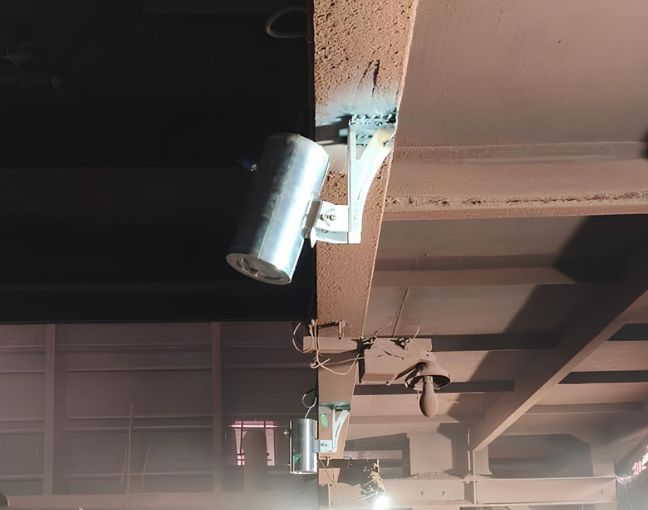
Deploys rugged industrial cameras and edge devices designed for dusty, high-temperature environments, ensuring reliable data capture and consistent monitoring across conveyors and material handling systems.
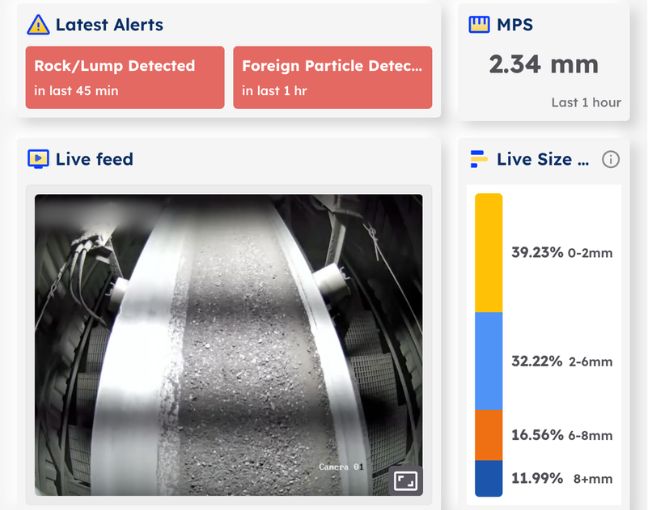
Continuously analyzes coal particle size distribution on conveyor belts, providing accurate visibility into size variations that may impact combustion efficiency, process stability, and overall plant performance.
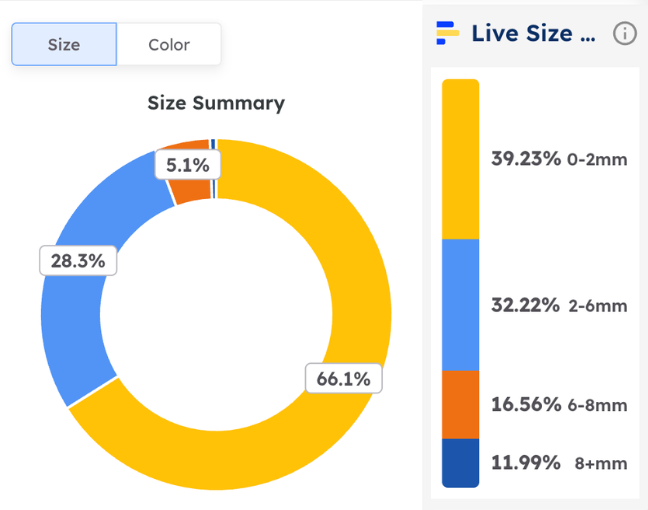
Displays the live distribution of coal particle sizes segmented into multiple size brackets, enabling operators to quickly assess size consistency, identify deviations, and maintain optimal fuel quality and process stability.
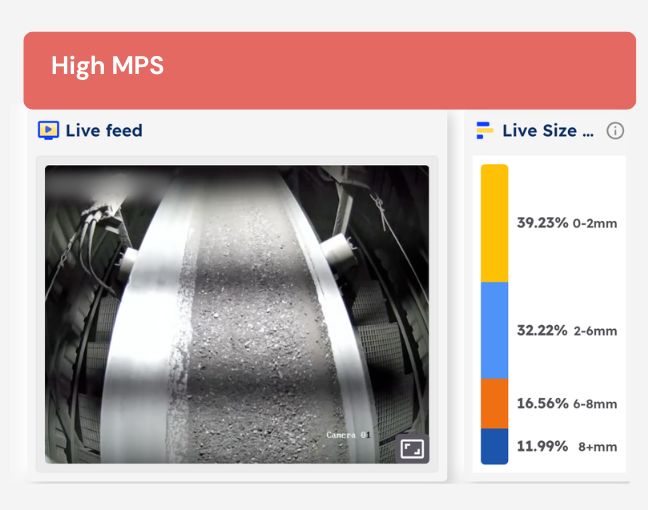
Generates automated real-time notifications when coal size deviates from defined thresholds, enabling operators to take timely corrective actions and prevent equipment damage or unplanned operational disruptions.
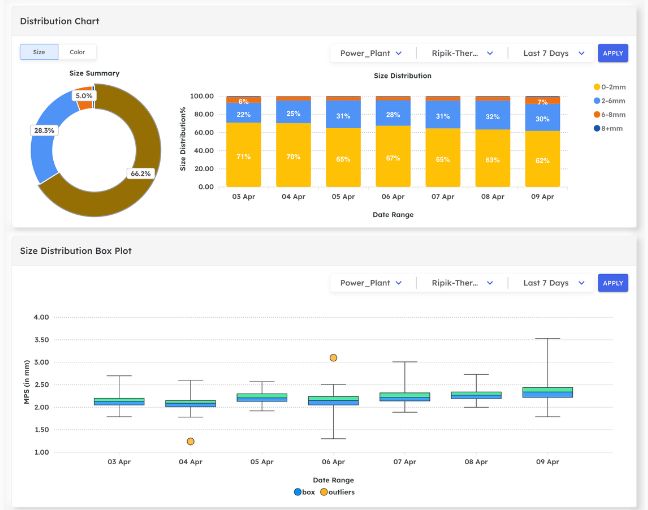
Delivers structured dashboards and performance reports that help teams track trends, evaluate equipment performance, and support data-driven decisions to improve operational efficiency and fuel management.
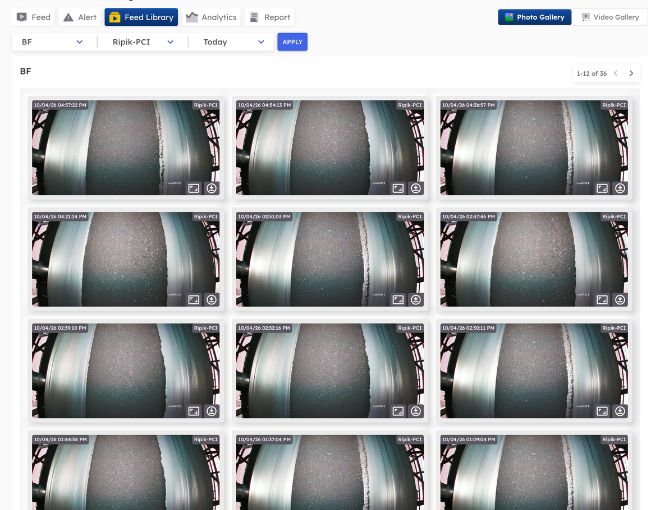
Maintains recorded video logs and event histories that allow operators to review past incidents, analyze root causes, and strengthen preventive maintenance and continuous process improvement initiatives.