


Zero Downtime, High Yield, AI-Driven Vision
Zero Downtime, High Yield, AI-Driven Vision
Limestone sizing plays a critical role in industries such as cement, steel, mining, and power generation, where raw material consistency directly impacts process efficiency, fuel consumption, clinker quality, and equipment life. However, Limestone sizing is most critical processes in cement manufacturing, directly impacting kiln stability, clinker quality, fuel consumption, and overall plant efficiency. Variations in limestone particle size can lead to uneven heating, operational disruptions, excessive maintenance, and inconsistent product quality. Traditional manual sampling and sieve analysis methods are often unable to provide continuous visibility into changing limestone conditions.
An AI-powered Limestone Sizing Platform enables real-time particle size monitoring using computer vision and advanced analytics. By continuously analyzing limestone particle size distribution on conveyor belts, the platform helps manufacturers instantly detect oversized particles, excessive fines, and abnormal material variations before they impact production.
Limestone sizing refers to the process of measuring, monitoring, and controlling limestone particle size distribution before the material enters downstream industrial processes such as crushing, raw milling, and kiln operations.
In cement manufacturing, maintaining the correct limestone particle size is essential for:
Stable kiln performance
Proper raw mix preparation
Efficient heat transfer
Improved clinker quality
Lower fuel consumption
Improper limestone sizing create bottlenecks in crushers and conveyors, reduce grinding efficiency, uneven kiln heating and inconsistent cement chemistry.
Limestone is the primary raw material in cement production, and even small variations in particle size can significantly impact manufacturing efficiency.
Inconsistent Clinker Quality: Large limestone particles create uneven thermal distribution inside the kiln, affecting clinker formation and final cement quality.
Increased Fuel Consumption: Improper particle size distribution reduces process efficiency and increases energy requirements during milling and calcination.
Crusher and Conveyor Blockages: Oversized particles can clog crushers, transfer points, and conveyors, leading to unplanned downtime and higher maintenance costs.
Reduced Milling Efficiency: Incorrectly sized limestone entering raw mills increases grinding inefficiencies and operational instability.
Difficult Root Cause Analysis (RCA): Traditional manual monitoring methods generate fragmented operational records, making it difficult to identify the root cause of process disruptions.
Improper limestone sizing can also negatively impact the performance of concrete and other construction materials in a project, since limestone serves as a mineral filler in concrete mixes, optimizing particle packing and flow behavior to enhance the properties of cementitious pastes and overall material quality.
The AI-powered Limestone Sizing Platform provides real-time monitoring and analysis of limestone particle size distribution across conveyors, crushers, and material handling systems. Using computer vision, AI analytics, cutting-edge machine vision, deep learning technologies and industrial imaging systems, the platform continuously detects size variations and generates automated alerts whenever limestone deviates from defined thresholds.
The system captures continuous images of limestone on conveyor belts and automatically classifies particles into different size categories. AI models analyze the feed continuously without interrupting production flow and manual intervention
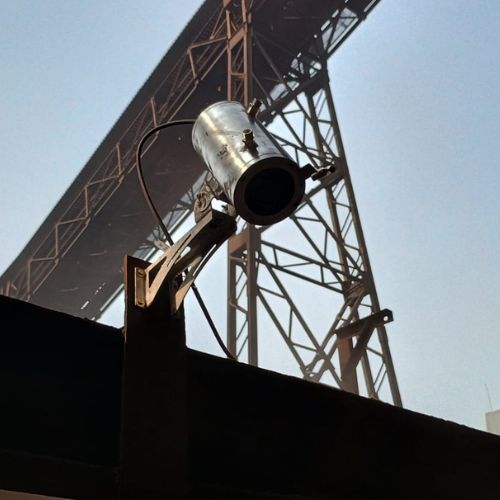
The platform uses rugged industrial cameras, edge processors, protective housings, and engineered lighting systems built for dusty and high-vibration environments, enabling reliable real-time limestone monitoring.
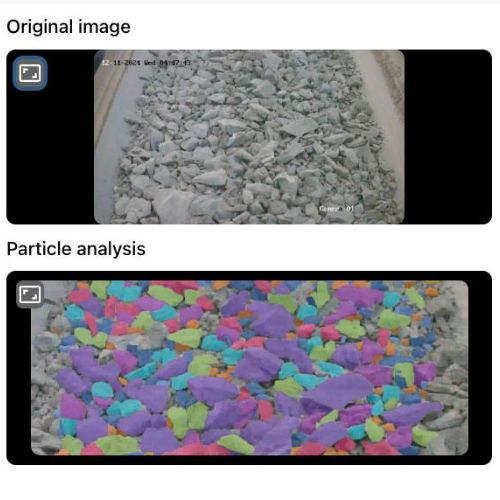
The AI platform continuously monitors limestone on conveyor belts and transfer points in real time, enabling immediate detection of oversized particles, excessive fines, and abnormal material variations.
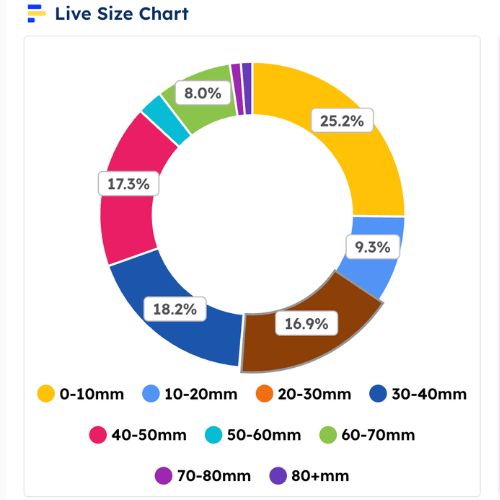
The system provides live size charts and distribution analysis segmented into multiple particle size categories. Operators can quickly identify process deviations and maintain optimal limestone quality.
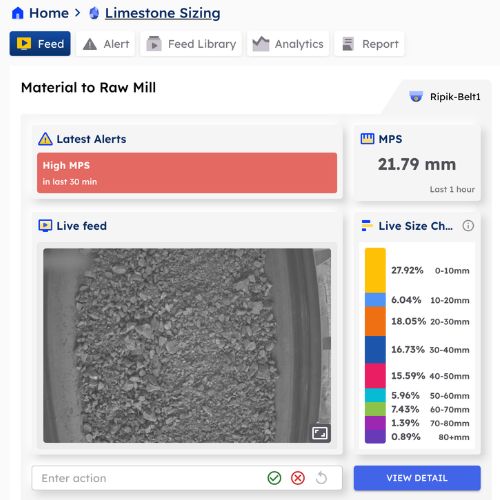
Automated alerts are generated whenever any deviation in limestone particle size from predefined operating limits. Notifications can be delivered through dashboards, alarms, email, WhatsApp, or control room systems for immediate corrective action.

Historical image and video records allow operators to review past limestone flow conditions, analyze recurring issues, and investigate root causes of process instability or equipment failures.
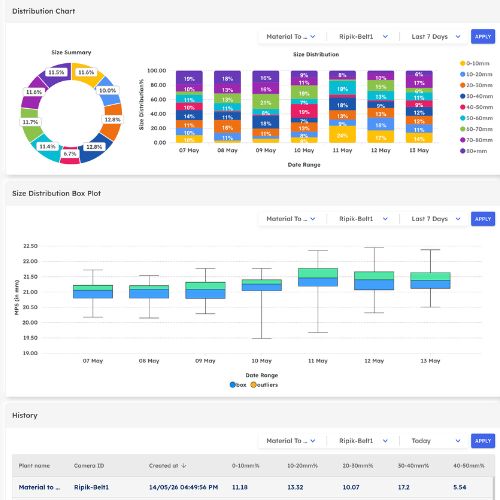
Limestone Sizing platform generates detailed reports and trend analytics related to limestone particle distribution, anomalies, and process performance to optimize crushing efficiency, improve material consistency, and support maintenance strategies.
Improved Clinker Quality: Consistent limestone sizing helps improve kiln efficiency and clinker chemistry stability.
Reduced Fuel Consumption: Optimized particle distribution improves thermal efficiency and lowers fuel usage.
Lower Maintenance Costs: Early detection of oversized particles prevents equipment overload and reduces wear.
Higher Process Efficiency: Continuous monitoring helps improve crushing efficiency and downstream process stability.
Faster Decision-Making: Operators receive instant visibility into changing limestone conditions.
Reduced Downtime: Real-time alerts help prevent conveyor blockages and crusher failures before they escalate.
Increased Sampling Frequency: AI-powered systems dramatically improve sampling frequency compared to traditional lab testing.