


Zero Downtime, High Yield, AI-Driven Vision
Zero Downtime, High Yield, AI-Driven Vision
A flare in industrial plants is a safety system used to burn excess or hazardous gases such as methane, propane, hydrogen sulfide, and flared gases in a controlled manner. It operates during startups, shutdowns, emergencies, process upsets, and maintenance activities. Flaring prevents dangerous pressure buildup and avoids the release of flammable or toxic gases into the atmosphere. It is widely used in the oil & gas, refinery, petrochemical, and chemical plant industries, as well as in power generation, cement, steel, and waste incineration. Flares play a critical role in protecting equipment and personnel while ensuring safety and environmental compliance.
Flare and flare gas monitoring is critical for ensuring safe, efficient, and compliant plant operations, but it is often challenged by harsh environments, complex gas behavior, and limitations of conventional measurement systems. Below are the major challenges faced in flare monitoring.
Selecting the right method for monitoring flare operation and combustion efficiency is challenging due to varying site conditions and technology limitations. Quantifying removal efficiency and smoke index in real time is also difficult because of the harsh and dynamic flare environment.
The Ripik AI platform for flare stack monitoring provides 24×7 real-time visibility using advanced infrared and optical vision, AI-driven anomaly detection, and automated alerts, while also developing advanced models for flare monitoring. It enables accurate gas flow measurements through flame–flow correlation, supports combustion efficiency tracking and emissions insights, and offers optional closed-loop controls to improve safety, reduce excess flaring, and ensure regulatory compliance in harsh industrial environments. The system uses combined data from multiple sensors and analytics for improved accuracy in flare monitoring.
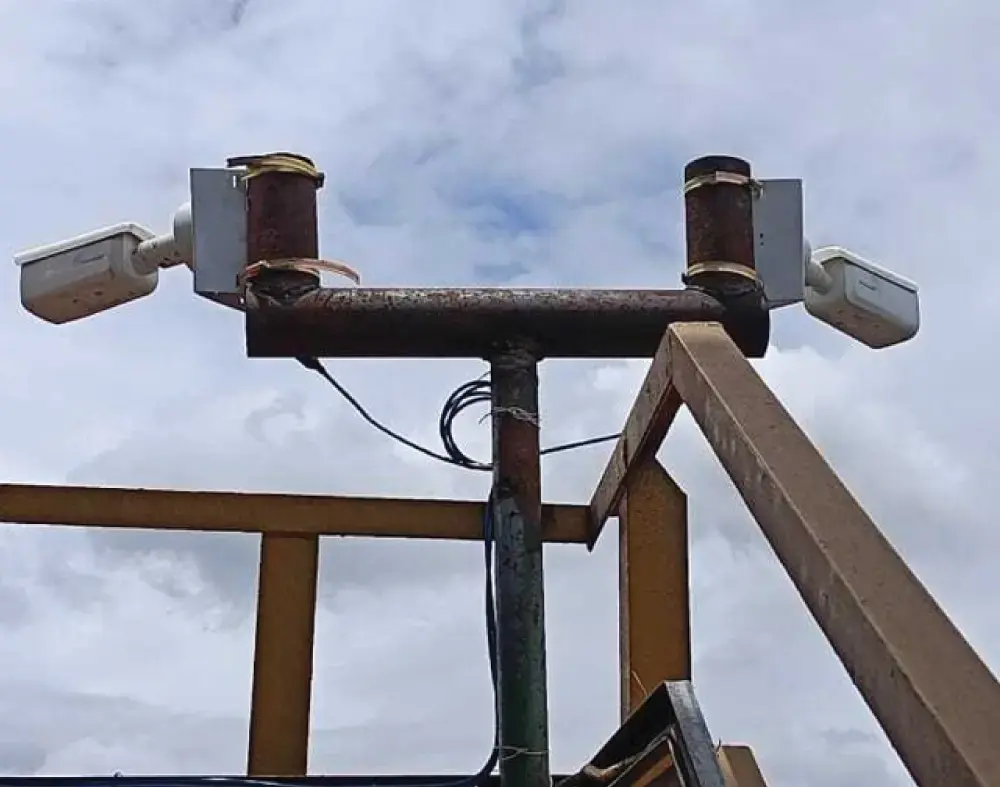
Specialized industrial-grade high-resolution cameras, rugged edge processors, and engineered vision systems are deployed on scrap receiving, conveyors, shredders, and furnace charging zones to enable real-time inspection and early detection of hazardous, oversized, and non-compliant scrap.
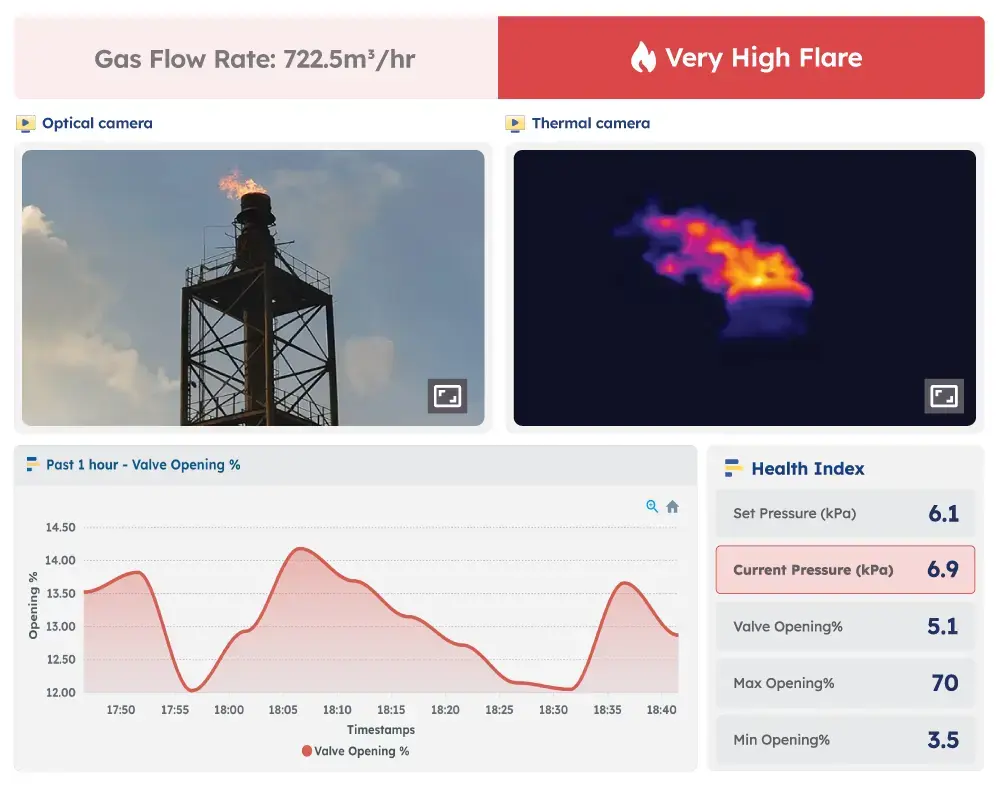
24×7 real-time monitoring with both optical and IR video feed enables reliable flame detection and live correlation with flare gas flow rate to quickly address flare irregularities with high accuracy.
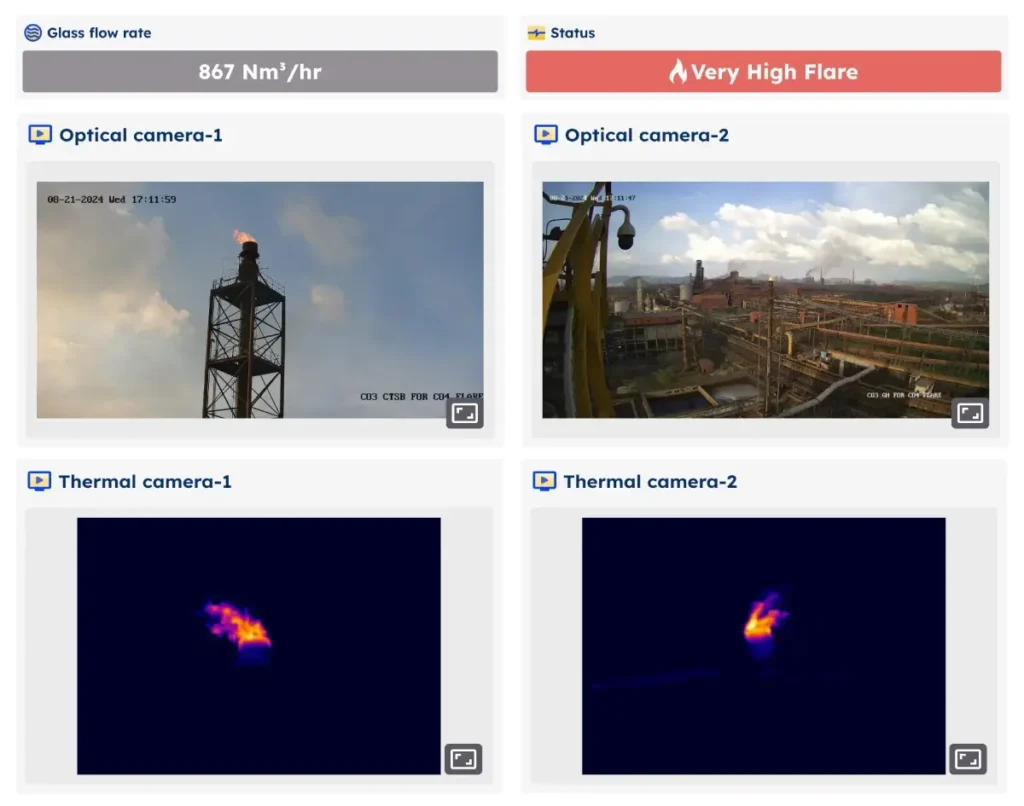
Get Instant alerts on whatsapp, dashboard or hooter alarms are triggered immediately on detecting flare anomalies, enabling quick operator response to prevent safety risks and excess flaring.
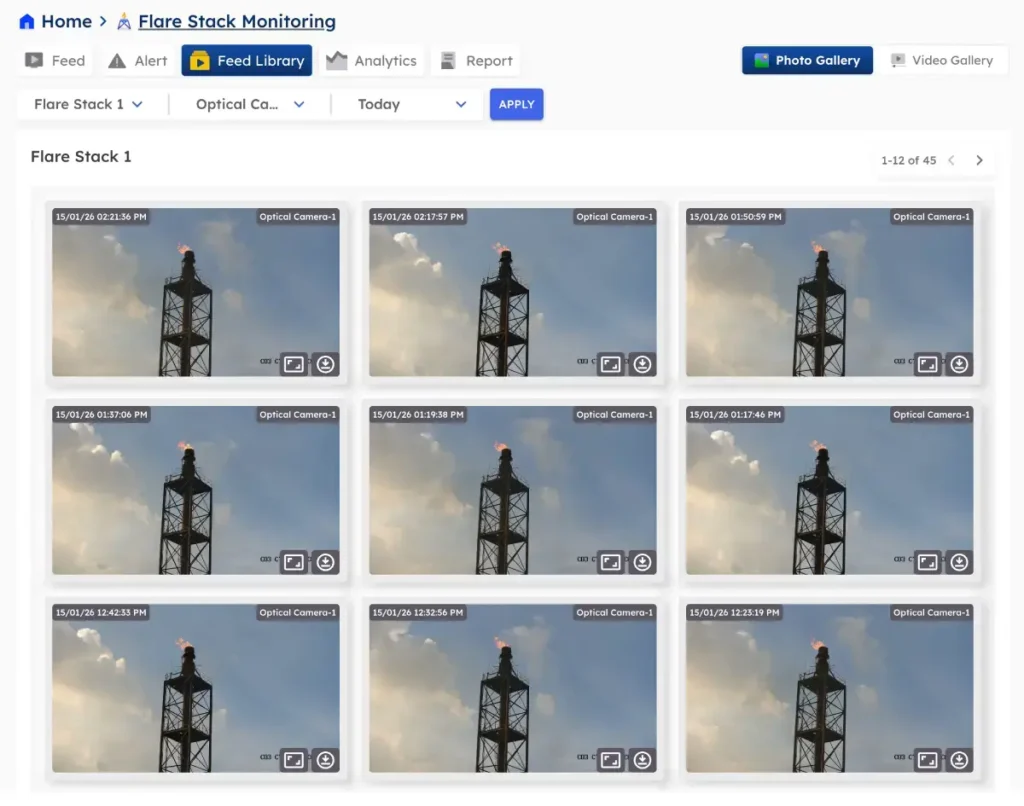
The system securely archives past flare stack video footage and operating conditions, enabling pattern understanding, trend identification, anomaly analysis, compliance validation, and root-cause investigations.
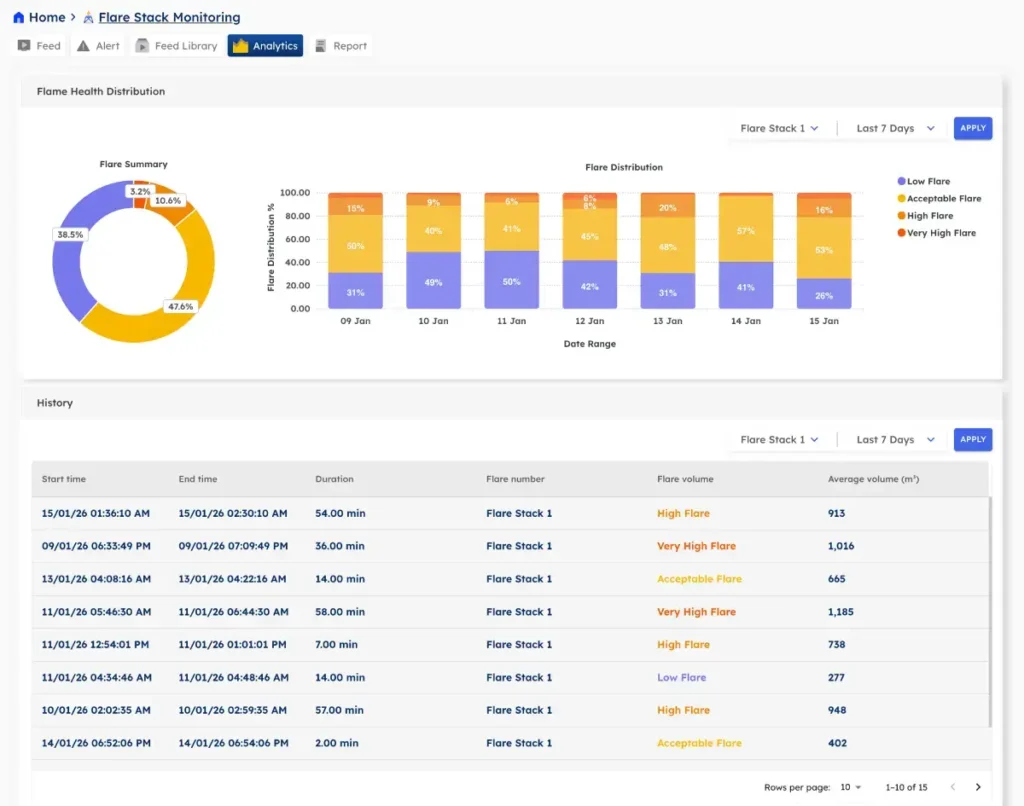
Automated reports and advanced analytics provide insights into flare performance, gas flow trends, anomalies, and emissions, enabling data-driven decisions, compliance tracking, and continuous process optimization.
Reliable flame detection in all conditions, including daylight, smoke, fog, rain, and glare
Real-time detection of flame failure and instability, preventing unburned gas release
Improved combustion efficiency and fuel gas utilization, minimizing black smoke and energy losses
Enhanced operational safety and compliance, lowering fire, explosion, and regulatory risks
Continuous compliance and emissions visibility, supporting regulatory and ESG requirements
Remote, real-time monitoring of flare stacks, reducing manual intervention and response time