


Zero Downtime, High Yield, AI-Driven Vision
Zero Downtime, High Yield, AI-Driven Vision
Industrial environments are among the most complex workplaces to manage safely. In manufacturing plants, area safety monitoring uses AI-powered computer vision, edge AI, and real-time analytics to continuously detect unsafe conditions, watch restricted and high-risk zones, and trigger instant alerts before minor issues escalate into accidents, downtime, or compliance failures.
Workers operate around heavy machinery, moving vehicles, high-temperature equipment, electrical systems, and hazardous materials, where even a small oversight can lead to serious incidents, production losses, and regulatory penalties. Traditional surveillance systems primarily record incidents for later investigation. Modern manufacturers need systems that identify risks as they occur and fit into existing plant infrastructure, turning video feeds into actionable alerts, analytics, and compliance visibility.
In manufacturing facilities relying solely on manual inspections or conventional CCTV systems makes it difficult to identify safety hazards as they occur, increasing the risk of workplace accidents, equipment damage, production downtime, and regulatory non-compliance. As industrial operations become more complex, plant safety monitoring has become essential for ensuring a safe and efficient workplace.
An AI-powered industrial area safety monitoring system provides continuous, real-time visibility across the plant by automatically detecting unsafe conditions such as restricted area intrusions, PPE violations, fire and smoke, unsafe worker behavior, and vehicle-pedestrian interactions. By enabling faster incident response and proactive risk management, manufacturing safety monitoring helps organizations improve workplace safety, reduce operational disruptions, strengthen compliance, and create a safer, more productive manufacturing environment.
Without an AI-powered area safety monitoring system, manufacturers often struggle to identify and respond to safety risks in real time. Making it difficult to continuously monitor large industrial facilities. This can result in delayed incident detection, increased operational risks, and higher costs.
Some of the key challenges include:
Delayed Hazard Detection: Fires, smoke, equipment malfunctions, and unsafe conditions may go unnoticed until they become serious incidents.
Unauthorized Access to Restricted Areas: Without continuous industrial area safety monitoring, unauthorized personnel may enter hazardous zones, increasing the risk of accidents and security breaches.
PPE Non-Compliance: Manual monitoring makes it difficult to consistently ensure workers are wearing mandatory personal protective equipment (PPE), leading to increased safety risks.
Higher Risk of Workplace Accidents: Unsafe worker behavior, vehicle-pedestrian interactions, and human-machine proximity often remain undetected, resulting in preventable injuries.
Slow Emergency Response: Delays in identifying incidents such as fire, smoke, or worker falls can significantly increase the severity of accidents and operational disruptions.
Production Downtime and Financial Losses: Safety incidents can damage equipment, halt production, increase maintenance costs, and lead to expensive unplanned downtime.
Regulatory Compliance Challenges: Limited visibility and poor documentation make it difficult to demonstrate compliance with workplace safety regulations and safety audits.
Implementing an AI-powered industrial area safety monitoring platform helps manufacturers overcome these challenges by providing real-time hazard detection, automated alerts, intelligent area control management, and continuous manufacturing safety monitoring, creating a safer and more efficient industrial workplace.
Ripik AI’s Area Control Management platform transforms conventional CCTV infrastructure into an intelligent industrial area safety monitoring solution. Powered by advanced computer vision and edge AI, the platform is one of the advanced monitoring solutions manufacturers use for continuous oversight and faster response, detecting unsafe conditions, monitoring restricted zones, and identifying workplace safety violations in real time. Manufacturers gain automated, 24×7 plant safety monitoring that helps prevent accidents before they occur.
The platform seamlessly integrates with existing CCTV and IP cameras, thermal cameras, PLCs, SCADA, DCS, alarm systems, and Public Address (PA) systems, with modern systems connecting these plant technologies into one monitoring environment. By delivering instant alerts, actionable insights, and centralized monitoring, Ripik AI workplace safety monitoring gives safety teams a complete overview helping safeguard people and company resources while supporting broader safety management, improving workplace safety, operational efficiency, and regulatory compliance.
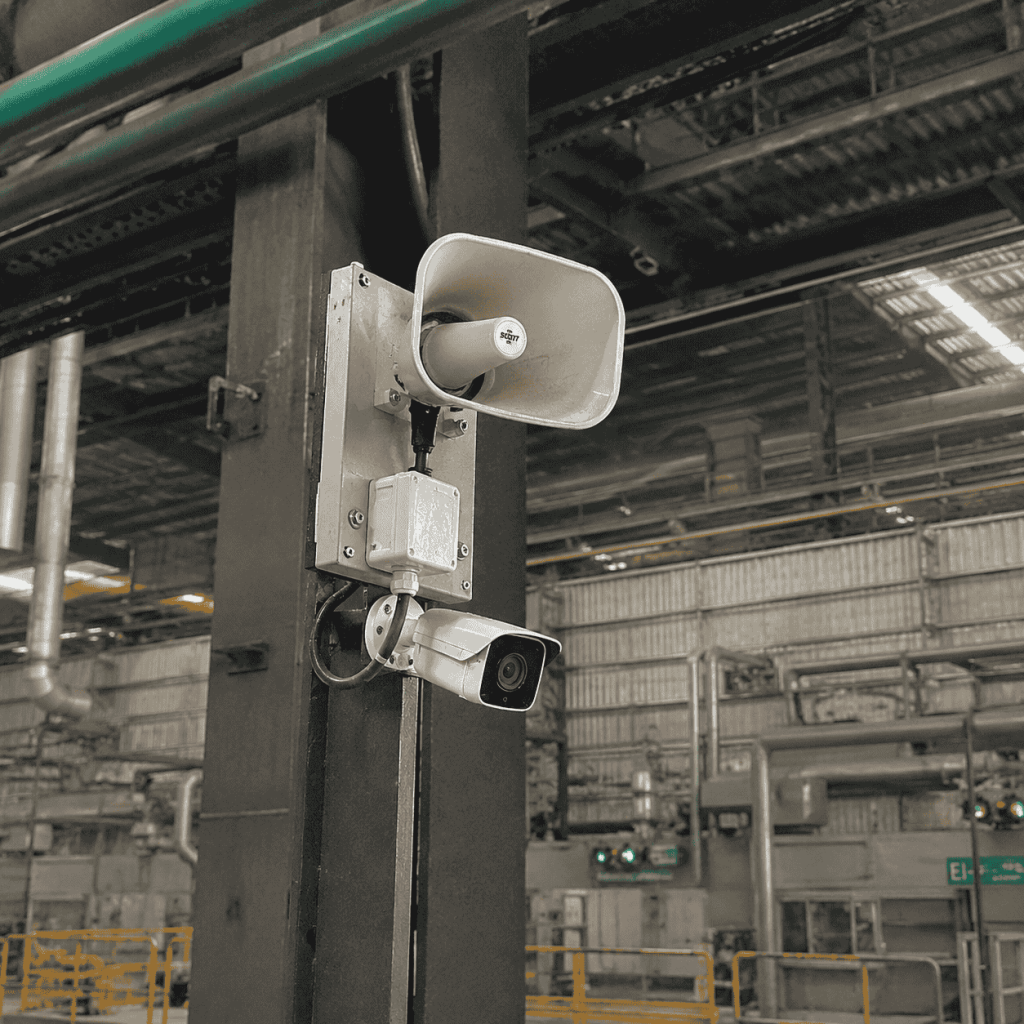
Ripik AI supports deployment using existing surveillance infrastructure while also integrating with specialized hardware such as high-resolution IP cameras, thermal cameras, edge AI devices, industrial gateways, and GPU-enabled processing units. This ensures reliable, low-latency monitoring even in harsh industrial environments, eliminating the need for extensive infrastructure upgrades.
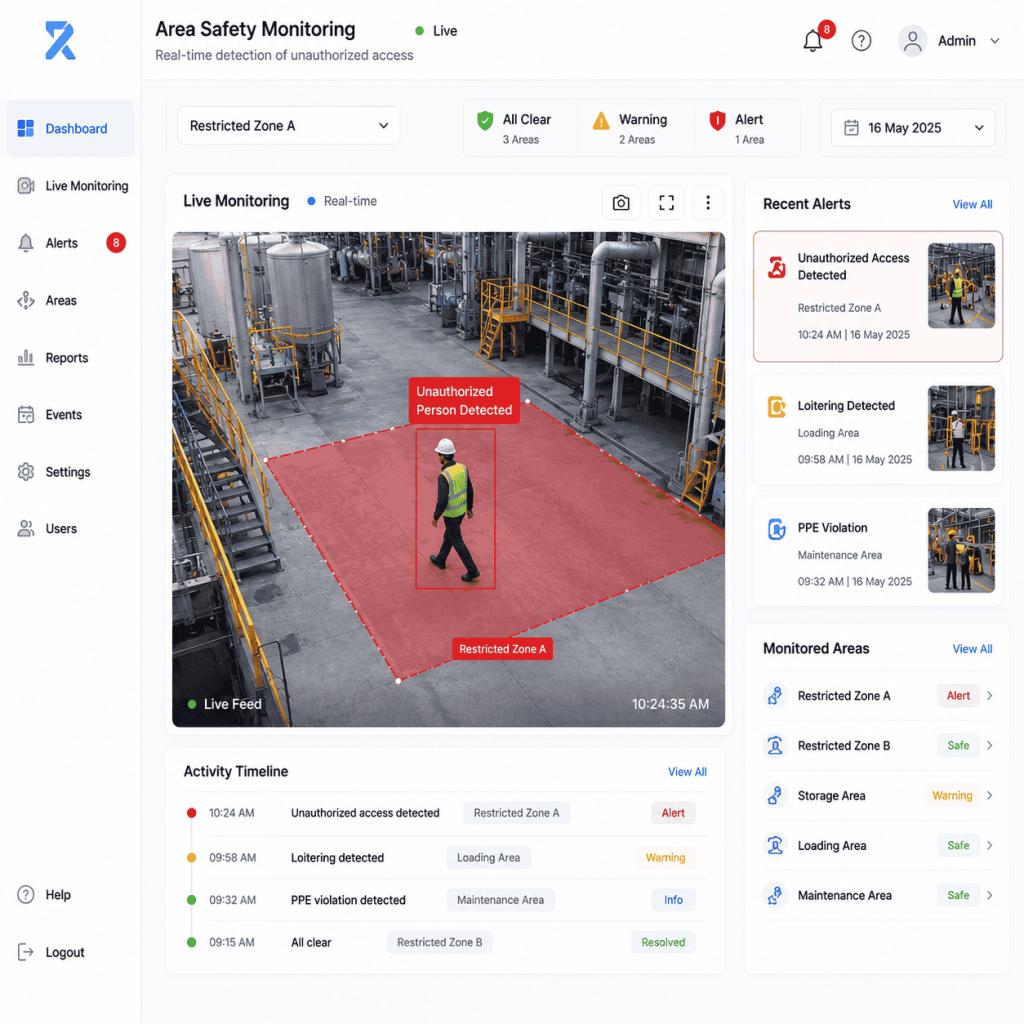
Area Safety Monitoring platform continuously monitors designated operational and restricted zones across the plant in real time, providing complete visibility of on-ground activities. It detects unauthorized entry into hazardous areas, identifies unauthorized personnel in restricted zones, and ensures that only authorized workers access critical operational areas, and improve overall area control management across the facility.

Area safety monitoring system whenever detect a safety event, the system immediately sends automated alerts to the relevant personnel through dashboards, mobile applications, email, WhatsApp, alarm systems, or hooter. Real-time notifications enable faster decision-making, helping safety teams respond quickly and minimize the impact of incidents.
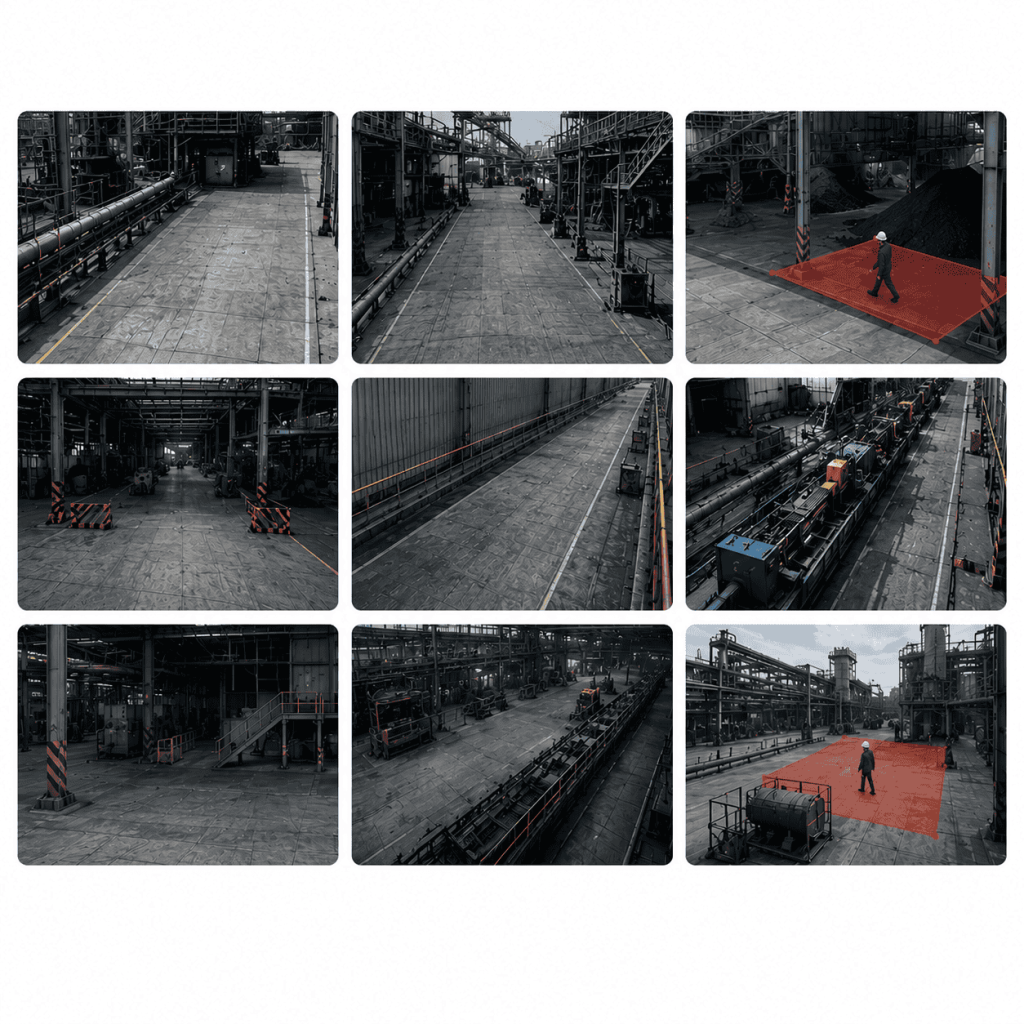
Historical video footage preserve real-time data for later review and validation and making it easy to retrieve and review specific incidents. Safety teams can quickly investigate accidents, conduct root cause analysis, verify compliance with OSHA regulations, and use historical data to improve future safety strategies, and support internal security protocols when reviewing access, events, and investigations.
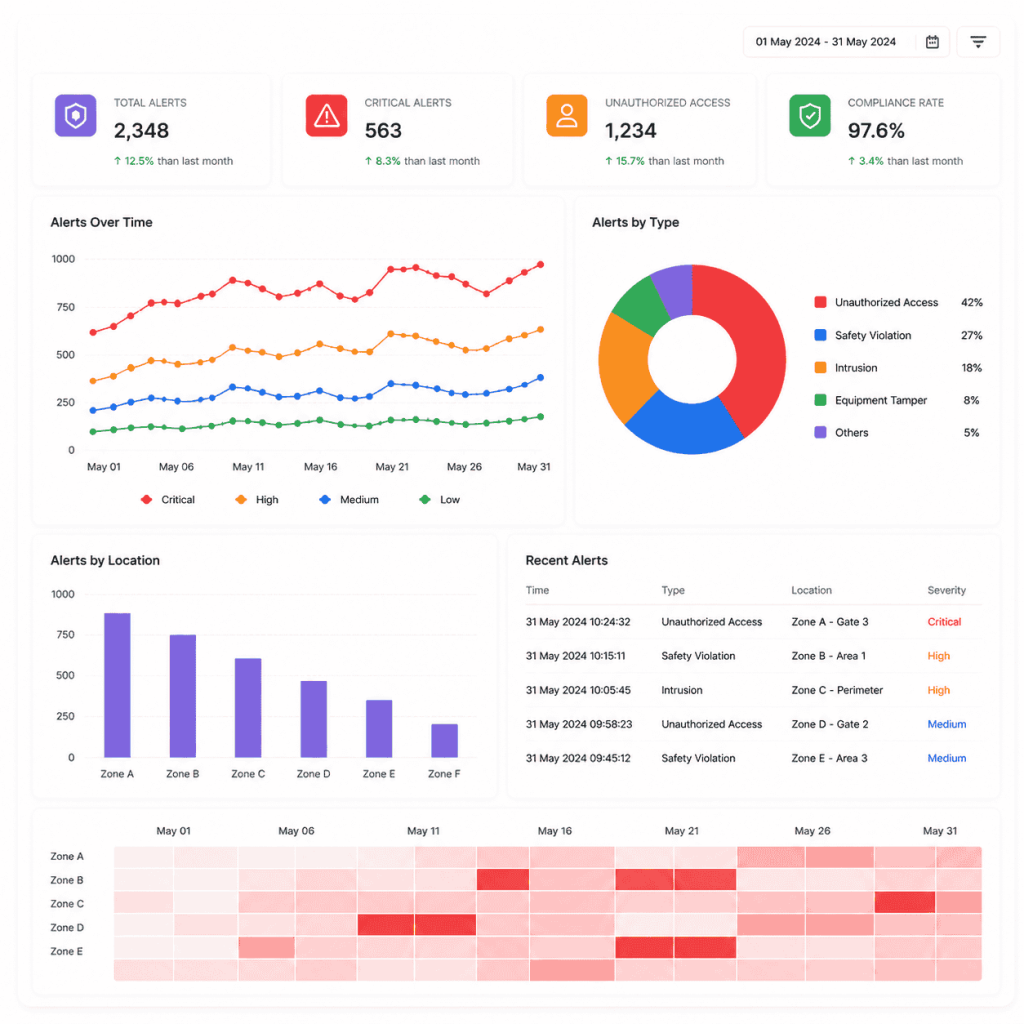
The platform automatically records every detected event and provides comprehensive reports with timestamps, camera locations, event categories, and trend analysis. These insights help manufacturers identify recurring safety issues, measure compliance, optimize safety protocols, and make data-driven decisions to strengthen worker safety monitoring.
Implementing an AI-powered area safety monitoring system has a significant impact on workplace safety, operational efficiency, and business continuity by improving both employee safety and employee health. By continuously monitoring plant operations and detecting hazards in real time, manufacturers can proactively prevent accidents instead of reacting after they occur. This not only creates a safer working environment but also minimizes production disruptions, protects critical assets, and supports safer conditions for contractors and site visitors.
Notably, 80% of major companies use workplace safety monitoring systems, reflecting how widely these tools are adopted to improve safety outcomes.
Some of the key benefits of industrial area safety monitoring include:
Improved Worker Safety: Functions as a worker safety monitoring system with real-time visibility into unsafe behaviors, restricted area intrusions, and PPE violations to help prevent workplace accidents.
Faster Incident Response: Instant alerts enable safety teams to respond immediately to fires, smoke, unauthorized access, and other critical safety events.
Reduced Production Downtime: Early detection of safety hazards helps prevent equipment damage and unplanned shutdowns, ensuring uninterrupted operations.
Enhanced Regulatory Compliance: Automated event recording and digital audit trails support workplace monitoring requirements and simplify documentation for occupational health and safety standards.
Lower Operational Costs: Fewer accidents reduce maintenance expenses, insurance claims, legal liabilities, and productivity losses.
Smarter Area Control Management: AI-driven monitoring provides complete visibility across the facility, enabling better control of restricted zones and high-risk operational areas.
Higher Operational Efficiency: By automating surveillance, safety teams can focus on preventive actions rather than manually monitoring multiple CCTV feeds.
Better Remote Coverage: Supports lone worker safety monitoring for isolated personnel so teams can respond faster when risks emerge.