AI Platform for PPE Compliance Monitoring
Industrial workplaces are becoming more automated, but one critical challenge remains unchanged, ensuring every worker consistently wears the right Personal Protective Equipment (PPE). Even a single missed helmet, safety vest, glove, hard hat, eye protection, or respiratory protective equipment can lead to serious injuries, regulatory violations, and costly production disruptions.
Traditional PPE inspections rely on manual supervision, CCTV monitoring, and periodic audits. While effective to some extent, these methods cannot provide continuous workplace safety monitoring or monitor multiple workers across large facilities and multiple shifts. This is where AI-powered PPE compliance and PPE detection systems are transforming industrial worker safety.
By combining advanced computer vision, edge AI, and real-time safety monitoring, modern monitoring solutions automatically detect PPE non-compliance, generate instant alerts, and deliver actionable safety analytics that help organizations improve health and safety, reduce safety risks, and create safer workplaces.
What is the need of PPE Monitoring System in Industrial environment?
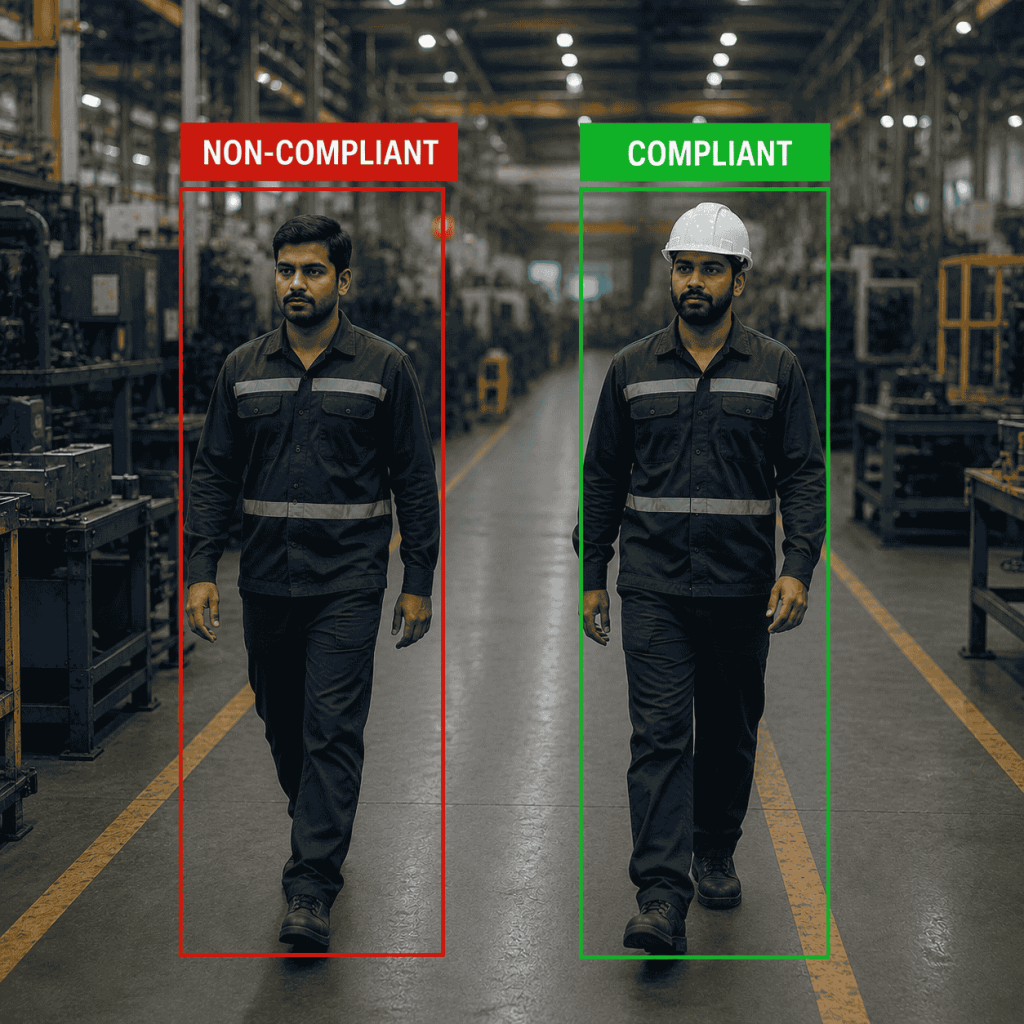
Industrial environments are inherently hazardous, with workers exposed to risks such as moving machinery, falling objects, flying debris, high temperatures, hazardous chemicals, dust, and heavy vehicle movement. While organizations enforce PPE requirements, ensuring every worker consistently wears the required protective equipment across large facilities and multiple shifts is difficult through manual inspections alone. An AI-powered PPE monitoring system continuously analyzes live video feeds to automatically from existing CCTV cameras to automatically detect whether workers are wearing mandatory PPE such as helmets, safety vests, gloves, goggles, face shields, respiratory protective equipmen, and safety shoes. By providing real-time alerts for non-compliance, it enables immediate corrective action, reduces workplace accidents, strengthens regulatory compliance, minimizes reliance on manual supervision, and helps organizations in case of PPE non-compliance build a safer and more proactive industrial work environment.
Key Challenges Faced Due to Lack of Automated PPE Detection
Inconsistent Manual Inspections: Safety personnel cannot continuously monitor every worker, leading to missed PPE violations.
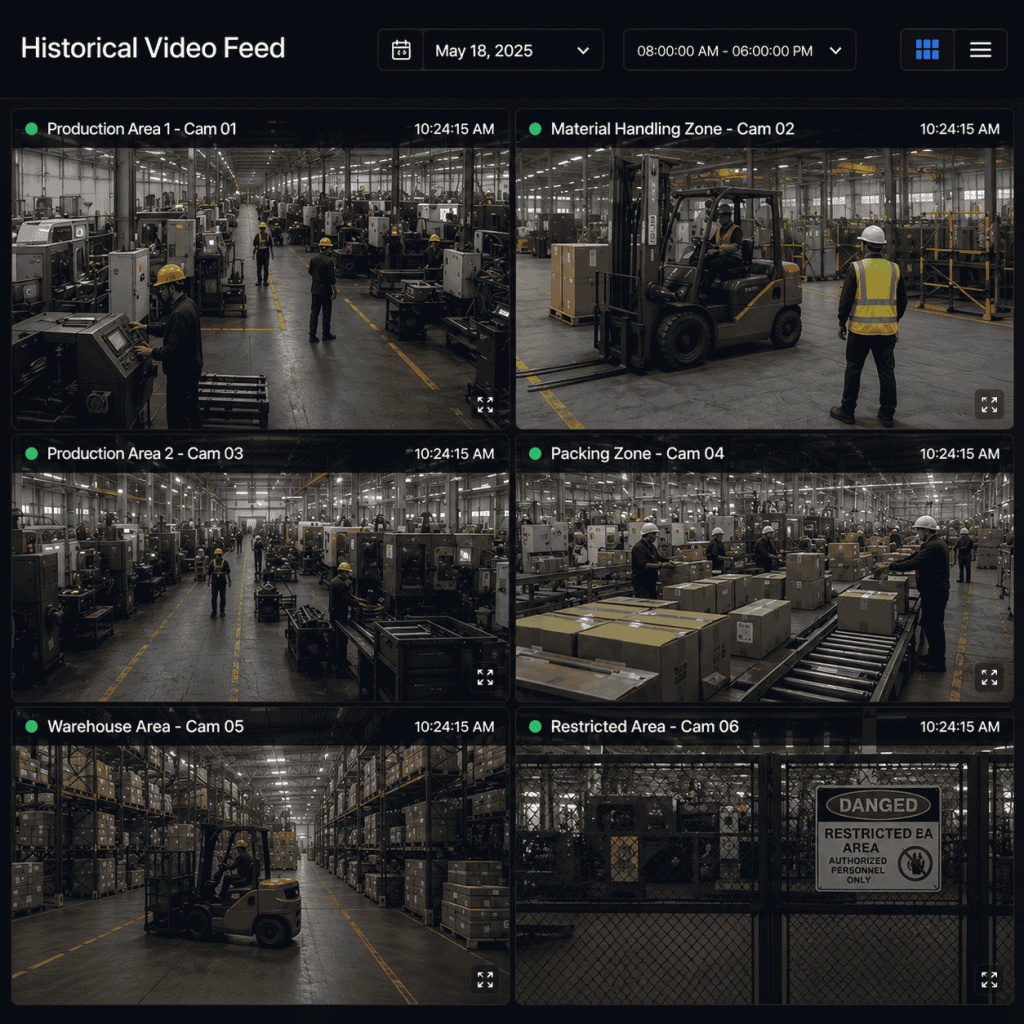
Limited CCTV Monitoring: Monitoring multiple camera feeds manually is inefficient and increases the chances of overlooking safety non-compliance.
Delayed Response to Violations: PPE breaches are often identified only after an incident or during routine inspections, delaying corrective action.
Higher Risk of Workplace Accidents: Workers without proper PPE are more vulnerable to injuries caused by hazardous equipment, chemicals, or high-temperature environments.
Difficulty Managing Large Facilities: Ensuring PPE compliance across multiple plants, production lines, shifts, and contractor teams is challenging without automation.
Lack of Real-Time Alerts: Manual monitoring cannot instantly notify supervisors about PPE violations, increasing response time.
Limited Safety Insights: Without automated analytics, it is difficult to identify recurring violations, high-risk zones, or compliance trends for continuous improvement.
Regulatory Compliance Challenges: Inadequate monitoring and documentation can make it harder to demonstrate compliance with workplace safety regulations and audit requirements.
Lack of Real-Time Safety Monitoring: Manual inspections cannot provide real-time safety monitoring across high-risk zones and restricted zones, increasing the likelihood of PPE non-compliance, delayed corrective actions, and preventable workplace accidents.
Ripik AI Platform for PPE Compliance Monitoring
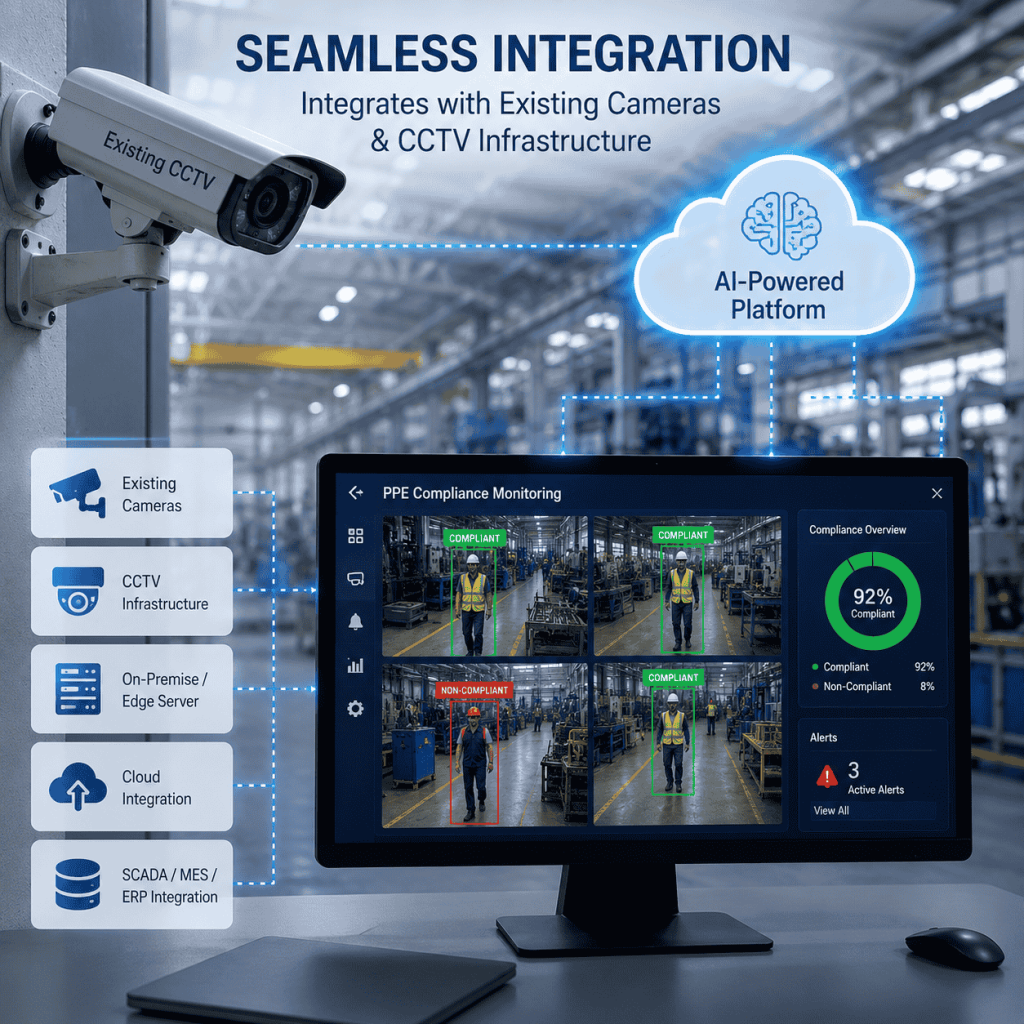
Ripik AI’s Vision AI Platform enables real-time PPE Monitoring by leveraging advanced computer vision and artificial intelligence to automatically detect whether workers are wearing the required personal protective equipment (PPE) across industrial facilities to enhance workplace safety. Designed for heavy industries such as steel, cement, mining, metals, manufacturing, and oil & gas, the platform transforms traditional manual safety inspections into an automated, proactive safety management system.
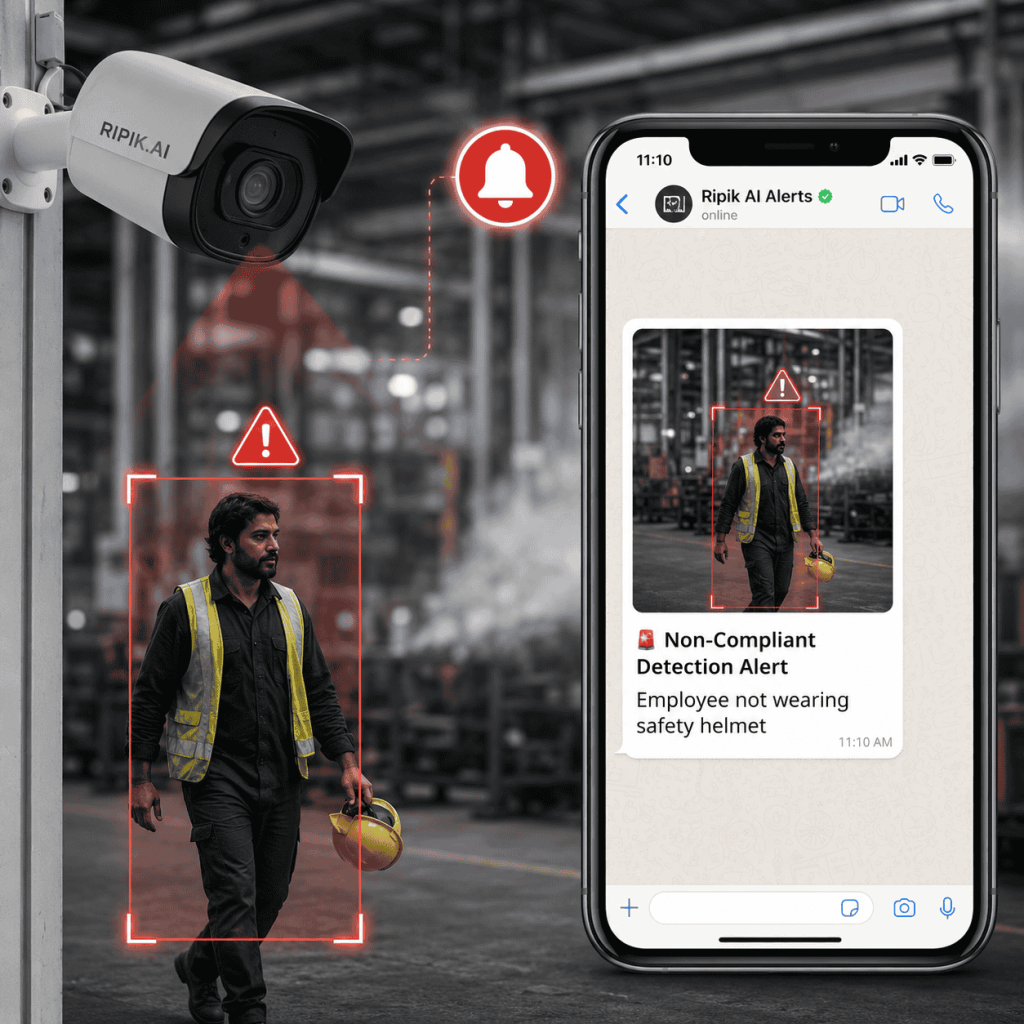
Using existing CCTV cameras, the platform continuously monitors production areas, identifies PPE violations in real time, and instantly alerts supervisors before unsafe conditions escalate into workplace incidents. This enables manufacturers to improve worker safety, ensure regulatory compliance, and reduce operational risks without disrupting daily operations.
Key Features
Instant Alerts and Notifications
Applications of PPE Monitoring Across Industries
Steel Manufacturing
Cement Manufacturing
Mining Industry
Oil & Gas Industry
Manufacturing and Automotive Industry
Construction Industry
Impact of Industrial Automated PPE Detection
Reduces Workplace Accidents and Injuries: AI-powered Industrial PPE Compliance Monitoring continuously verifies whether workers are wearing mandatory personal protective equipment (PPE), such as helmets, safety vests, gloves, masks, and protective eyewear. By detecting violations in real time, manufacturers can prevent accidents before they occur, creating a safer workplace, reducing Lost Time Injuries (LTIs), and cutting workplace injuries by 80%. Proper PPE usage can also prevent nearly 70% of hand injuries and 60% of eye injuries.
Ensures Continuous Safety Compliance: Unlike manual inspections that are periodic and prone to human error, AI-based PPE monitoring provides 24/7 automated compliance across production lines, warehouses, loading bays, and hazardous zones. This supports workplace monitoring with real time monitoring capabilities, helping manufacturers consistently meet OSHA and local industrial safety regulations while maintaining a safe working environment and audit-ready compliance records.
Minimizes Production Downtime: Workplace accidents often lead to equipment shutdowns, production delays, and costly investigations. Real-time PPE compliance monitoring identifies unsafe behavior instantly, allowing supervisors to intervene before an incident disrupts manufacturing operations.
Improves Workforce Productivity and Accountability: Continuous AI monitoring encourages employees to follow safety protocols without constant manual supervision. Over time, this builds a strong safety culture where workers are more accountable, resulting in higher operational discipline and improved productivity.
Reduces Operational and Insurance Costs: Preventing safety incidents lowers medical expenses, workers’ compensation claims, insurance premiums, legal liabilities, long-term claims exposure, and unplanned maintenance costs. Industrial PPE compliance monitoring delivers measurable ROI by reducing both direct and indirect costs associated with workplace accidents.
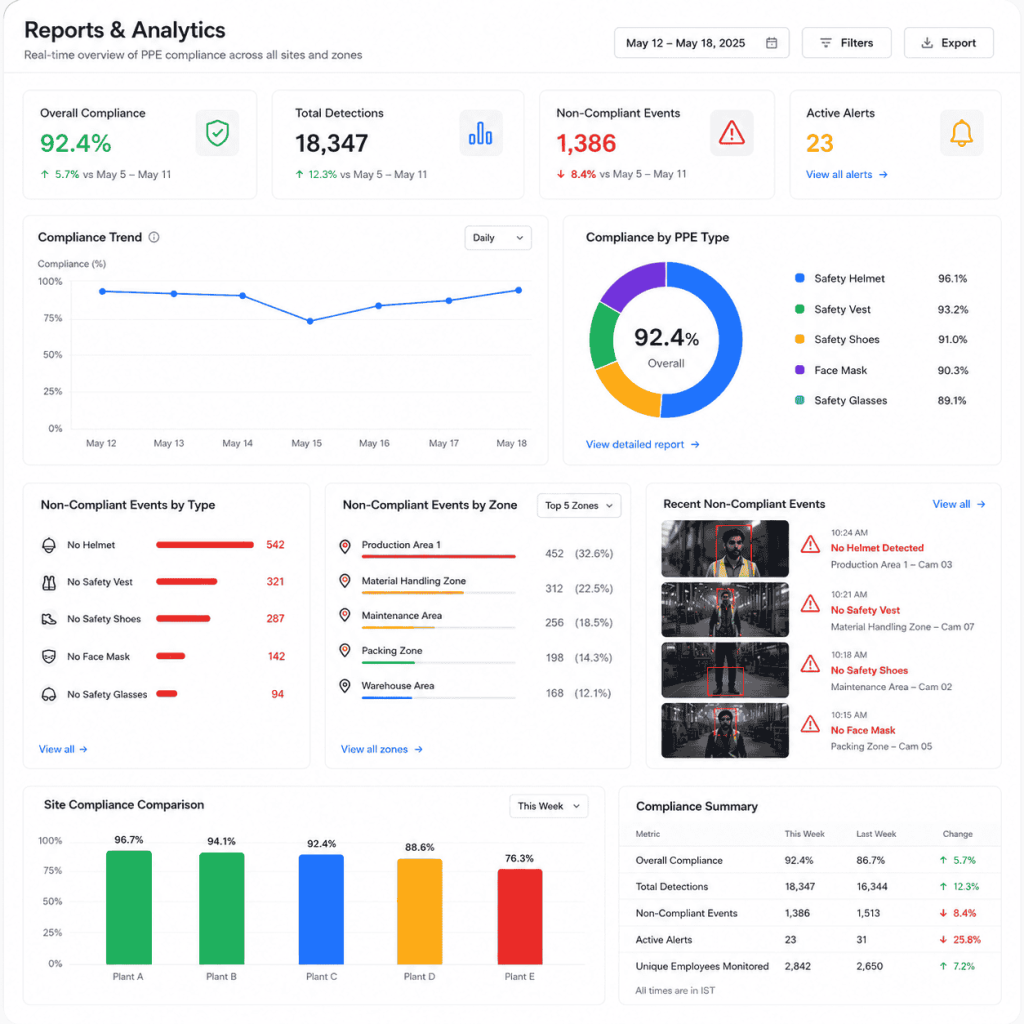
Provides Actionable Safety Intelligence: Modern AI-powered PPE monitoring systems generate dashboards and analytics on compliance rates, recurring violations, high-risk areas, shift-wise trends, and department-wise performance. These insights help EHS managers identify safety gaps, optimize training programs, and implement data-driven safety improvements.
Protects Workers in High-Risk Manufacturing Environments: Industries such as steel, cement, mining, metals, foundries, chemicals, and heavy manufacturing involve hazardous operations where missing PPE can lead to severe injuries. AI-based PPE monitoring ensures workers entering restricted or dangerous zones are equipped with the required protective gear before exposure to operational risks.
Accelerates Emergency Response: Real-time alerts notify supervisors immediately when PPE violations occur or when workers enter hazardous areas without the required equipment. Faster intervention reduces response time, prevents accidents, and enhances overall plant safety.
Strengthens ESG and Corporate Safety Performance: Industrial PPE Compliance Monitoring supports Environmental, Social, and Governance (ESG) initiatives by demonstrating a company’s commitment to employee well-being, workplace safety, and responsible manufacturing practices. Strong safety performance also enhances brand reputation and stakeholder confidence.
Enables Smart, AI-Driven Manufacturing: As manufacturers adopt Industry 4.0 and smart factory technologies, AI-powered PPE Compliance Monitoring becomes a critical component of digital safety management. By integrating with CCTV cameras, SCADA, MES, and industrial IoT systems, it delivers real-time visibility, automated alerts, and predictive safety insights that improve operational resilience
Improves Workplace Safety Monitoring: Continuous workplace safety monitoring enables organizations to detect unsafe behavior before incidents occur. By analyzing real-time data, identifying risk patterns, and monitoring compliance across high-risk zones, AI-powered monitoring systems help manufacturers reduce workplace accidents, avoid costly penalties, and ensure compliance with workplace safety regulations.