


Zero Downtime, High Yield, AI-Driven Vision
Zero Downtime, High Yield, AI-Driven Vision
Industrial facilities contain numerous high-risk zones where unauthorized entry can lead to serious accidents, equipment damage, production downtime, and compliance violations. Restricted area monitoring is an AI-powered system that continuously analyzes live CCTV video to detect unauthorized entry into predefined restricted zones in real time, generate instant alerts, and enable faster response. As industries embrace digital transformation, AI platforms for restricted area monitoring are replacing traditional security systems with intelligent monitoring that strengthens workplace safety, operational continuity, and compliance.
Unlike conventional CCTV surveillance that depends on manual observation, AI-powered restricted area monitoring identifies entry into prohibited zones, distinguishes authorized and unauthorized personnel, and creates historical video logs and analytics for investigation and improvement. For operations managers, plant engineers, heads of manufacturing, and digital transformation leads in medium and large process-manufacturing companies—including steel, cement, aluminum, power, chemicals, and pharmaceuticals—this article explains how computer vision platforms work, how they integrate with existing CCTV infrastructure, where they are applied across plants, and the benefits they deliver through real-time detection and alerting.
Unauthorized entry to restricted areas presents significant safety, security, and compliance risks across industrial, commercial, and institutional settings. Industrial facilities contain numerous hazardous zones such as conveyor belts, blast furnaces, coal handling plants, crushers, kilns, high-voltage electrical rooms, robotic cells, and heavy machinery operating zones.
Increased Risk of Workplace Accidents: Workers or visitors may unknowingly enter hazardous areas containing moving machinery, high-voltage equipment, or high-temperature processes. Without AI safety solutions, these incidents can result in serious injuries or fatalities.
Unauthorized Access to Critical Areas: Restricted zones such as control rooms, coal handling plants, blast furnaces, substations, and robotic work cells require controlled access. Without AI-based monitoring, unauthorized personnel can enter these areas unnoticed, compromising both safety and security.
Delayed Incident Detection: Traditional CCTV systems require operators to continuously monitor multiple camera feeds. Human fatigue, distractions, or limited staffing can delay the detection of unauthorized entry, reducing the time available to prevent an accident.
Lack of Real-Time Alerts: Without an automated monitoring system, supervisors are often informed only after an incident has occurred. The absence of immediate alerts delays emergency response and increases the severity of potential accidents.
Protect High-Risk Equipment: Restricted areas often house expensive and mission-critical equipment. Unauthorized access can lead to equipment damage, process disruptions, or costly repairs. Continuous monitoring safeguards these assets from accidental or intentional interference.
Equipment Damage and Production Losses: Unauthorized access near sensitive machinery can lead to equipment damage, process interruptions, emergency shutdowns, and costly repairs. Even a minor safety incident can result in significant production downtime.
Limited Incident Investigation: When unauthorized access goes undetected, organizations often lack accurate evidence to determine what happened. Missing video records, timestamps, or event logs make root cause analysis and corrective action more difficult.
Increased Operational Costs: Workplace accidents, equipment failures, insurance claims, legal expenses, and production losses all contribute to higher operational costs. Preventable incidents can significantly impact profitability over time.
Ripik AI leverages advanced AI Vision technology, powered by computer vision and deep learning, to continuously analyze visual data from live CCTV feeds and detect unauthorized personnel entering predefined restricted zones and other sensitive areas in real time. The platform AI monitors hazardous operations 24×7, automatically identifying safety violations and triggering instant alerts for rapid intervention before workplace accidents occur. Unlike conventional surveillance systems that rely on manual monitoring, Ripik AI intelligently filters events to minimize false alarms and reduce alert fatigue, enabling safety teams to focus on genuine risks. The platform seamlessly integrates with existing CCTV infrastructure, eliminating the need for additional hardware while delivering centralized monitoring, audit-ready reports, enhanced operational visibility, and improved compliance across industrial hazardous areas.
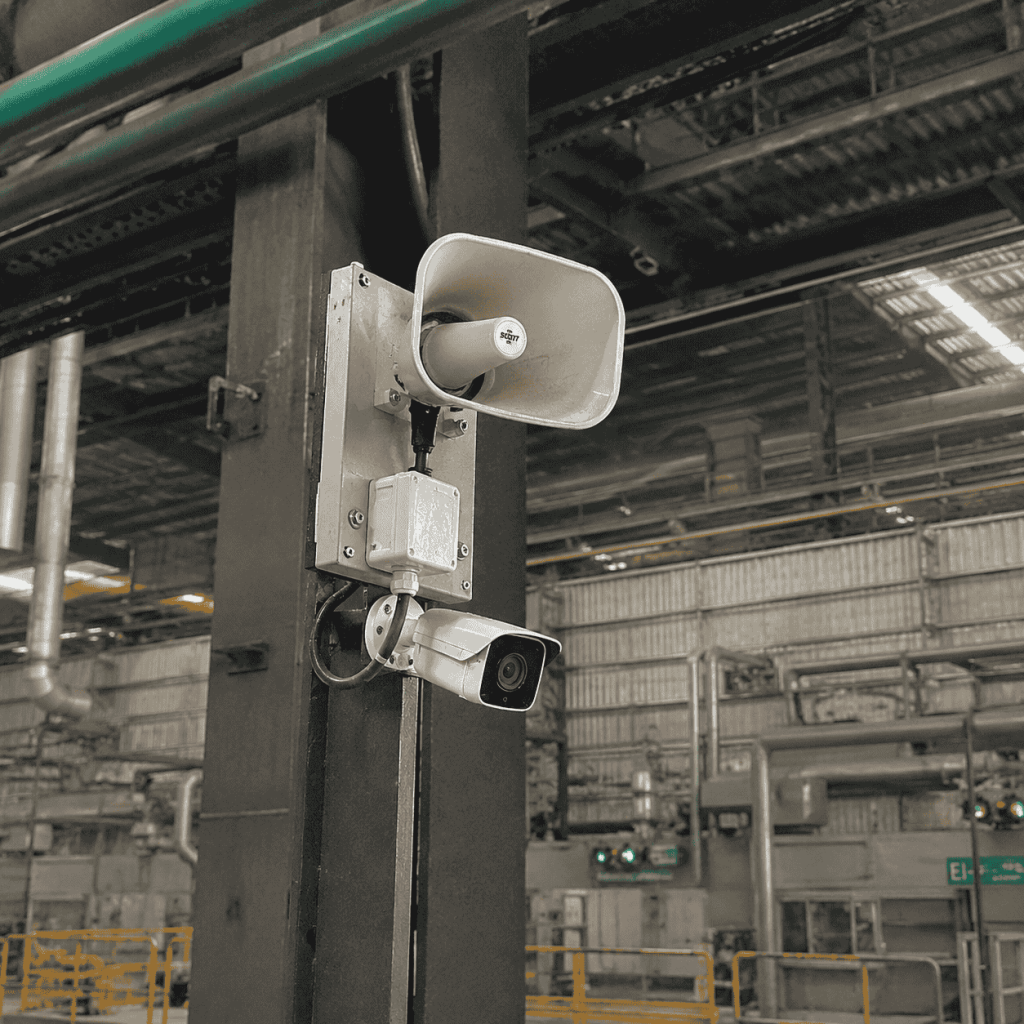
Ripik AI's industrial-grade edge hardware is built for tough industrial environments, processing AI Vision and computer vision models locally to analyze live CCTV feeds with fast, reliable detection despite challenging environmental conditions. It supports continuous monitoring even in low-connectivity environments while reducing bandwidth usage and ensuring secure on-site data processing. This real-time video analytics layer complements existing CCTV infrastructure rather than replacing it. It is also designed to perform reliably in low light.
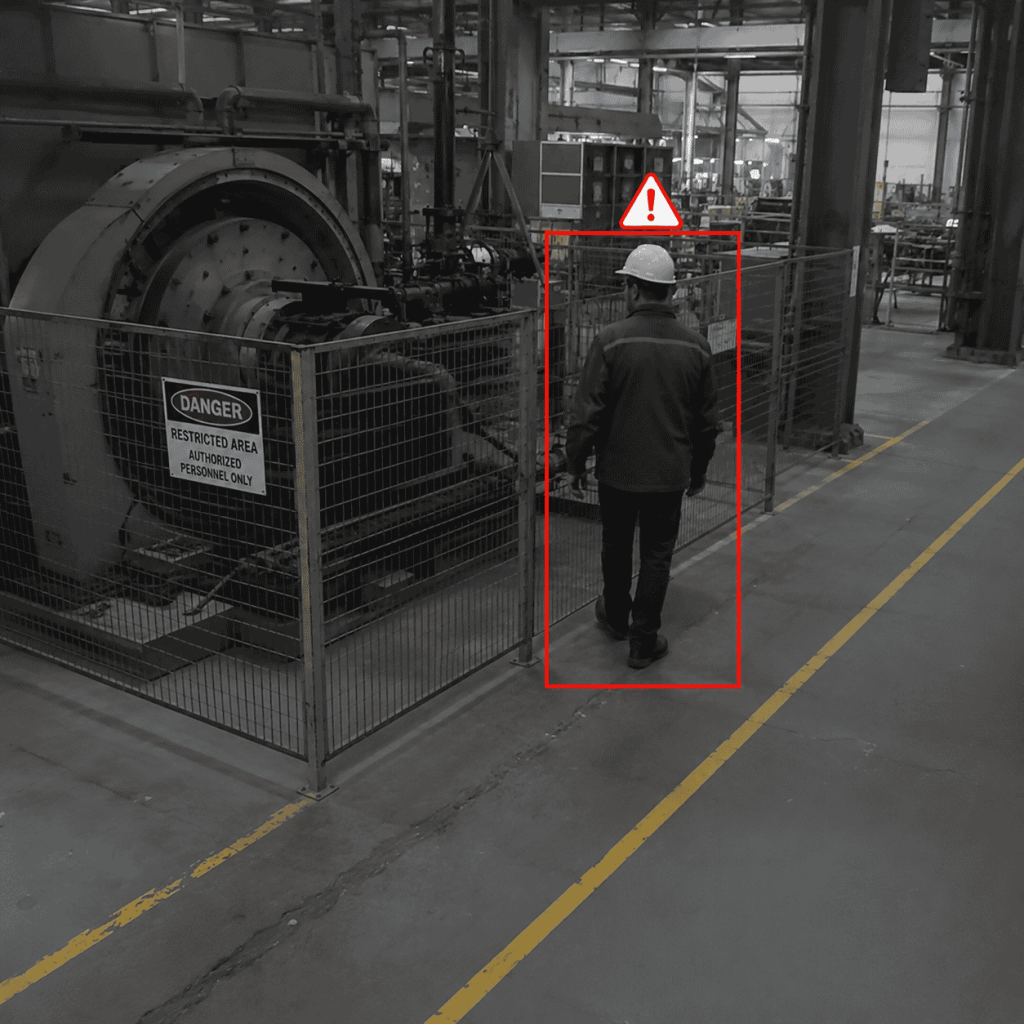
Ripik AI continuously analyzes visual data from existing CCTV cameras to detect unauthorized entry into restricted and hazardous areas in real time, including confined spaces, controlled access zones, and geo-fenced danger zones. AI-powered monitoring enables immediate intrusion detection and hazard detection of safety violations before they become critical incidents, while the hardware maintains reliable performance in low light and other challenging environmental conditions.
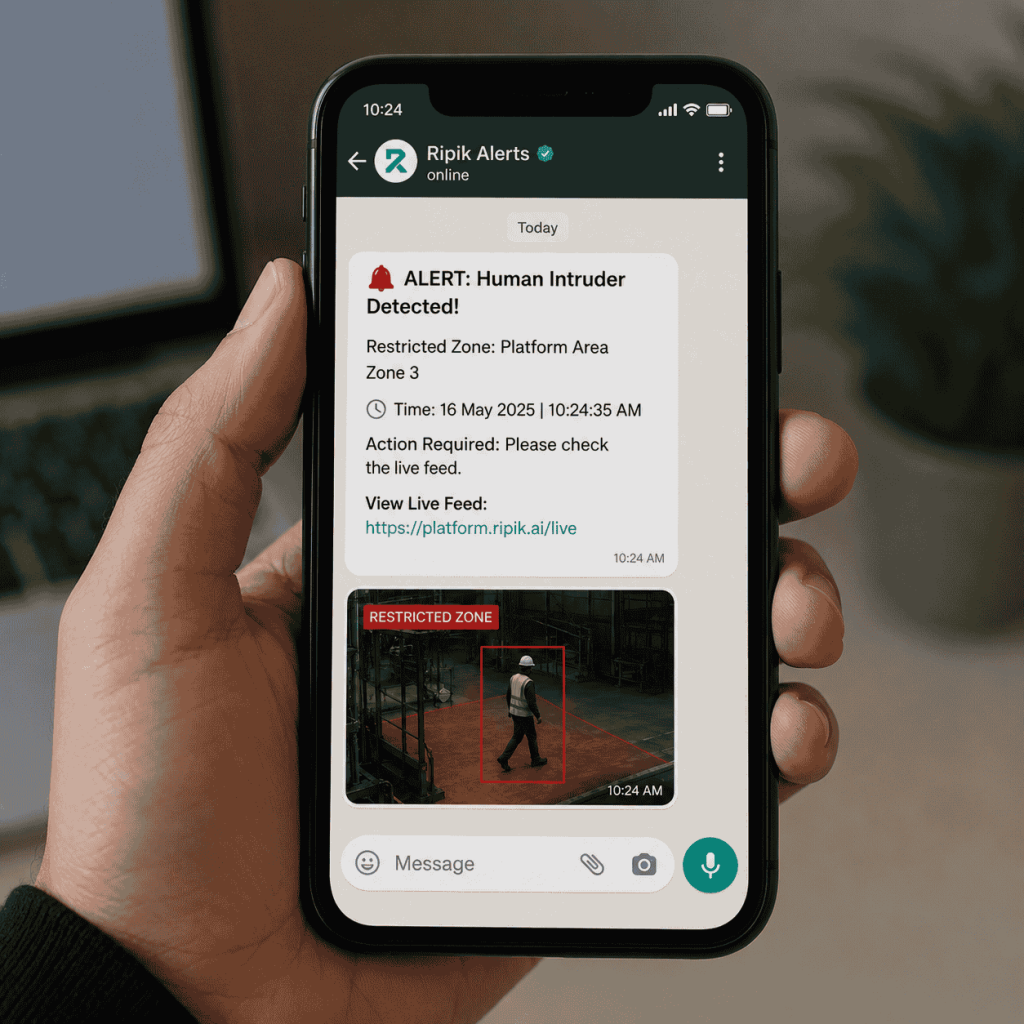
The platform instantly detects unauthorized entry across restricted areas, including controlled access zones, danger zones, and confined spaces, and notifies operators through dashboards, mobile devices, alarms, email, or SMS whenever a restricted zone breach is detected. This real-time capability supports intrusion detection and hazard detection for immediate response before incidents escalate. Intelligent filtering minimizes false alarms and reduces alert fatigue, enabling faster and more effective incident response.
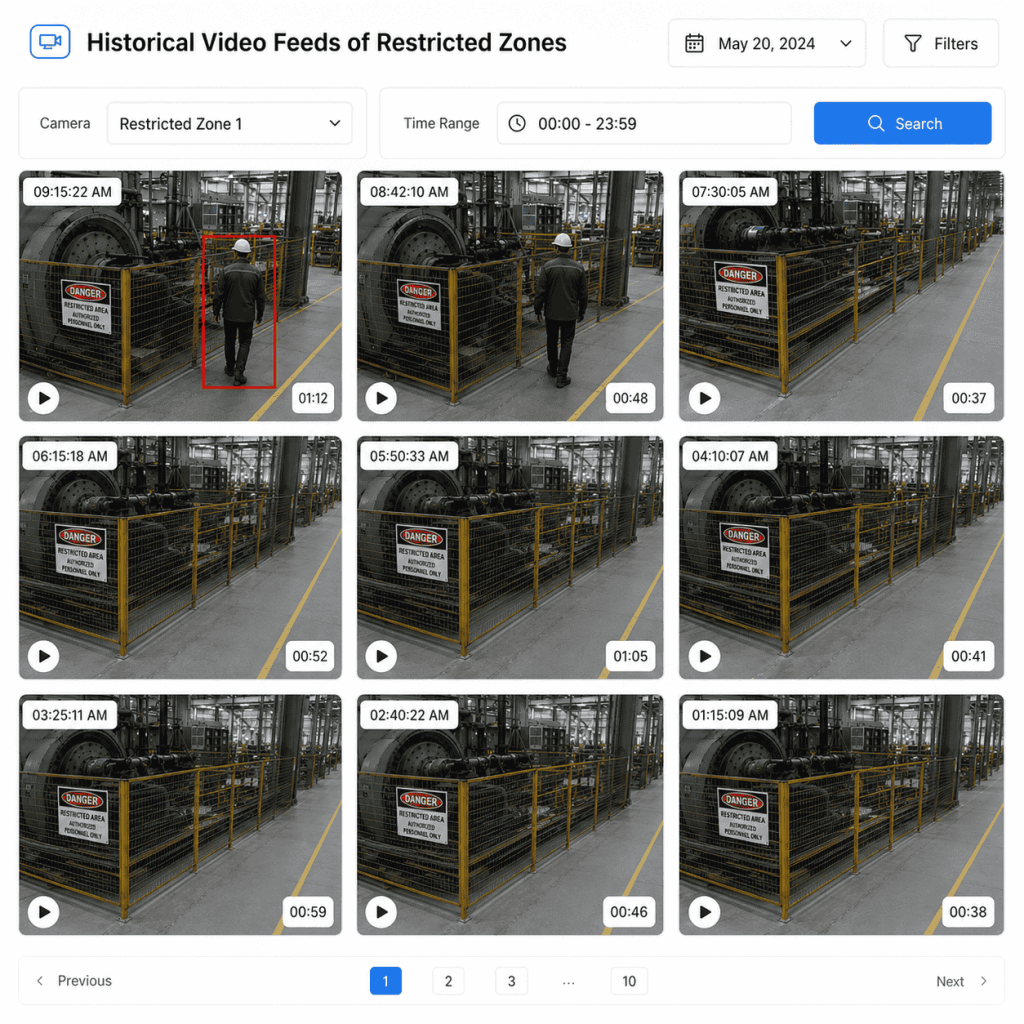
Every safety event is automatically recorded with video clips, snapshots, and timestamps. Historical footage enables quick incident investigation, root cause analysis, compliance verification, and faster notification for immediate response by operators and safety teams, while providing visual evidence for accident liability and legal audits and supporting continuous improvement of workplace safety practices.
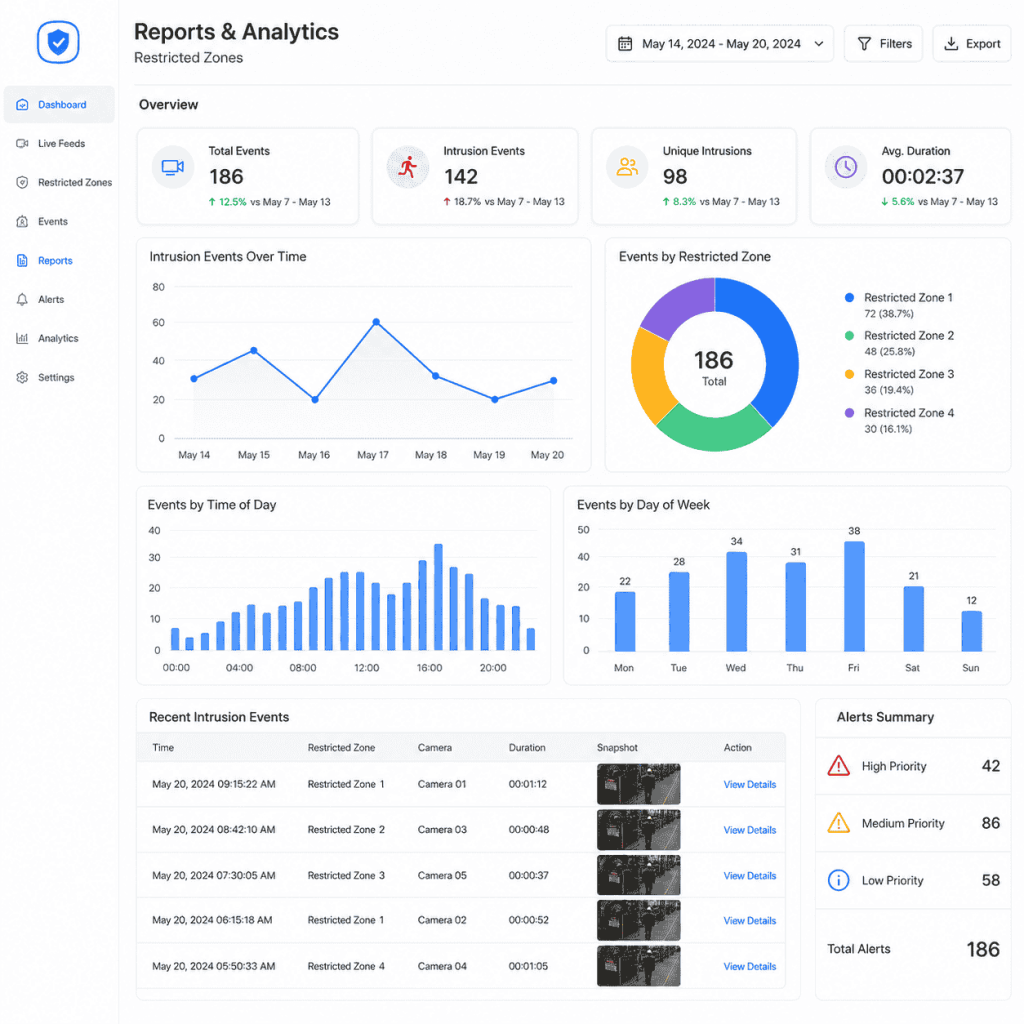
Ripik AI generates audit-ready reports and actionable analytics on restricted zone violations, incident trends, and response times. These insights help organizations improve safety performance, optimize operations, and demonstrate compliance with industrial safety regulations.
Steel plants operate in high-risk environments with blast furnaces, rolling mills, coke ovens, conveyor belts, and molten metal handling areas where unauthorized entry result in severe injuries, equipment damage, and production losses. AI-powered Unauthorized Person Detection continuously monitors these restricted zones and instantly alerts operators when an unauthorized individual enters a hazardous area.
Improves miner safety in hazardous environments.
Reduces accidents involving heavy machinery.
Enables faster emergency response through real-time alerts.
Mining operations involve heavy machinery, crushers, excavation sites, and conveyor systems where unauthorized access poses significant safety risks. AI continuously monitors these hazardous areas to ensure only authorized personnel can enter.
Improves miner safety in hazardous environments.
Reduces accidents involving heavy machinery.
Enables faster emergency response through real-time alerts.
Coal handling facilities include conveyors, crushers, stacker reclaimers, and transfer points where unauthorized entry can result in severe injuries and equipment damage. AI-powered monitoring provides continuous surveillance of these critical areas.
Prevents accidents near moving equipment.
Minimizes equipment damage and operational disruptions.
Improves overall worker safety.
Cement plants have hazardous production areas such as rotary kilns, raw mills, clinker coolers, and conveyor galleries that require strict access control. AI detects unauthorized access in real time to improve plant safety.
Reduces accidents in hazardous production areas.
Protects critical manufacturing equipment.
Improves compliance with industrial safety standards.
Power generation facilities contain high-voltage substations, boilers, turbines, switchyards, and coal yards where unauthorized entry can create serious operational and safety risks. AI ensures continuous monitoring of these restricted zones.
Prevents unauthorized access to critical infrastructure.
Reduces electrical and operational safety risks.
Enables rapid incident response.
Power generation facilities contain high-voltage substations, boilers, turbines, switchyards, and coal yards where unauthorized entry can create serious operational and safety risks. AI ensures continuous monitoring of these restricted zones.
Prevents unauthorized access to critical infrastructure.
Reduces electrical and operational safety risks.
Enables rapid incident response.
Warehouses and logistics centers include loading docks, forklift operating areas, and automated storage systems where unauthorized access can compromise both safety and security. AI helps maintain safe and secure operations.
Improves worker safety around moving vehicles.
Protects valuable inventory and assets.
Enhances warehouse security.
Warehouses and logistics centers include loading docks, forklift operating areas, and automated storage systems where unauthorized access can compromise both safety and security. AI helps maintain safe and secure operations.
Improves worker safety around moving vehicles.
Protects valuable inventory and assets.
Enhances warehouse security.
Implementing an AI-powered Restricted Area Monitoring System has a significant impact on industrial safety, operational efficiency, and regulatory compliance. By continuously monitoring hazardous zones and detecting unauthorized access in real time, organizations can prevent accidents before they occur, minimize operational disruptions, and create a safer working environment.
Reduces Workplace Accidents and Fatalities: Restricted area monitoring prevent workplace accidents. AI plaftforms instantly detects when an unauthorized person enters a hazardous zone, enabling safety teams to take immediate action. This proactive approach helps reduce injuries, fatalities, and near-miss incidents.
Improves Worker Safety: Workers are protected from entering dangerous areas. Real-time alerts encourage safer work practices and strengthen overall workplace safety.
Enables Real-Time Incident Response: AI detects unauthorized entry by continuously monitoring every camera feed and sending immediate alerts when a restricted zone is breached, reducing the need for constant human supervision.
Minimizes Equipment Damage: AI-powered monitoring in unauthorized access helps prevent these incidents near heavy equipment by detecting unsafe entry before equipment is affected.
Reduces Operational Downtime: Accidents in restricted areas often lead to production stoppages, maintenance delays, and costly downtime. Preventing unauthorized access ensures smoother plant operations, improves equipment availability, and supports higher overall productivity.
Strengthens Regulatory Compliance: AI systems automatically record compliance of workplace safety regulations and maintaining controlled access to hazardous areas. The platform records every intrusion with timestamps, snapshots, and video evidence, making compliance audits, incident investigations, and reporting much easier.
Lowers Security Risks: Restricted Area Monitoring not only improves safety but also enhances plant security. It helps detect unauthorized personnel, visitors, or contractors attempting to enter sensitive locations, reducing the risks of theft, sabotage, vandalism, and unauthorized operations.
Reduces Dependence on Manual Surveillance: AI automates surveillance by analyzing live video 24/7 without fatigue, allowing security and EHS teams to focus on responding to alerts instead of continuously watching screens, saving time.
Improves Incident Investigation: Every restricted area violation is automatically documented with video recordings, timestamps, and event logs. This digital evidence simplifies root cause analysis, supports corrective actions, and helps organizations improve future safety strategies.
Delivers Long-Term Cost Savings: AI-powered Restricted Area Monitoring significantly reduces operational costs. Restricted zones monitoring also maximizes the return on existing CCTV infrastructure by transforming standard surveillance cameras into intelligent safety monitoring tools.