


Zero Downtime, High Yield, AI-Driven Vision
Zero Downtime, High Yield, AI-Driven Vision
Every year, industrial fires cause billions of dollars in property damage, production losses, and regulatory penalties. In industrial settings, fire detection monitoring uses computer vision, Vision AI, and real-time video analytics to continuously analyze live camera feeds for smoke, flames, sparks, hotspots, and abnormal thermal activity, so teams can detect hazards earlier and respond before a small event becomes a plant-wide incident. A single unnoticed spark, overheating conveyor, electrical fault, or smoke plume can quickly escalate into equipment damage, operational downtime, environmental impact, and serious risks to worker safety.
In large industrial facilities such as steel plants, cement factories, warehouses, power plants, chemical units, and manufacturing lines, traditional fire detection systems often identify hazards only after smoke or heat reaches a critical threshold, leaving limited time for effective intervention. AI-powered fire detection systems continuously analyze live feeds from RGB cameras, infrared (IR) cameras, and thermal imaging cameras to detect smoke, flames, sparks, hotspots, overheating equipment, and abnormal thermal signatures at the earliest stage. By generating instant alerts with the precise location of the incident, the system enables faster emergency response, reduces false alarms, protects critical assets, minimizes production downtime, and strengthens overall industrial safety.
A fire detection system is a safety solution designed to detect the early signs of a fire, such as smoke, flames, heat, hotspot or sparks and sends alert personnel immediately to take corrective action before the fire spreads. Its primary purpose is to protect people, RHMS, equipment, and facilities by enabling a rapid response and minimizing damage.
Traditional fire detection systems rely on devices such as smoke detectors, heat detectors, flame detectors, and fire alarm panels as core detection devices; smoke detectors are the first line of defense, while a flame detector identifies the specific light spectrum emitted by flames, though in large industrial environments this setup can still delay response. In contrast, AI-powered fire detection systems and modern systems may combine multiple sensors for earlier detection and use wired and wireless networks for monitoring and alerts. By detecting smoke, flames, sparks, overheating equipment, and abnormal thermal patterns at an early stage, these integrated systems enable faster emergency response, reduce false alarms, improve situational awareness, and help industries strengthen workplace safety, fire protection, and business continuity through a broader fire alarm system that can connect with other building systems for enhanced safety.
Industrial fires occur due to a combination of equipment failures, human error, hazardous materials, and unsafe operating conditions. Identifying these risks early is essential to prevent accidents, protect workers, and minimize production losses.
Electrical Faults: Electrical faults such as short circuits, arc flashes, overloaded circuits, insulation failure, cable overheating, transformer faults, switchgear failures, and motor control center (MCC) malfunctions can generate excessive heat or electrical arcs capable of igniting nearby combustible materials.
Overheated Machinery: Continuous operation, inadequate lubrication, excessive friction, bearing wear, shaft misalignment, conveyor belt slippage, and poor preventive maintenance can cause motors, gearboxes, bearings, conveyors, rotary kilns, crushers, pumps, and compressors to overheat, increasing the risk of thermal ignition.
Flammable and Combustible Materials: Improper storage, leakage, or handling of coal, coke, biomass, fuels, solvents, lubricants, compressed gases, LPG, diesel, furnace oil, and chemicals significantly increases the likelihood of fire and explosion.
Hot Work Activities: Activities such as welding, gas cutting, grinding, brazing, soldering, and plasma cutting produce sparks and high-temperature surfaces that can ignite combustible materials if proper hot work permits and safety procedures are not followed.
Dust Accumulation: Industries such as cement, mining, steel, food processing, woodworking, and grain handling generate combustible dust. Dust deposits or suspended dust clouds can ignite from sparks, hot surfaces, or electrostatic discharge, leading to flash fires or dust explosions.
Human Error: Unsafe work practices, inadequate training, non-compliance with Standard Operating Procedures (SOPs), improper equipment operation, and smoking in restricted areas remain major contributors to industrial fire incidents.
Conveyor Belt and Material Handling Hazards: Belt misalignment, seized idlers, overheated rollers, pulley failures, belt slippage, and material spillage can generate localized hotspots, particularly in coal handling plants and bulk material conveying systems.
Equipment Failure: Mechanical failures, lubrication issues, overheating components, excessive vibration, and malfunctioning production equipment can create ignition sources during normal plant operations.
Chemical Reactions: Improper storage or mixing of oxidizers, reactive chemicals, combustible gases, and incompatible substances can cause spontaneous combustion, thermal runaway, or explosions.
Poor Housekeeping: Accumulation of oil spills, combustible waste, dust, packaging materials, and process residues provides fuel for fires and accelerates flame propagation across industrial facilities.
A lack of continuous fire monitoring can leave industrial facilities vulnerable to undetected fire hazards, resulting in safety risks, operational disruptions, and significant financial losses. Traditional fire detection methods often rely on smoke or heat sensors that react only after a fire has developed, making early intervention difficult. Below are the key challenges industries face without an effective fire monitoring system.
Delayed Fire Detection: Without real-time monitoring, smoke, flames, or overheating equipment may remain unnoticed until the fire has already spread. This delay reduces the time available for emergency response and fire containment.
Increased Safety Risks: Undetected fires can put workers at risk of burns, smoke inhalation, and other serious injuries. Delayed alerts also make evacuation and emergency response more challenging.
Equipment and Infrastructure Damage: Fires can quickly damage expensive machinery, electrical systems, production lines, and storage facilities, leading to costly repairs or complete asset replacement.
Unplanned Production Downtime: A fire incident can bring manufacturing operations to a standstill, disrupting production schedules, delaying customer deliveries, and impacting overall business continuity.
High Financial Losses: Industrial fires result in direct costs such as equipment replacement and inventory loss, as well as indirect costs including production delays, insurance claims, regulatory fines, and lost revenue.
False Alarms with Conventional Systems: Traditional fire detection systems may generate false alarms due to dust, steam, welding sparks, or changing environmental conditions, leading to unnecessary shutdowns and reduced operator confidence.
Slow Emergency Response: Without instant alerts and precise location information, emergency teams may take longer to identify and control the source of a fire, increasing the extent of damage.
Difficulty in Identifying Fire Hazards: Without continuous monitoring, early warning signs such as smoke, sparks, or overheating equipment are often missed, preventing preventive maintenance and timely corrective action.
The Ripik AI Platform for Fire Detection Monitoring leverages Vision AI, computer vision, and edge AI to detect smoke, flames, sparks, and other fire hazards in real time. By continuously analyzing live video feeds from CCTV and thermal cameras, the platform enables early fire detection, instant alerts, and centralized monitoring to help industries prevent fire incidents before they escalate. Designed for manufacturing plants, warehouses, power plants, mining sites, and other industrial facilities, Ripik’s platform enhances safety, minimizes downtime, and protects critical assets.
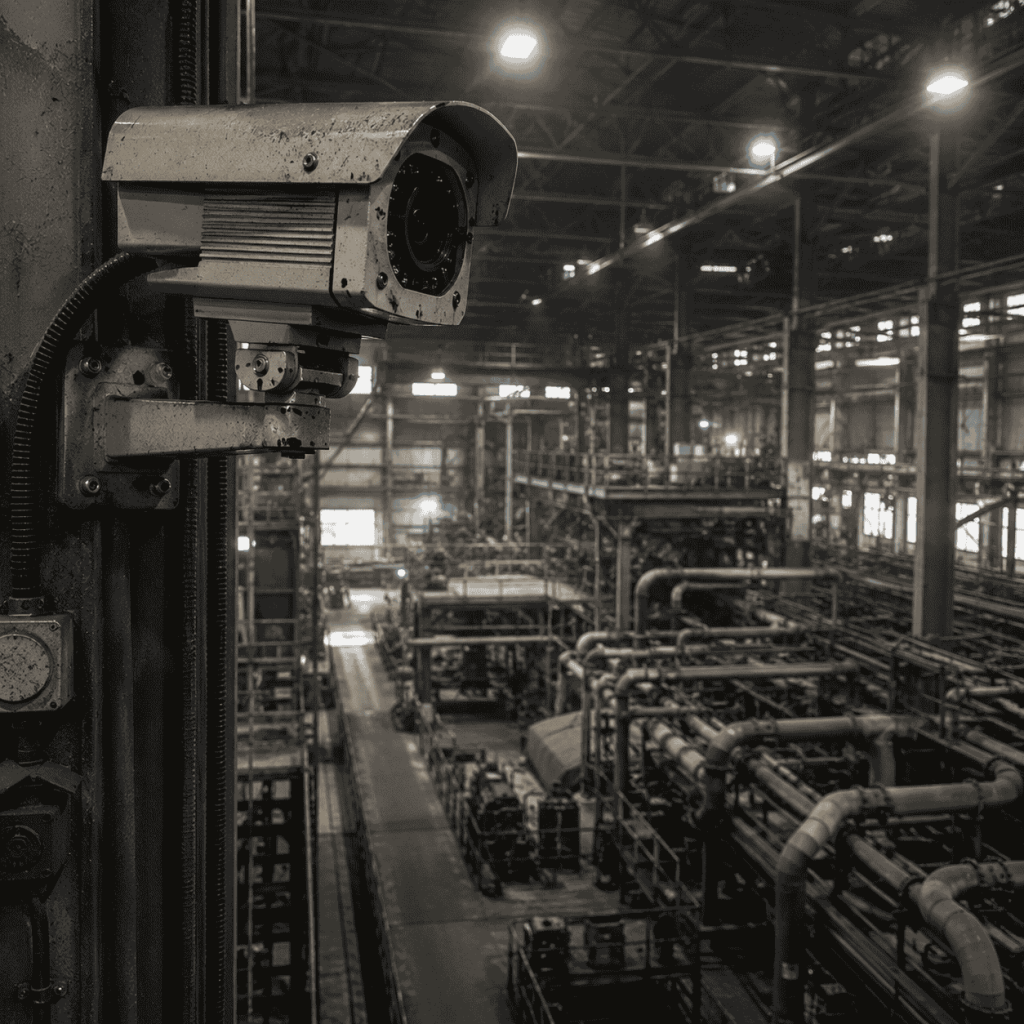
Ripik's platform utilizes industrial-grade RGB cameras, infrared (IR) cameras, and thermal cameras designed for continuous operation in harsh industrial environments. Featuring IP-rated, dust-resistant, self-cleaning (air-purge), and vibration-resistant housings, these cameras deliver reliable fire detection even in high-temperature, dusty, and low-visibility conditions.
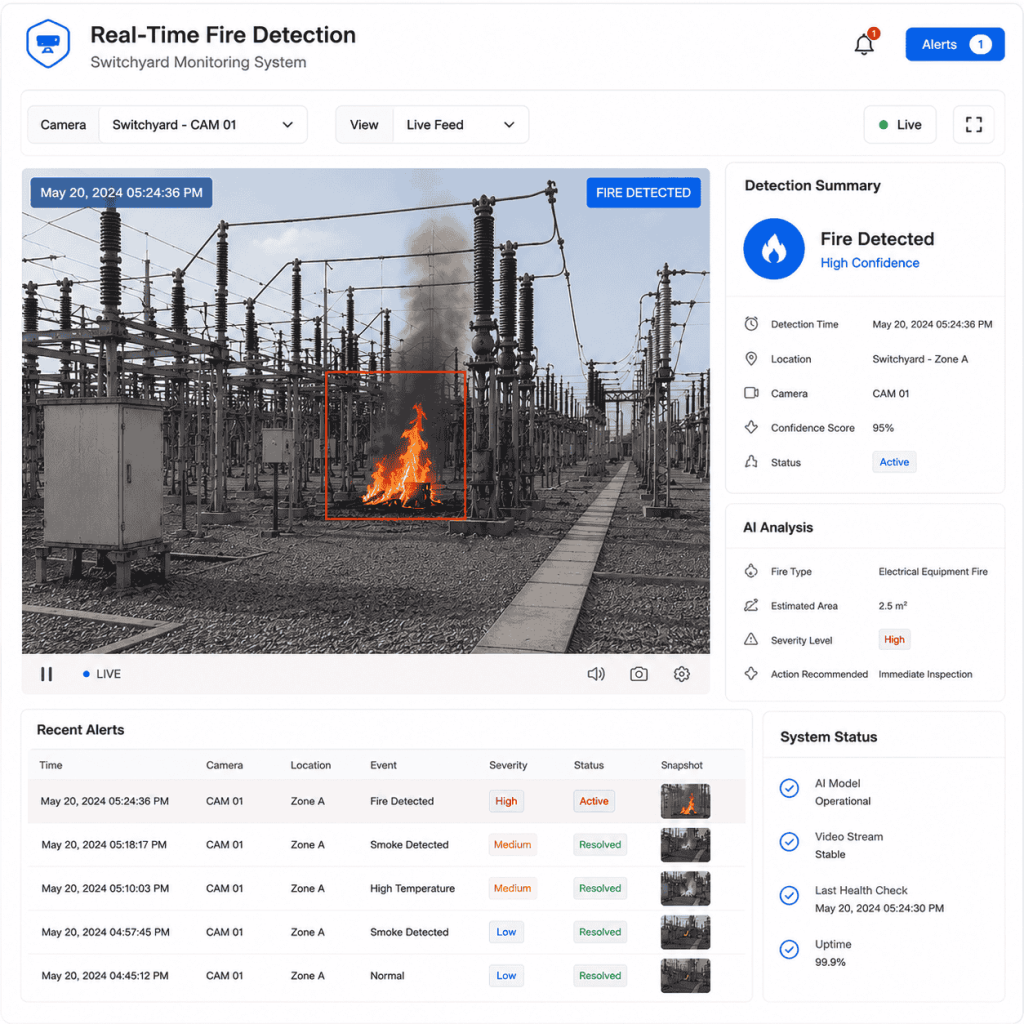
Fire monitoring system continuously inspects critical process areas for smoke emission, open flames, sparks, hotspots, overheating equipment, and abnormal combustion events. It accurately localizes the fire hazard, enabling rapid operator intervention to mitigate fire risks, prevent asset damage, and avoid unplanned production shutdowns.

The industrial fire detection system automatically sends real-time alert to operators, supervisors, and control rooms via the monitoring dashboard, whatsapp, hooter, or integrated alarm systems. These instant notifications enable faster emergency response and reduce the impact of fire incidents.
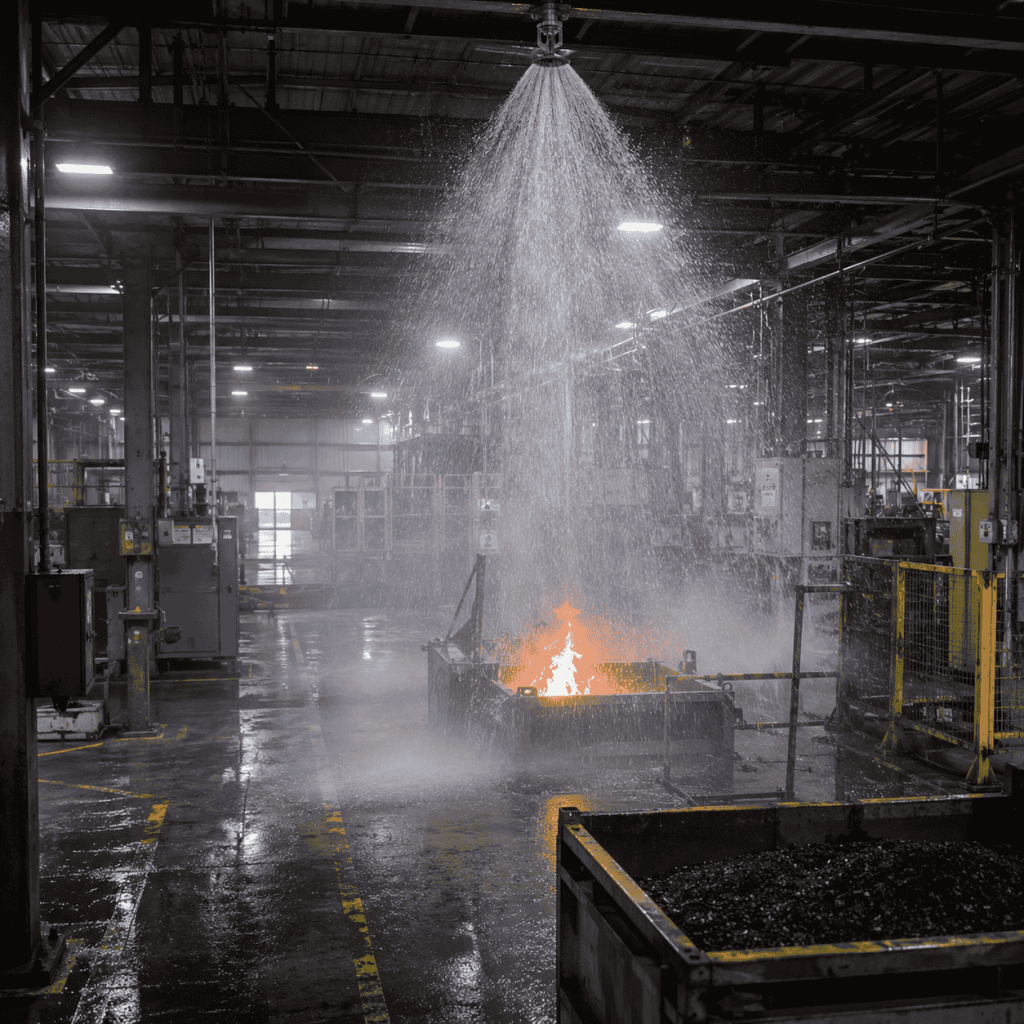
The platform integrates with existing CCTV cameras, PLCs, SCADA, DCS, and fire alarm systems, enabling automated safety actions based on predefined logic. Upon fire detection, it can trigger equipment shutdown, conveyor stoppage, emergency alarms, or fire suppression systems to help contain incidents and minimize operational impact.

Fire detection software, securely stores historical video footage and detected fire events, allowing operators and facility managers to review incidents, track system readiness over time, perform root cause analysis, and investigate safety concerns. It also support regulatory compliance, audits, and continuous improvement of fire prevention strategies, and find fire alarms.
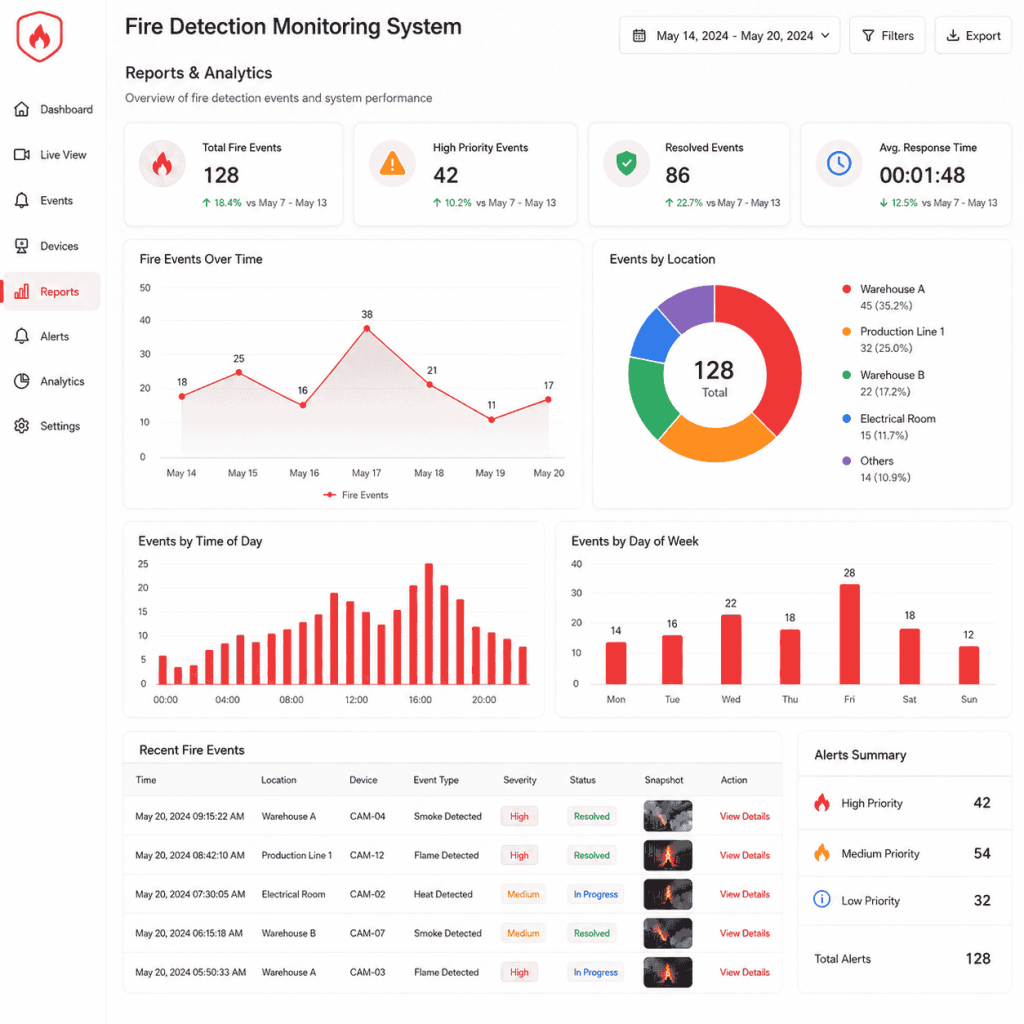
Fire monitoring system provides comprehensive reports and analytics that summarize fire incidents, alert history, response times, and operational trends. These insights help organizations identify recurring fire risks, optimize safety procedures, improve preventive maintenance, and make data-driven decisions to strengthen overall fire safety.
Implementing an AI-powered fire monitoring system as part of a monitored alarm system has a significant impact on industrial operations and can save lives by strengthening both facility protection and life safety. By continuously monitoring facilities for smoke, flames, sparks, and abnormal heat patterns, organizations can detect fire hazards early and take immediate action before they escalate into major incidents.
Early Fire Detection: AI-powered fire monitoring systems identify smoke, flames, and thermal anomalies in real time, enabling faster response and preventing small incidents from becoming large-scale fires.
Reduced Equipment Damage: Early intervention helps protect critical assets such as machinery, electrical panels, conveyors, and production equipment, reducing repair and replacement costs.
Minimized Production Downtime: By detecting fire hazards before they spread, manufacturers can avoid unplanned shutdowns, maintain production schedules, and reduce financial losses.
Enhanced Worker Safety: Instant alerts allow employees and emergency response teams to react quickly, and can also notify designated contacts or response personnel so occupants can be protected sooner, improving evacuation times and reducing the risk of injuries.
Lower False Alarms: AI-based video analytics distinguish genuine fire events from dust, steam, lighting changes, or other environmental factors, minimizing unnecessary disruptions to operations.
Faster Emergency Response: Real-time notifications, live camera feeds, and the exact location of the incident enable emergency teams to respond more effectively and contain fires sooner.
Improved Regulatory Compliance: Fire monitoring systems maintain detailed logs, incident records, and reports that help organizations comply with fire safety regulations, support code compliance, maintain records across the facility, and simplify audits.
Continuous 24/7 Monitoring: Unlike manual inspections, AI platforms provide uninterrupted surveillance of critical areas, ensuring fire hazards are detected at any time of the day or night.
Better Asset and Infrastructure Protection: Continuous monitoring safeguards warehouses, manufacturing plants, raw material storage areas, and high-value equipment, reducing the risk of extensive property damage.
Data-Driven Safety Improvements: Advanced analytics and historical incident reports help identify recurring fire risks, optimize maintenance schedules, and strengthen overall fire prevention strategies.