


Zero Downtime, High Yield, AI-Driven Vision
Zero Downtime, High Yield, AI-Driven Vision

In today's competitive steel manufacturing industry, maximizing the performance of Electric Arc Furnaces (EAFs) is critical for enhancing operational efficiency and reducing costs. The challenges of maintaining consistent quality, optimizing energy consumption, and ensuring safe operations are ever-present. Vision AI technology is transforming how manufacturers address these challenges by providing real-time insights into EAF operations. With the ability to monitor key processes, detect anomalies, and optimize furnace performance, Vision AI empowers manufacturers to make data-driven decisions that lead to improved productivity, cost savings, and enhanced safety.
Primary steelmaking, which involves the blast furnace/basic oxygen furnace (BF/BOF) methods, remains a conventional approach in the industry. However, the increasing adoption of electric furnaces offers a cleaner alternative to traditional methods, contributing to the shift towards low-carbon steel production.
Electric Arc Furnaces play a significant role in producing steel sustainably by focusing on recycling steel scrap and reducing carbon emissions.
Previously, steel production relied on blast furnaces and basic oxygen furnaces (BOFs), which consumed large amounts of iron ore and coke. These processes were highly carbon-intensive, with blast furnaces emitting huge amount of 7% of carbon emission worldwide, contributing significantly to global greenhouse gas emissions. These methods also lacked flexibility in scaling production. This rigidity, combined with resource inefficiency and high operational costs, created the need for more sustainable and adaptable alternatives in steel manufacturing.
Electric Arc Furnaces (EAFs) emerged as a solution to these challenges by offering significant improvements in resource efficiency and lower environmental impact. Today EAFs account for approximately 29% of global crude steel production. Electric Arc Furnace primarily utilize recycled scrap steel, reducing the need for iron ore and coke, which significantly lowers CO2 emissions than traditional methods. EAFs produce carbon dioxide emissions as low as 0.6 tons per ton of steel. Recycling scrap not only conserves natural resources but also reduces carbon emissions, promoting a sustainable approach in the industry. Electric Arc Furnace (EAFs) are more energy-efficient and can be powered by renewable electricity, contributing to a greener production process. Their flexibility allows manufacturers to adjust production quickly, scaling up or down based on market demand, which further reduces waste and enhances operational efficiency. Modern furnaces are engineered to minimize backcharges, reducing dead time during charging cycles and contributing to significant energy savings. This positions Electric Arc Furnace as the future of sustainable steelmaking.
Electric Arc Furnaces (EAF) are at the heart of modern steel production, offering a more sustainable and efficient way to produce steel, especially when compared to traditional methods. Instead of relying on the combustion of coal or coke, EAFs generate intense heat through powerful electric arcs created between large graphite electrodes and the raw materials. This heat is used to melt scrap steel or direct reduced iron (DRI), and in many operations EAFs can melt steel in less than 40 minutes. Injected oxygen can be optimized to burn fuel and provide additional chemical energy during melting.
One of the key advantages of Electric Arc Furnaces is its flexibility. Unlike blast furnace, which require continuous operation, EAFs can be started and stopped as needed, allowing for production to align with demand. This versatility, along with the ability to recycle scrap materials, reduces the environmental impact and carbon emissions associated with steelmaking. Electric Arc Furnaces (EAF) plays a crucial role in modern steelmaking, offering several benefits such as lower CO2 emissions, energy efficiency, and the ability to operate in smaller batches. Electric Arc Furnace (EAF) is a highly efficient and flexible technology for modern steelmaking process.
Steelmaking has evolved over the years, with different methods being developed to meet the growing demands of the industry. Two prominent technologies stand at the forefront of this evolution: the traditional blast furnace and the more modern Electric Arc Furnace (EAF). Both methods have their own set of advantages and challenges, and the choice of which one to use depends on various factors including raw materials, energy costs, and sustainability goals.
Steelmaking with the blast furnace is a traditional method that involves combining iron ore, coke, and limestone to produce molten iron, which is later refined into steel. During the process, coke serves a dual purpose as both a fuel and a reducing agent, extracting oxygen from the iron ore. This method is highly suited for large-scale, continuous production, particularly in regions with abundant raw materials. However, the blast furnace process comes with significant environmental drawbacks. The use of coke, a carbon-intensive fuel, results in high CO2 emissions, contributing to environmental pollution. The process also requires substantial energy to heat and refine the molten iron, further increasing operational costs. These factors make the traditional blast furnace method less sustainable in the context of modern environmental standards and growing energy efficiency concerns.
In contrast to the traditional blast furnace, the Electric Arc Furnace (EAF) primarily uses recycled scrap steel as its feed material, although some iron ore and Direct Reduced Iron (DRI) may be added. Electric Arc Furnaces are powered by electric arcs created between graphite electrodes, generating intense heat to melt the scrap steel and convert it into high-quality steel. Electric Arc Furnace for steelmaking offers greater flexibility than blast furnaces, allowing for easy adjustments to production volumes and steel grades, making it ideal for modern, fluctuating markets.
Electric Arc Furnaces operate with substantially lower CO2 emissions compared to traditional blast furnaces. Approximately 60.9 million tons of steel were produced in the United States in 2021 by recycling using the EAF process to melt steel scrap. By relying on scrap steel, Electric Arc Furnaces reduce the need for iron ore mining, significantly reducing carbon footprint in the steelmaking process. However, EAFs do depend on a consistent supply of high-quality scrap steel, and variability in scrap supply can affect operating consistency through shifts in material chemistry and availability.
Electric Arc Furnaces for steelmaking process provides an efficient and sustainable method of production. However, its success hinges on several key components that work in tandem to optimize performance and enhance operational efficiency.
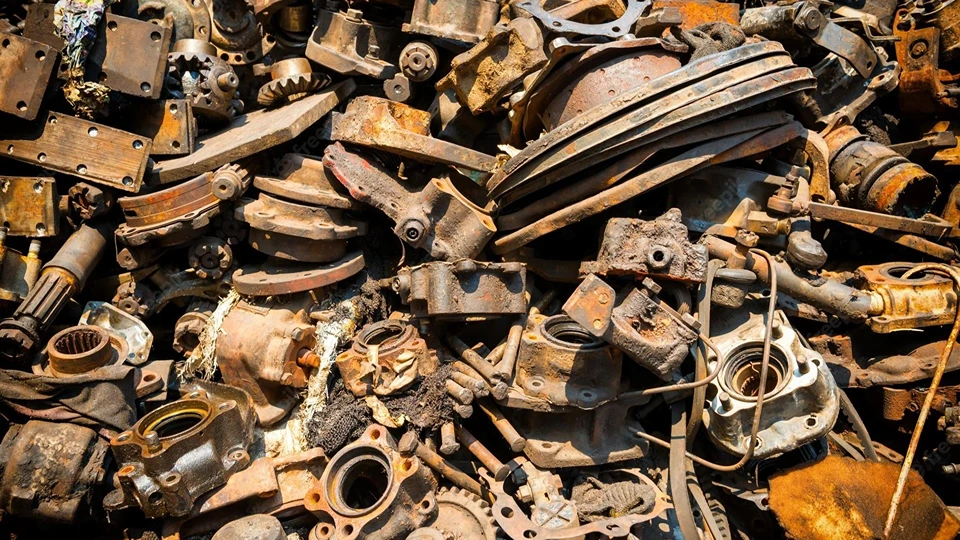
Steel scrap serves as the primary feedstock for electric furnace steelmaking, making up a significant portion of the raw material input. This feedstock is largely based on recycled materials from sources such as old vehicles, appliances, industrial waste, or construction debris. The use of steel scrap in EAFs offers several advantages, including reduced energy consumption and a lower carbon footprint compared to traditional steelmaking methods that rely on virgin materials. High-purity, well-prepared scrap can improve melting efficiency and reduce furnace energy consumption. Electric arc furnace efficiently melt and refine varying grades and types of scrap steel, but scrap sorting matters for controlling residual elements, maintaining consistent steel chemistry, and protecting steel quality. When tighter chemistry control is needed, alloy steels or pig iron may be blended into the charge to achieve target steel compositions while maintaining process stability. Electric arc furnace can efficiently melt and refine varying grades and types of scrap steel, allowing for flexibility in production while contributing to sustainability in the steel industry.
Electrodes are crucial components in electric arc furnace steelmaking, typically made of graphite or a similar conductive material. They generate the electric arc necessary for melting steel by conducting high-voltage electricity, and arc stability is a key operating objective because it directly affects melting consistency and energy transfer. The intensity of the arc produced between the electrodes and the steel scrap creates the extreme heat needed to reach melting temperatures, typically exceeding 1,600 degrees Celsius (2,912 degrees Fahrenheit). The performance and lifespan of electrodes are vital to the efficiency of the EAF, as they must withstand continuous exposure to high temperatures and oxidative environments during the melting process.
The refractory lining is the interior layer of the EAF (electric arc furnace), a refractory lined steelmaking furnace designed to withstand the extreme temperatures and harsh conditions present during steelmaking. Composed of heat-resistant materials, the lining protects the furnace shell from molten metal and EAF slag; typical EAF slag consists primarily of CaO, SiO₂, MgO, MnO, and FeO. Slag formers are added to control slag chemistry, promote refining reactions, and create foamy slag that helps protect refractory linings from excessive heat. It is engineered to maintain thermal insulation and structural integrity, minimizing heat loss and ensuring efficient operation. Over time, the refractory lining can degrade due to thermal cycling and chemical interactions with molten steel, necessitating regular maintenance and replacement to sustain performance and longevity.
Computer vision AI is transforming the steelmaking process in all aspects, revolutionizing the manufacturing industry with the emergence of Industry 4.0. In particular, Electric Arc Furnaces (EAF) with computer vision technology empower manufacturers to gain real-time insights into the furnace's operational parameters.
This capability improves the eaf steelmaking process by enabling more precise control over melting and refining, enhancing electric arc furnaces efficiency and optimizing resource utilization. By integrating real-time monitoring and advanced visual analytics, manufacturers can monitor critical factors such as temperature fluctuations, charge composition, slag formation, and energy consumption, ultimately leading to improved operational performance and reduced costs.
Electric Arc Furnace (EAF) operations are complex and energy-intensive, and in broader electric steelmaking, EAF steelmaking requires precise control to maximize efficiency and product quality. Computer vision technology plays a pivotal role in enhancing EAF processes by providing real-time monitoring and analysis. AI in electric arc furnaces are revolutionizing the steel production by enabling precision monitoring and optimization of every phase of the process. Computer vision systems can detect anomalies, such as refractory wear or unexpected material behavior, allowing for predictive maintenance and reduced downtime while supporting more consistent steel products. Below are some of the computer vision applications in the EAF process.
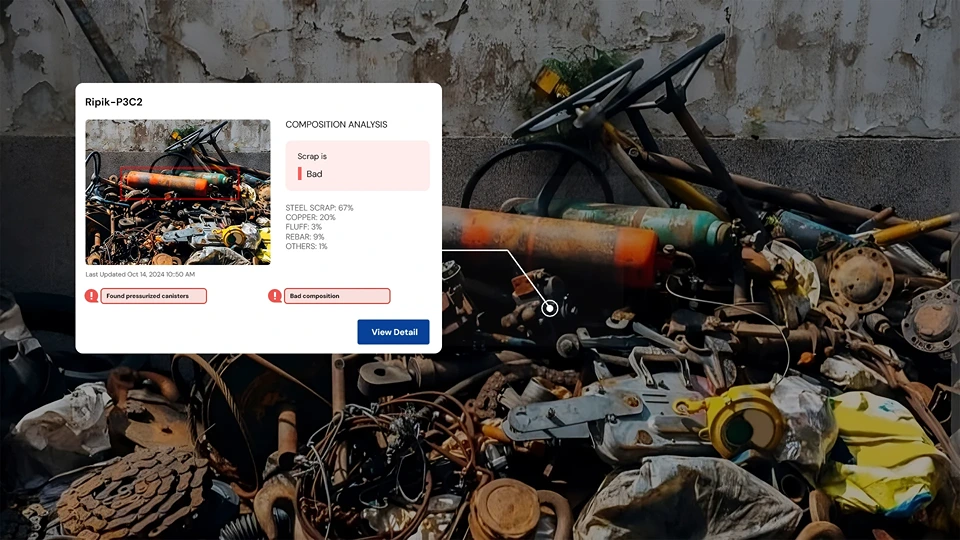
Steel scrap from old vehicles, appliances, industrial waste, and construction debris are recycled to produce new steel, offering a sustainable and cost-effective solution for the steel industry. However, managing this scrap often presents significant challenges that can impact production efficiency and product quality.
One major challenge involves the inconsistent composition of scrap materials. Variations in the types and grades of steel scrap complicate the melting and refining processes, and better scrap sorting helps control residual elements and stabilize steel chemistry. Additionally, the presence of foreign objects in scrap, such as plastic, rubber, or other metals, poses a risk of contamination that can compromise the quality of the final product. Large particle sizes also create operational difficulties, hindering efficient processing and increasing wear on equipment.
To address these challenges, advanced algorithms and real-time Scrap Metal Inspection solutions provide comprehensive support for steel scrap analysis and optimization. The system enables real-time composition analysis, allowing operators to assess the quality of scrap materials as they are processed. This capability ensures that only suitable materials enter the production line.
Furthermore, this solution includes instant detection of foreign objects and large particles, which are crucial for maintaining product integrity and safety. Better sorting also improves steel quality and supports production of EAF steel for more demanding grades. By providing immediate alerts and actionable insights, manufacturers can swiftly respond to issues as they arise, preventing potential disruptions in the production process. Overall, these advanced technologies lead to improved scrap quality, enhanced safety, and increased operational efficiency, enabling manufacturers to reduce costs and contribute to a more sustainable steel production process. Hot briquetted iron can also supplement scrap when a purer metallic charge is needed.
Uneven electrode wear and breakage, often caused by undetected hotspots, leads to frequent downtime, significantly disrupting steelmaking operations and increasing operational costs. Traditional manual monitoring methods are insufficient for addressing these challenges, as they frequently fail to detect early-stage overheating and hotspots in real time. This situation results in safety risks and leads to unplanned maintenance, complicating the production process.
To combat these issues, implementing a Vision AI system integrated with infrared (IR) cameras is essential. This advanced monitoring solution enables continuous detection and analysis of hotspots on electrodes during the steelmaking process. By facilitating real-time monitoring, the system allows for early detection of temperature anomalies, which drastically improves electrode lifespan by reducing wear and the frequency of replacements.
One of the primary benefits of this technology is increased operational efficiency. By minimizing unexpected downtime, manufacturers optimize their steelmaking processes, achieving higher productivity and reduced operational costs. Furthermore, improved monitoring capabilities enhance safety by preventing electrode failures that result in equipment damage or pose hazards to workers. This advancement fosters a safer working environment and promotes a culture of safety within the steelmaking facility.
As the refractory lining of Electric Arc Furnaces (EAF) wears out, the outer part of the furnace becomes exposed to high temperatures. This exposure leads to hot metal leakage and spillage, posing significant risks to safety and operational efficiency. EAF operations also create byproducts such as EAF dust and slag. The U.S. EPA classifies electric arc furnace (EAF) dust as a hazardous waste (K061) due to its potential content of heavy metals such as zinc, lead, and cadmium. EAF slag production is 10-15% of steel produced.
Computer vision systems with infrared (IR) cameras provide crucial warnings to operators of an imminent breakout before it occurs, allowing for timely corrective actions. Vision AI combined with IR cameras plays a vital role in monitoring the refractory lining of the EAF. Operators track the real-time presence of hotspot regions on the EAF refractory and receive alerts for recurring hotspots in specific areas while protecting and monitoring liquid steel, liquid slag, and the metal bath. Material can also be poured to a slag pit where the liquid slag cools into solidified slag for later handling.
Additionally, images captured during the monitoring process are stored, enabling access for postmortem analytics. This capability allows for in-depth analysis of refractory performance over time, facilitating better maintenance strategies and enhancing the overall safety and efficiency of steel production processes.
Maximizing Electric Arc Furnace efficiency through Vision AI presents a transformative opportunity for steel manufacturers, especially across any steel plant or steel mill, including mini mills. By leveraging advanced monitoring, predictive maintenance, and real-time data analysis, EAF operators can enhance efficiency, reduce costs, and maintain high-quality steel production. As the steel industry continues to evolve, embracing innovative technologies like Vision AI will be crucial for staying competitive and sustainable in the future.
EAF technology is increasingly used by steel producers at eaf steelmaking facilities as an alternative to integrated steelworks.
By investing in Vision AI, manufacturers can position themselves at the forefront of a smarter, more efficient steel production landscape, paving the way for a more sustainable future.
Insights and perspectives from Ripik.ai's thought leaders

Vision AI in blast furnace operations enables real-time monitoring to identify visual patterns, detect...

Discover practical strategies to enhance plant operations with AI, boosting efficiency and productivity....

Computer Vision for Manufacturing: Applications and Benefits Introduction Manufacturers today face increasing...
Predictive Maintenance in Manufacturing Industry: A Complete Guide Introduction Predictive maintenance...

Discover how AI in cement manufacturing improves kiln optimization, energy efficiency, predictive maintenance,...

Vision AI unlocks the true value of this existing infrastructure by continuously analyzing live video...
A powerful suite of intelligent agents working in sync to transform manufacturing with speed, precision, and autonomy.