


Zero Downtime, High Yield, AI-Driven Vision
Zero Downtime, High Yield, AI-Driven Vision
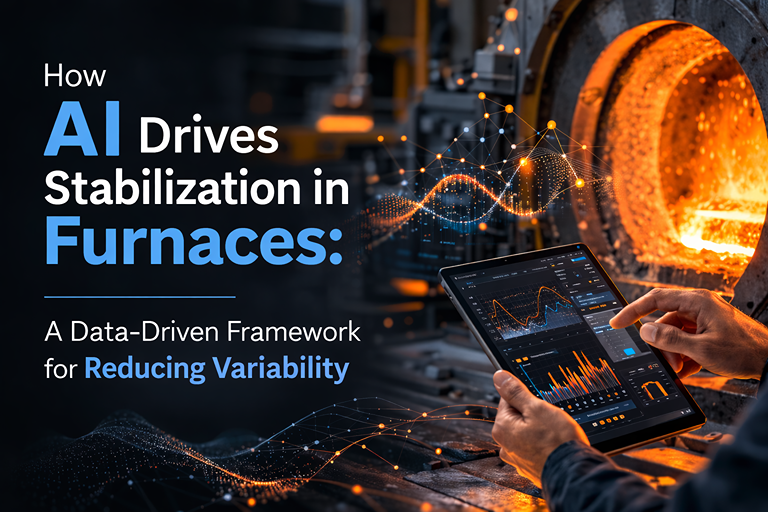
Blast furnaces are the backbone of global steelmaking, yet they remain one of the most difficult industrial processes to control. Temperature fluctuations, inconsistent raw materials, uneven burden distribution, and casting irregularities create compounding variability that erodes productivity, inflates fuel costs, and increases operational risk.
The conventional approach has been to optimize individual process parameters — adjusting oxygen levels, tweaking hot blast temperatures, or fine-tuning PCI rates. But this misses a critical insight that has emerged from large-scale AI deployments across some of the world's largest steel plants:
Analysis across 8 blast furnaces by Ripik.AI reveals that 70% of blast furnace KPI variability is caused by variability in input parameters — not by process control settings themselves. This finding fundamentally reframes the problem: before steel plants can optimize for fuel efficiency or throughput, they must first attack the sources of instability feeding the furnace.
This article breaks down a proven, AI-powered 4-step framework for driving furnace stabilization — from real-time monitoring through closed-loop control — drawing on deployments at 6 of the global top 10 steel companies.
Steel plant operators often jump straight to optimizing parameters like RAFT (Raceway Adiabatic Flame Temperature), gas utilization ratios, or coke rates. While these are important, they are downstream effects. The real drivers of furnace performance sit upstream — in the variability of inputs and operations.
There are typically four sources of variability in any blast furnace:
| Source of Variability | What Varies | Impact on Furnace |
|---|---|---|
| Raw Material Variability | Source-wise differences, physical properties (size, strength, moisture), chemical properties | 70% of BF KPI variability traces back to input parameter inconsistencies |
| Charging Variability | Charging depth (especially beyond ~1.8 m), material quality and volume per charge, charging composition | Unstable burden distribution and erratic descent patterns |
| Casting Variability | HM and slag tapping duration, gap between casts, tap hole length, HM temperature, HM chemical analysis (Si, S) | Temperature swings across tap holes force operators to use higher fuel rates as a safety buffer |
| Process Variability | O₂, hot blast temperature, PCI, K-factor, pressure, RAFT, gas utilization, coke rate, fuel rate | The optimization layer — but only effective after upstream variability is controlled |
When operators see high variation in hot metal temperature (HMT) across a single cast — swinging between 1,480°C and 1,508°C, for example — the natural response is to increase fuel input as a buffer against furnace cooling. This reactive approach is expensive and self-reinforcing. AI-driven stabilization breaks this cycle by addressing root causes, not symptoms. Fluctuating molten metal levels during refining or vacuum degassing led to inconsistent carbon, oxygen, and inclusion levels, resulting in variations in mechanical strength, cleanliness, and surface finish of the final steel product.
Based on deployments across major steel producers — including US Steel, Nucor, ArcelorMittal, Tata Steel, JSW Steel, and others — Ripik.AI has developed a repeatable 4-step framework that systematically eliminates variability in each zone of the blast furnace.
The foundation of AI-driven furnace stabilization is seeing what traditional sensors cannot. Soft sensorization uses computer vision and AI models to create virtual measurement layers across the furnace operation, detecting deviations the moment they occur.
Inadequate slag detection or manual monitoring leads to slag carryover during tapping and Foreign objects on conveyor belts — bricks, metal plates, plastic trays, wooden planks, refractory pieces, cement bags, metal wires, and rock particles — are a common but often invisible source of furnace instability. AI vision agents deployed on conveyor feeds detect and classify these contaminants in real time, triggering immediate alerts before they enter the furnace and disrupt the burden. . When slag enters ladles or tundishes, it introduces impurities and oxides that compromise steel cleanliness and quality. The lack of advanced slag monitoring systems makes it difficult to identify the optimal tapping point, increasing the risk of slag inclusion and product contamination. Preventing such contamination is critical for maintaining consistency across the entire steel making process.
At US Steel's Clairton Works in Mon Valley, Ripik.AI deployed real-time size distribution analytics that track size fractions, variability trends, and historical patterns — providing operators with continuous visibility into raw material quality that was previously sampled only periodically.
Once soft sensorization generates continuous data streams, the next step is identifying the optimal operating windows — the "golden batches" where furnace performance peaks.
AI models correlate soft sensor data with furnace KPIs to pinpoint the exact input parameter ranges that produce the best outcomes. For example, at Nucor, Ripik.AI's analysis of fines content versus power efficiency revealed a clear optimal range:
|
Current Fines Range
2.4% to 10.4%
|
AI-Identified Optimal Range
3% to 7%
|
The insight is nuanced: very low fines reduce packing efficiency and thermal contact, while excessive fines restrict bed permeability and gas flow. The recommended fines range balances heat transfer and permeability, resulting in faster melting, lower power-on time, and reduced energy consumption.
This same approach extends to pellet size distribution, where the AI model tracked daily sizing trends and precisely identified days when larger-sized pellets entered the process — detecting shifts into the 10–20 mm bucket that would otherwise go unnoticed until downstream KPIs degraded.
With the operating sweet spots defined, ML models then serve as an early warning system — predicting deviations before they manifest in output KPIs and recommending standard operating procedure (SOP) adjustments.
ML-based models identify the thermal profile of the furnace and determine the golden recipe for the Peripheral Working Index (PWI) and stave temperature. Based on the combination of hot metal temperature and PWI, the system generates specific burden distribution recommendations:
| PWI High | PWI In Range | PWI Low | |
|---|---|---|---|
| HM Temp High | Reduce Coke Rate in steps of 2Kg/THM | Reduce PCI in steps of 5Kg/THM | Reduce PCI in steps of 5Kg/THM |
| HM Temp In Range | Change Burden Distribution | Optimized Functioning | Change Burden Distribution |
| HM Temp Low | Increase PCI in steps of 5Kg/THM | Increase PCI in steps of 5Kg/THM | Increase Coke Rate in steps of 2Kg/THM |
Casting variability control focuses on two dimensions of hot metal temperature stability:
The business impact is direct: when hot metal temperature variation across a cast narrows from a 28°C swing (1,480–1,508°C) to a 5°C band (1,500–1,505°C), operators gain the confidence to reduce fuel rate sustainably rather than maintaining expensive thermal buffers. Similarly, lower variation across different tap holes directly enables fuel rate reduction.
The final step moves from advisory to autonomous. Prescriptive alerting and closed-loop control integrate AI recommendations directly into the furnace control system, replacing traditional PID-based control with adaptive, multi-variable AI optimization.
Traditional PID controllers optimize one variable at a time. An AI-based Advanced Process Control (APC) engine processes all input values simultaneously — blast furnace design parameters, process parameters, operation parameters, raw material chemistry, gaseous analysis, production KPIs, and fuel rate constituents — with their current values, lags, and deltas.
This enables continuous monitoring of all factors affecting furnace permeability, driving faster preventive and corrective action that results in better overall BF permeability and stability.
The closed-loop system includes a Blast Furnace Stability Indicator that provides at-a-glance dashboards showing:
The combined impact of the 4-step framework, when deployed end-to-end, delivers transformational results:
| Focus Area | Variability Reduction | Annual Value | Key KPI |
|---|---|---|---|
| Casting | 150–200 t/day reduction | ₹40–50 Cr | TH1–TH2 Δ < 3 min |
| Charging | 200–250 t/day | ₹80–100 Cr | Stockline σ < 0.2 m |
| Raw Materials | 100–150 t/day | ₹70–80 Cr | RM Stress Index < 0.25 |
| Process | 50–100 t/day (fine-tuning) | ₹100 Cr | PCI > 220, Coke Rate < 340 |
| Total Impact | HM SD ↓ to ~200 t/day | ₹300+ Cr/year | Stable operation |
The headline metrics are compelling:
Each phase of the framework is executed in 3-month sprints with a structured workplan:
This sprint-based approach ensures measurable value at each phase closure, with the operations team actively involved in model tuning and validation throughout.
Vision AI agents serve as the sensing backbone of the entire stabilization framework. Unlike traditional sensor arrays that measure discrete points, vision AI provides continuous spatial monitoring across the furnace operation. Deployed use cases include:
These vision AI agents deliver a minimum ROI of 1:5 — meaning for every unit invested, five units of value are generated through reduced variability, eliminated unplanned outages, and improved process consistency. In one deployment at Hindustan Zinc, the system reduced total production losses by nearly 20% through the complete elimination of unplanned outages.
The steel industry is at an inflection point. With BF-BOF routes still accounting for roughly 71% of global output and increasing pressure on emissions, fuel efficiency, and productivity, the companies that achieve operational stability through AI will have a structural cost advantage.
AI in manufacturing does not only save cost — it eliminates human error. And eliminating human error in a blast furnace, where the process runs 24/7 at extreme temperatures with hundreds of interacting variables, leads to millions of dollars in annual savings.
The north star is to build dark factories for process manufacturing — where AI agents continuously monitor, predict, and control every variable, and human operators focus on exception management and strategic decisions rather than reactive firefighting.
The market leader in steel and cement tomorrow will be the company that has access to the better AI software.
AI-driven furnace stabilization is the use of machine learning, computer vision, and advanced analytics to systematically reduce variability in blast furnace operations. Rather than optimizing individual parameters in isolation, it addresses the four root sources of variability — raw materials, charging, casting, and process control — through a layered approach of soft sensorization, golden batch analytics, early warning models, and closed-loop control.
Deployments at major steel producers have demonstrated a ~70% reduction in hot metal standard deviation (from ~600–700 t/day to less than or equal to 200 t/day), a ~10% coke rate reduction, a ~20% PCI increase, and ~13% productivity improvement. The combined financial impact can exceed ₹300 Cr/year for a single large blast furnace.
Stabilization focuses on reducing variability and achieving consistent, predictable operations. Optimization focuses on pushing performance metrics like fuel rate or throughput to their best values. Stabilization must come first because optimization gains are unsustainable when the underlying process is unstable. Analysis across 8 blast furnaces shows that 70% of KPI variability originates from input parameters, not process settings.
Each phase of AI-driven stabilization is executed in a 3-month sprint covering data integration, baseline assessment, root cause analysis, AI model building, dashboard creation, and pilot deployment. Most blast furnaces already collect 4,000+ data points continuously, so the primary work involves building the analytical layer on top of existing data infrastructure.
Vision AI agents deliver a minimum ROI of 1:5. When combined with the full stabilization framework including ML-based early warning, golden batch analytics, and closed-loop control, the annualized value from a single large blast furnace can exceed ₹300 Cr/year through fuel savings, higher throughput, and reduced operational risk.
Ripik.AI works with 6 of the global top 10 steel companies. Get a free variability assessment for your blast furnace.
Insights and perspectives from Ripik.ai's thought leaders
Vision AI in blast furnace operations enables real-time monitoring to identify visual patterns, detect...
Discover practical strategies to enhance plant operations with AI, boosting efficiency and productivity....

Computer Vision for Manufacturing: Applications and Benefits Introduction Manufacturers today face increasing...
Predictive Maintenance in Manufacturing Industry: A Complete Guide Introduction Predictive maintenance...
Discover how AI in cement manufacturing improves kiln optimization, energy efficiency, predictive maintenance,...
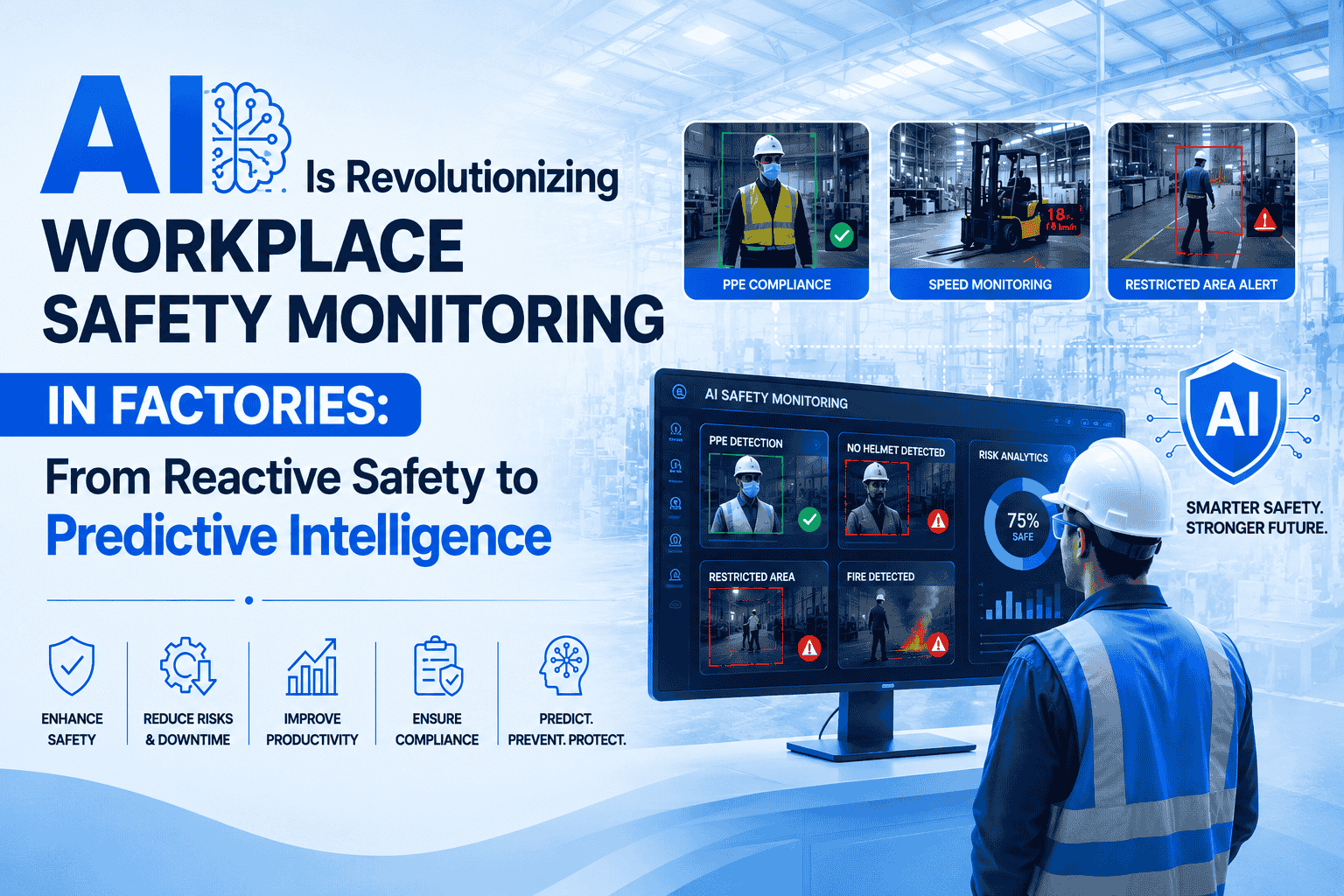
Vision AI unlocks the true value of this existing infrastructure by continuously analyzing live video...
A powerful suite of intelligent agents working in sync to transform manufacturing with speed, precision, and autonomy.