


Zero Downtime, High Yield, AI-Driven Vision
Zero Downtime, High Yield, AI-Driven Vision
The cement industry is under increasing pressure to produce more while consuming less energy, lowering operating costs, and meeting stricter environmental regulations. Yet many cement plants continue to struggle with fluctuating raw material quality, unstable kiln operations, high fuel consumption, unplanned equipment downtime, and manual process monitoring. These inefficiencies reduce productivity and increase carbon emissions in an industry responsible for nearly 7–8% of global CO₂ emissions. At the same time, energy remains one of the largest production costs, accounting for approximately 30–40% of total manufacturing expenses,making operational optimization a top priority for cement manufacturers.
AI in cement manufacturing addresses these problems directly through real-time process optimization, predictive maintenance, computer vision-based monitoring, and intelligent energy management. For operations managers, plant engineers, heads of manufacturing, and digital transformation leads in medium and large cement companies, it offers a practical path to stabilize kiln operations, improve raw material and grinding control, reduce downtime, manage alternative fuels more effectively, and support closed-loop control across the plant. This article examines where AI delivers value in cement production—from raw material monitoring and kiln stability to grinding efficiency, energy consumption, maintenance, and vision-based process monitoring—and how these systems help plants improve efficiency, product quality, operating resilience, and CO₂ performance.
Artificial Intelligence in cement manufacturing move beyond traditional automation by turning cement plant data into real-time operational insights. Unlike conventional control systems that follow fixed rules, AI continuously learns from data collected through DCS, SCADA, IoT sensors, and industrial cameras to predict process changes and recommend the best operating conditions. This allows cement plants to make faster, data-driven decisions instead of reacting after problems occur.
At a plant level, AI optimizes interconnected processes rather than individual equipment. It helps stabilize kiln operations, reduce fuel consumption, improve grinding efficiency, predict equipment failures, maintain consistent clinker quality, and enhance efficiency across connected processes. Compared to rule-based control, which follows predefined if-then logic, AI analyzes multiple process variables simultaneously and identifies the most efficient operating strategy. The result is higher productivity, lower operating costs, improved energy efficiency, and more reliable cement manufacturing.
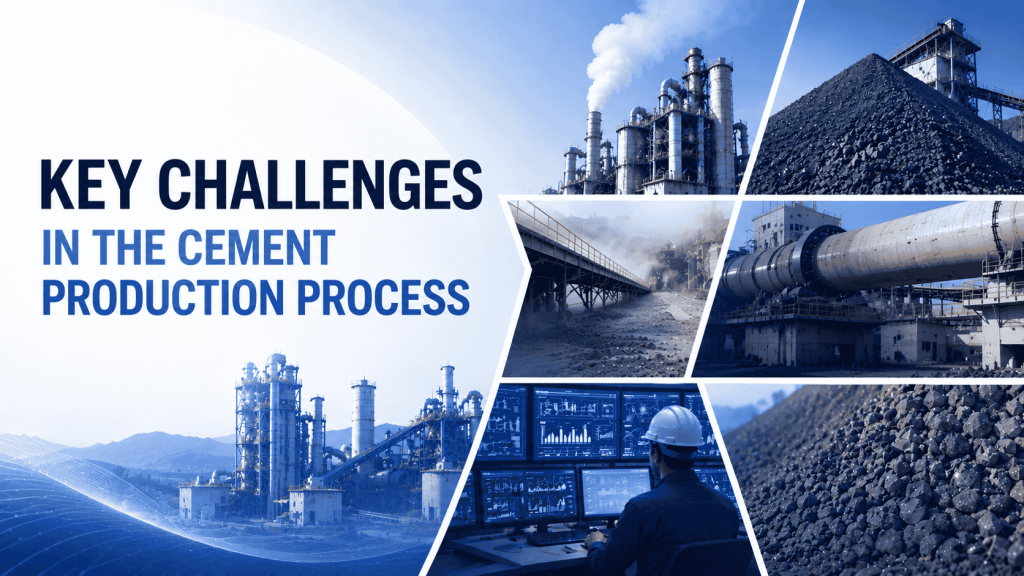
Cement manufacturing is a tightly integrated process where the performance of one unit directly impacts the next. Variations in raw material quality, kiln conditions, grinding efficiency, and fuel characteristics can quickly cascade across the plant, affecting clinker quality, energy consumption, equipment reliability, and production throughput. While Distributed Control Systems (DCS) automate many operations, they often struggle to respond to the dynamic conditions of a modern cement plant. As a result, operators still face several critical challenges that directly impact plant performance and create multiple optimization opportunities across the plant.
Some of the most common operational challenges include:
Maintaining a consistent raw meal is one of the biggest challenges in cement manufacturing process, and variability often begins in raw meal preparation. Variations in limestone grade, moisture content, particle size distribution, and quarry blending affect LSF, SM, and AM, leading to unstable kiln feed, inconsistent clinker formation, and frequent process corrections. Since laboratory analysis often lags behind real-time production, operators are forced to make decisions with incomplete information.
The kiln is the heart of the cement manufacturing process, and maintaining its stability is critical for efficient clinker production. Changes in kiln feed chemistry, coal fineness, alternative fuel quality, burner flame characteristics, draft, and secondary air temperature can destabilize the burning zone, resulting in higher free lime, ring formation, refractory wear, coating instability, and increased specific heat consumption.
Energy remains one of the largest operating costs in cement manufacturing. Operators must continuously balance fuel consumption in the pyroprocess while minimizing electrical consumption in raw mills, cement mills, and auxiliary equipment is a constant challenge. Even small process inefficiencies can significantly increase the specific energy consumption per ton of cement and reduce overall plant profitability.
Grinding accounts for a major share of a cement plant's electrical energy consumption. Variations in clinker hardness, feed moisture, mill loading, circulating load, and separator efficiency make it difficult to consistently achieve the target Blaine fineness while maximizing mill throughput and minimizing power consumption.
Unexpected failures in crushers, conveyors, mills, fans, bucket elevators, and other critical equipment can disrupt the entire production line. Conveyor belt misalignment, oversized rocks, foreign object intrusion, excessive material moisture, and equipment wear often go undetected until they result in costly shutdowns and maintenance activities.
For reducing energy consumption, cement manufacturers are increasing the use of Alternative Fuels and Raw Materials (AFR) and supplementary cementitious materials (SCMs). However, variations in fuel moisture, calorific value, particle size, and feed rates can affect combustion stability, clinker formation, and emissions. Balancing sustainability goals with stable kiln operation has become one of the most complex challenges in modern cement manufacturing.
Despite extensive instrumentation, many critical process conditions—including raw material quality, conveyor health, material moisture, refractory condition, and fire hazards—are still monitored through manual inspections or periodic sampling. The lack of continuous visibility delays corrective actions, increases operational risks, and limits opportunities for proactive process optimization.
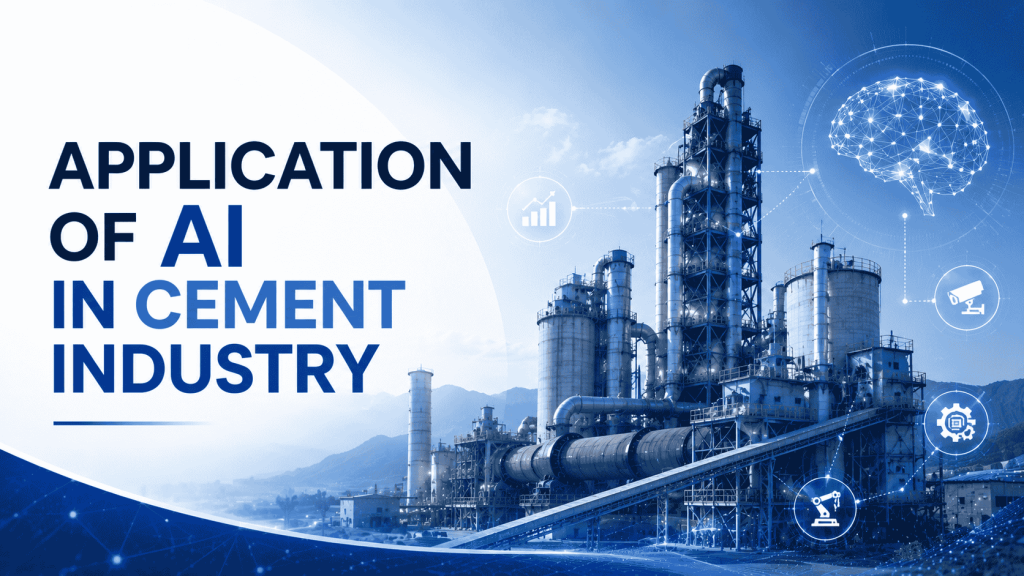
Artificial Intelligence in cement manufacturing by moving cement plants from reactive operations to predictive and autonomous decision-making. Instead of relying solely on operator experience, AI in Cement Industry continuously analyzes process data, machine conditions, and visual information from cameras to identify process deviations, predict equipment failures, improve overall efficiency across plant operations, and optimize plant performance in real time. The result is lower energy consumption, higher clinker quality, reduced downtime, and improved overall equipment effectiveness (OEE). Modern AI platforms combine machine learning, computer vision, predictive analytics, and edge computing to optimize every stage of the cement manufacturing process.
AI Platforms optimizes cement raw material preparation by real-time analyzing the quality and characteristics of incoming materials, including limestone, clay, and other additives. It monitors parameters such as particle size, moisture content, material composition, and blending ratios in real time to ensure a consistent raw meal. AI also detects oversized rocks, foreign objects, and material inconsistencies before they impact downstream processes. By optimizing raw material blending and feed consistency, AI improves kiln stability, enhances clinker quality, reduces energy consumption, and minimizes production variability.
AI Platforms in cement production optimizes cement kiln operations by continuously monitoring the rotary kiln as the core unit, along with critical parameters such as flame shape, burner performance, kiln temperature, feed chemistry, draft, and combustion conditions. AI also tracks various process parameters together to maintain stable combustion and control variability. It detects process deviations in real time, predicts kiln instability, and provides actionable recommendations to maintain a stable burning zone. This helps reduce fuel consumption, improve clinker quality, ensuring consistent product quality, minimize process variations, extend refractory life, lower emissions, improve thermal efficiency, and support optimal performance while maximizing kiln throughput and overall operational efficiency.
AI optimizes the cement grinding process by continuously monitoring mill performance, separator efficiency, clinker characteristics, feed rate, and product fineness in real time. It identifies process inefficiencies, recommends optimal operating parameters, and helps maintain the target Blaine fineness while maximizing mill throughput. By optimizing grinding conditions, AI reduces specific power consumption, improves cement quality consistency, minimizes over-grinding, and enhances overall mill efficiency.
AI minimizes unplanned equipment downtime by continuously monitoring the health and performance of critical assets such as conveyors, crushers, mills, fans, and bucket elevators. Using computer vision and real-time analytics, it detects anomalies such as conveyor belt misalignment, material spillage, oversized rocks, foreign object intrusion, fire and smoke, and equipment wear before they lead to failures. By providing early alerts and actionable insights, AI enables predictive maintenance, reduces unexpected breakdowns, improves equipment reliability, and maximizes plant availability.
Alternative Fuels and Raw Materials (AFR) are sustainable substitutes for conventional fossil fuels and raw materials used in cement manufacturing, including biomass, refuse-derived fuel (RDF), industrial waste, and used tires. AI platforms enable Alternative Fuel Optimization utilization by continuously analyzing fuel properties such as moisture content, particle size, composition, and calorific value, along with real-time kiln combustion conditions. Based on these insights, it recommends optimal fuel blending and feed rates, ensuring efficient combustion, stable kiln operation, and consistent heat generation. This enables cement manufacturers to maximize AFR utilization, improve fuel efficiency, reduce dependence on conventional fuels, lower carbon emissions, and achieve more sustainable cement production.
Cement AI technology enables intelligent energy consumption management by continuously monitoring thermal and electrical energy usage across the cement plant. This tighter energy control also helps reduce greenhouse gas emissions and the overall environmental impact of production. It analyzes data from kilns, mills, fans, compressors, and other energy-intensive equipment to identify inefficiencies, optimize operating parameters, and recommend actions that reduce unnecessary energy consumption. By balancing energy usage with production demand, AI helps improve fuel efficiency, reduce power consumption, lower operating costs, and cut the plant's carbon footprint while supporting regulatory requirements and achieving sustainability goals without compromising cement quality.
AI-driven cement plant optimization relies on data from DCS/SCADA systems, IoT sensors, and industrial cameras. Deep learning models analyze both time-series data, such as kiln temperature, fuel consumption, mill load, and process parameters, and visual data, including flame images, material flow, and conveyor conditions, to identify patterns, predict process deviations, and recommend optimal operating parameters in real time.
These insights enable closed-loop control, where AI not only detects process changes but also continuously adjusts operating parameters within predefined safety limits. By integrating with the plant's Distributed Control System (DCS), AI can automatically optimize variables such as fuel feed, kiln temperature, mill operation, and airflow based on real-time process conditions. This continuous feedback loop helps maintain stable operations, reduce energy consumption, improve clinker quality, and maximize production efficiency by reducing routine human intervention while keeping operators in supervisory control. It also reduces reliance on human operators for continuous manual monitoring and analysis while ensuring full oversight.
Modern AI platforms integrate seamlessly with existing DCS, SCADA, PLCs, and industrial IoT systems without replacing the plant's automation infrastructure. AI analyzes real-time operational data, identifies process deviations, and provides optimization recommendations or closed-loop control actions within predefined safety limits, enabling smarter process control while preserving operator oversight.
AI delivers the highest impact in energy-intensive and process-critical operations, including raw material handling, kiln optimization, cement grinding, Alternative Fuel (AFR) management, conveyor monitoring, predictive maintenance, and quality control. These applications help improve process stability, increase throughput, reduce energy consumption, and minimize unplanned downtime.
Computer Vision uses industrial cameras to continuously monitor critical operations that are difficult to inspect manually. It can detect flame instability, conveyor belt misalignment, oversized rocks, foreign objects, material spillage, stockpile levels, fire, smoke, and refractory hotspots, enabling faster response times and safer, more efficient plant operations.
AI continuously analyzes thermal and electrical energy consumption across kilns, mills, fans, and other major equipment to identify operational inefficiencies, uncover performance gaps in major equipment, and highlight plant-wide optimization opportunities in energy use. This enables cement manufacturers to reduce specific energy consumption, improve fuel efficiency, and lower operating costs while maintaining production targets.
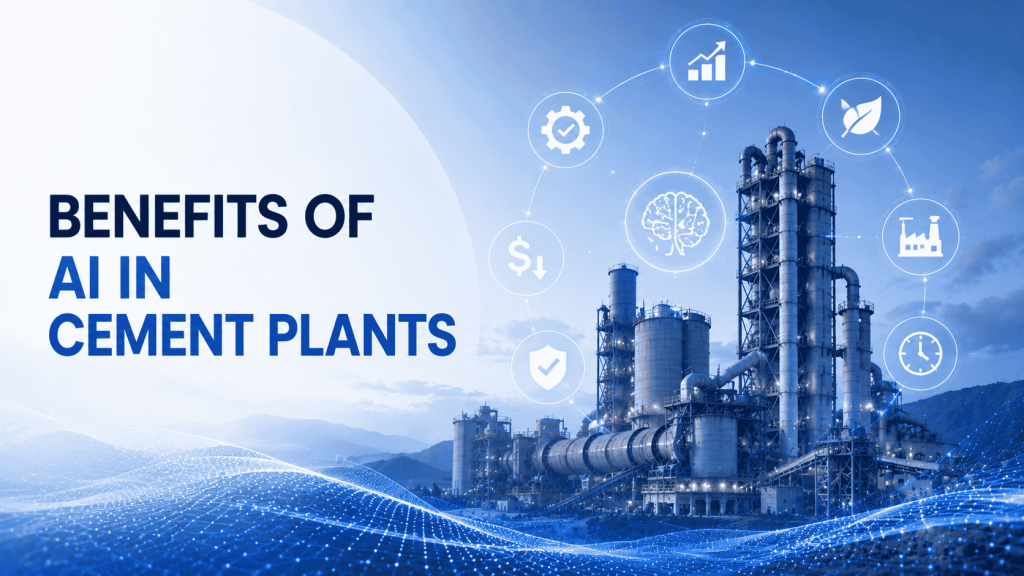
Improved Process Stability: AI continuously monitors production processes and recommends real-time adjustments across the process to maintain stable kiln operations, consistent raw meal quality, and optimized grinding performance, helping optimize production. This reduces process variability and ensures consistent clinker and cement quality.
Real-Time Monitoring and Visibility: AI provides a unified, real-time view of plant operations by continuously monitoring equipment, production processes, material flow, and critical assets using sensors and computer vision. Operators receive instant alerts and actionable insights into process deviations, equipment health, fire hazards, and material inconsistencies, enabling faster decision-making and proactive interventions.
Lower Energy Consumption: By optimizing kiln combustion, grinding operations, and equipment performance, AI minimizes thermal and electrical energy consumption while supporting better thermal efficiency, without compromising production targets. This helps reduce fuel costs and improve overall plant efficiency.
Higher Production Throughput: AI identifies process bottlenecks, optimizes equipment utilization, and helps plants operate closer to optimal performance. This unlocks significant improvements in throughput while maintaining product quality and operational stability.
Reduced Unplanned Downtime: Using predictive analytics and computer vision, AI detects equipment abnormalities before they result in failures. Early warnings enable proactive maintenance, improving equipment reliability and maximizing plant availability.
Enhanced Product Quality: AI continuously monitors process parameters and raw material characteristics to maintain consistent clinker formation and cement properties. This reduces quality variations, minimizes rework, and ensures consistent product quality.
Smarter Decision-Making: By combining data from DCS, SCADA, IoT sensors, laboratory systems, and industrial cameras, AI provides operators with data-driven recommendations and predictive insights, enabling faster, more informed operational decisions.
Improved Workplace Safety: Computer Vision continuously monitors hazardous areas, detects fire and smoke, identifies unauthorized access, and alerts operators in real time. This helps improve worker safety while reducing operational risks.
Greater Sustainability: AI supports sustainable cement manufacturing by optimizing energy usage, increasing the utilization of Alternative Fuels and Raw Materials (AFR), reducing CO₂ emissions, and minimizing material waste, helping manufacturers meet growing demand while lowering environmental impact and advancing their decarbonization goals. Better resource use and circular practices also support minimizing waste.
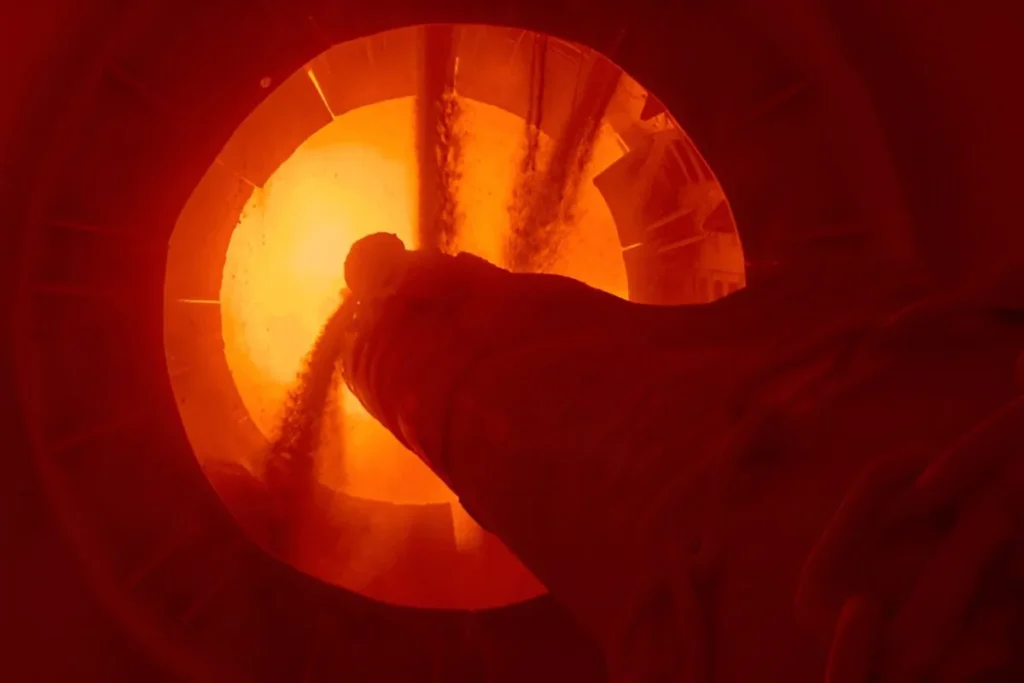
AI is already delivering measurable business outcomes through targeted optimization projects in cement manufacturing. From reducing fuel consumption to improving raw material visibility, manufacturers are leveraging Vision AI to optimize critical processes, minimize downtime, and enhance operational efficiency.
A leading Indian cement manufacturer implemented Ripik Vision to optimize kiln operations using real-time Computer Vision. The AI solution continuously monitored kiln health, automatically classified operating conditions as Healthy, Hot, or Dusty, and provided operators with optimal fuel rate recommendations, early warnings, and post-event analysis. By improving the time the kiln operated in a healthy state and reducing excessive coal consumption during unstable conditions, the plant achieved a 5% reduction in energy costs and a 3% reduction in fuel rate, while improving process stability and minimizing unplanned downtime.
Another cement manufacturer deployed Vision AI to automate material monitoring across its raw material handling and crushing operations. Using real-time Computer Vision, the system continuously detected oversized rocks, monitored particle size, and identified material inconsistencies before they reached downstream equipment. This improved raw material visibility enabled operators to prevent crusher blockages, reduce equipment damage, optimize material flow, and ensure a more consistent feed to the kiln, resulting in higher equipment availability and improved process efficiency. In one deployment, the solution reduced crusher blockages by 82% and unwanted stoppages by 20%, while generating significant annual cost savings.
As cement manufacturers navigate rising energy costs, increasing sustainability targets, and growing operational complexity, AI is emerging as a strategic enabler of digital transformation. By combining real-time process monitoring, Computer Vision, predictive analytics, and closed-loop optimization, AI helps plants improve process stability, reduce energy consumption, minimize unplanned downtime, and maintain consistent product quality. Rather than replacing existing automation systems, AI enhances them with intelligent, data-driven decision-making that drives measurable business outcomes. As the industry continues its journey toward smarter, more sustainable operations, AI will play a pivotal role in building the connected, efficient, and autonomous cement plants of the future.
Insights and perspectives from Ripik.ai's thought leaders

Vision AI in blast furnace operations enables real-time monitoring to identify visual patterns, detect...
Discover practical strategies to enhance plant operations with AI, boosting efficiency and productivity....
Computer Vision for Manufacturing: Applications and Benefits Introduction Manufacturers today face increasing...
Predictive Maintenance in Manufacturing Industry: A Complete Guide Introduction Predictive maintenance...
Discover how AI in cement manufacturing improves kiln optimization, energy efficiency, predictive maintenance,...
Vision AI unlocks the true value of this existing infrastructure by continuously analyzing live video...
A powerful suite of intelligent agents working in sync to transform manufacturing with speed, precision, and autonomy.