


Zero Downtime, High Yield, AI-Driven Vision
Zero Downtime, High Yield, AI-Driven Vision
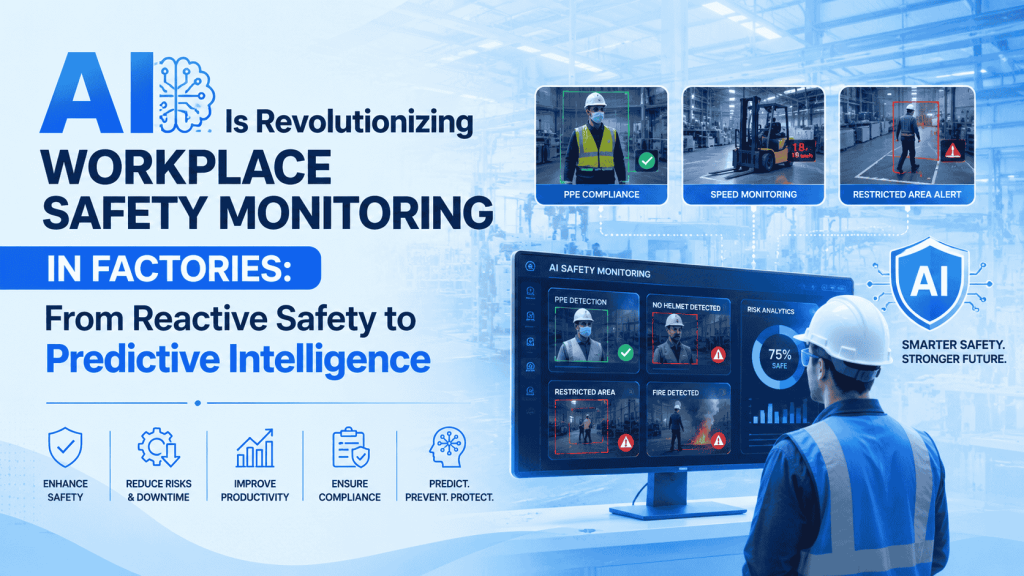
Manufacturing is entering a new era driven by automation, connected systems, and artificial intelligence, but workplace safety often remains reactive. Almost every manufacturing plant today also has an extensive network of CCTV cameras installed across production lines, warehouses, loading bays, utilities, and restricted areas, generating enormous volumes of video every day, but most of the are underutilized. The challenge isn't the lack of visibility, it's the inability to act on it. Most CCTV systems are still used primarily for recording incidents or reviewing footage after an accident has already occurred. However, it is impossible for safety personnel to monitor hundreds of camera feeds 24/7 across multiple facilities. As a result, critical events such as PPE violations, workers entering dangerous zones, unsafe behaviors, smoke, fire, or deviations from standard operating procedures (SOPs) often go unnoticed until they lead to safety incidents.
This is where AI-powered workplace safety monitoring is changing the paradigm. By combining existing CCTV or digital infrastructure with computer vision AI, manufacturers can transform passive cameras into intelligent monitoring agents. AI continuously analyzes live video feeds to detect PPE non-compliance, monitor SOP adherence, identify unsafe behaviors, recognize smoke and fire in their earliest stages, and operators receive real-time alerts in case of deviation or safety hazards. The future of AI for manufacturing safety has move beyond reactive incident management toward predictive intelligence that improves compliance, protects workers, and builds safer, smarter factories.
For decades, workplace safety in manufacturing relied almost entirely on human supervision, manual monitoring, audits and standardized safety procedures. Safety officers regularly walked through the plant to identify hazards, supervisors monitored workers to ensure compliance with safety protocols, and maintenance teams performed routine equipment inspections. Existing CCTV cameras were installed across facilities, but their primary purpose was surveillance and post-incident investigation rather than real-time hazard detection.
However, manufacturing has evolved has undergone a dramatic transformation. Today's facilities are larger, more automated, and operate at significantly higher production speeds than ever before. Heavy industries such as steel, cement, mining, chemicals, and automotive manufacturing now generate millions of operational events every day, creating an environment far more dynamic and complex than traditional factories. Traditional safety monitoring methods have failed to evolve at the same pace as manufacturing. These conventional approaches are no longer capable of keeping up with the scale and complexity of modern manufacturing, leading to multiple loopholes in workplace safety. Hazards that emerge between inspections often go unnoticed, unsafe behaviors are be missed, compliance cannot be verified continuously, and critical risks may remain undetected until they result in a near miss or an accident. As manufacturing continues to advance, the traditional safety regulations continues to widen, making proactive risk prevention increasingly difficult.
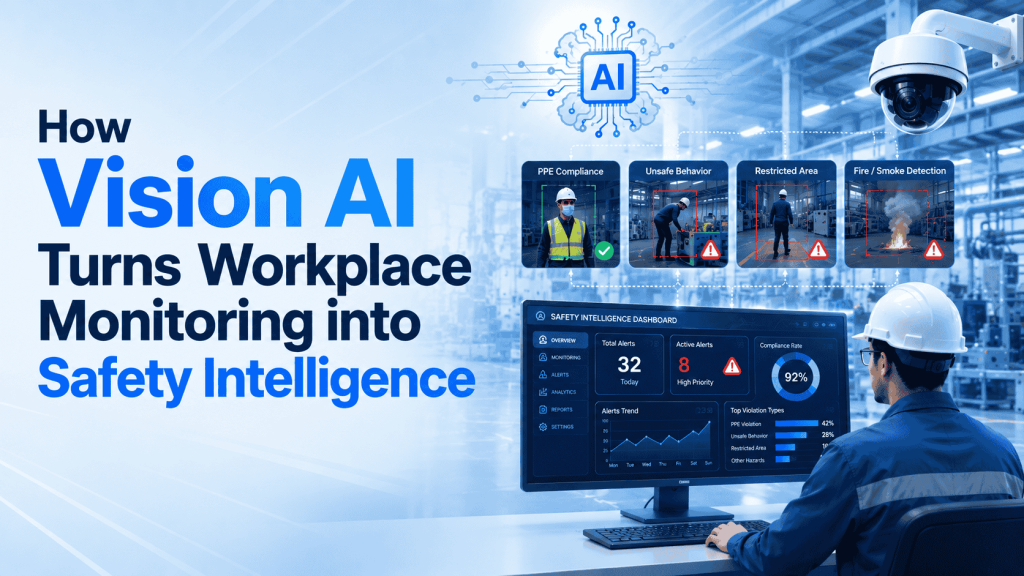
Most industrial facilities already have extensive CCTV coverage, yet these systems are primarily used for surveillance and post-incident investigations. Vision AI unlocks the true value of this existing infrastructure by continuously analyzing live video feeds of workplace in real time and the trained AI Models identify unsafe behaviors, detects hazards, verifies the proper use of safety equipment, monitors PPE requirements, and delivers provide insights that improve safety while supporting compliance with industry standards.
By combining computer vision, deep learning, real-time analytics and cutting edge ai technology, Vision AI transforms workplace monitoring into an intelligent safety ecosystem providing a comprehensive view of entire environment. Every detected event is automatically classified, documented, and prioritized using context aware detection, so alerts surface when PPE or safety rules are actually relevant, enabling rapid intervention while generating audit-ready records and analytics. The platform provides insights into recurring safety risks, high-risk zones, and compliance trends, helping the safety team and EHS team review prioritized events, act faster, strengthen safety programs, support OSHA requirements, and drive continuous improvement across the organization.
Real-Time AI Safety Monitoring: Continuous 24/7 monitoring using existing CCTV cameras to detect workplace hazards, unsafe behaviors, and safety violations as they occur, providing immediate feedback on hazards as they happen.
Comprehensive SOP & PPE Compliance: Automatically verifies PPE requirements, monitors the proper use of safety procedures, and ensures compliance with SOPs, OSHA requirements, and other industry standards.
Instant Alerts & Intelligent Incident Management: Generates real-time alerts, records incidents with images and video evidence, and integrates with PLC, SCADA, and existing plant safety systems and tools for rapid response.
Advanced Safety Analytics & Actionable Insights: Centralized dashboards provide insights into recurring hazards, high-risk zones, compliance trends, and root causes to support continuous improvement.
Scalable Enterprise-Wide Safety Intelligence: Monitors multiple facilities, work zones, workers, and industrial assets from a single platform to improve safety, reduce operational risks, and strengthen overall EHS performance.
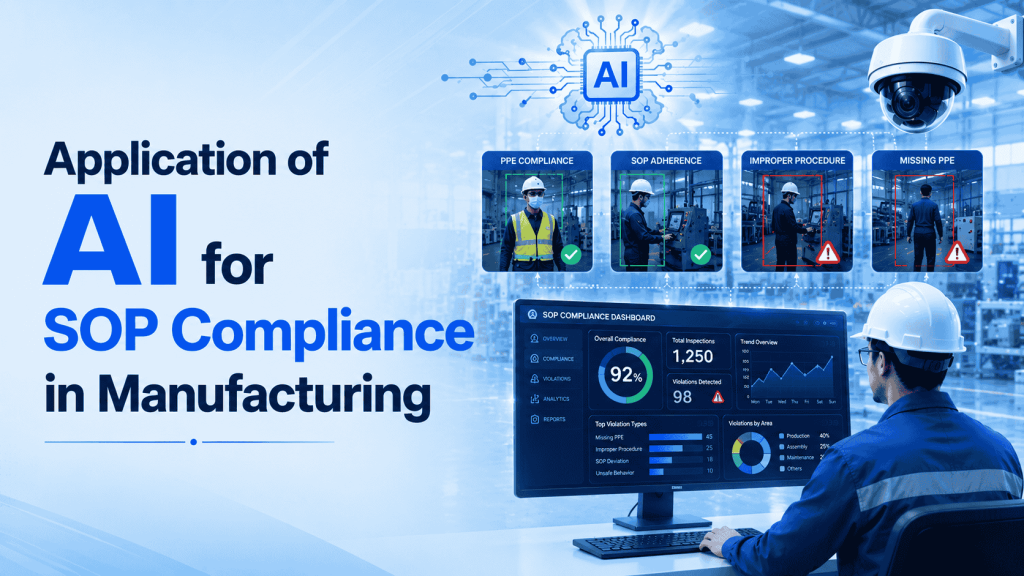
Standard Operating Procedures Compliance ensure that every manufacturing activity is performed safely, consistently, and in accordance with regulatory requirements, and regular safety meetings reinforce protocols and keep safety top of mind. However, maintaining SOP compliance across large manufacturing facilities requires continuous real-time monitoring of workers, equipment, and operational processes, while digital management software streamlines permit-to-work systems and tracks inspection logs alongside video-based monitoring. Vision AI systems automate this process by analyzing live video feeds, supporting training through real time detection of deviations from standard procedures, generating instant alerts whenever a safety violation is detected, and helping document gaps where official OSHA guidance applies, since OSHA requires employers to maintain safe procedures. These processes also support quality and compliance outcomes.
Below are some of the key applications of AI for workplace safety and SOP compliance.
Personal Protective Equipment (PPE) is mandatory in most manufacturing environments for worker protection from occupational hazards,and this is especially valuable in construction and other high-risk industrial settings. Vision AI softwares enables real-time PPE monitoring and PPE compliance by continuously analyzing video feeds to verify whether workers are wearing the required safety gear, including hard hats/helmets, safety vests, gloves, safety goggles, safety boots, safety glasses, respiratory protection, face shields, ear protection, safety harnesses, protective coveralls, hairnets/caps, and protective sleeves or aprons. When a PPE detection system detects over 15 types of PPE automatically and it instantly alerts supervisors, enabling timely corrective action, improving PPE regulations, and reducing the risk of workplace injuries.
Fire is the most critical hazards in manufacturing, areas such as production lines, electrical rooms, warehouses, chemical and fuel storage areas, machine rooms, conveyor systems, battery charging stations, and raw material storage yards, where heat, sparks, combustible materials, or electrical faults can quickly trigger a fire. Lack of fire detection system, small incidents can go unnoticed until they escalate into major fires, leading to worker injuries, equipment damage, production downtime, environmental impact, and significant financial losses. Vision AI-powered fire detection monitoring continuously analyzes live video feeds from existing cameras to detect smoke, fire, flames, hotspots, steam, dust and abnormal temperature rise at the earliest stage, helping reduce worker exposure to smoke, fumes, and other hazardous conditions during an incident. When a potential fire risk is identified, the system instantly generates real-time alerts and even integrate with existing fire alarm, PLC, or SCADA systems to enable rapid emergency response for corrective actions, worker safety, uninterrupted manufacturing operations, and identification of potential hazards before they escalate into larger emergencies.
Explosive detection systems are critical in manufacturing environments that handle flammable gases, combustible dust, volatile chemicals, fuels, solvents, pressurized cylinders, explosive materials, or other harmful substances such as chemical plants, refineries, pharmaceutical facilities, mining operations, and hazardous material storage areas. Failure to detect explosive risks at an early stage can lead to catastrophic explosions, worker fatalities, equipment destruction, environmental damage, and prolonged production shutdowns. Vision AI-powered explosive detection monitoring continuously analyzes live video safety data to identify the presence of explosive materials, unsafe storage practices, unauthorized handling, leaks, sparks, smoke, or other visual indicators of explosion risks. When a potential hazard is detected, the system immediately generates real-time alerts, enabling rapid intervention and helping organizations prevent explosions, strengthen SOP compliance, and ensure safer manufacturing operations.
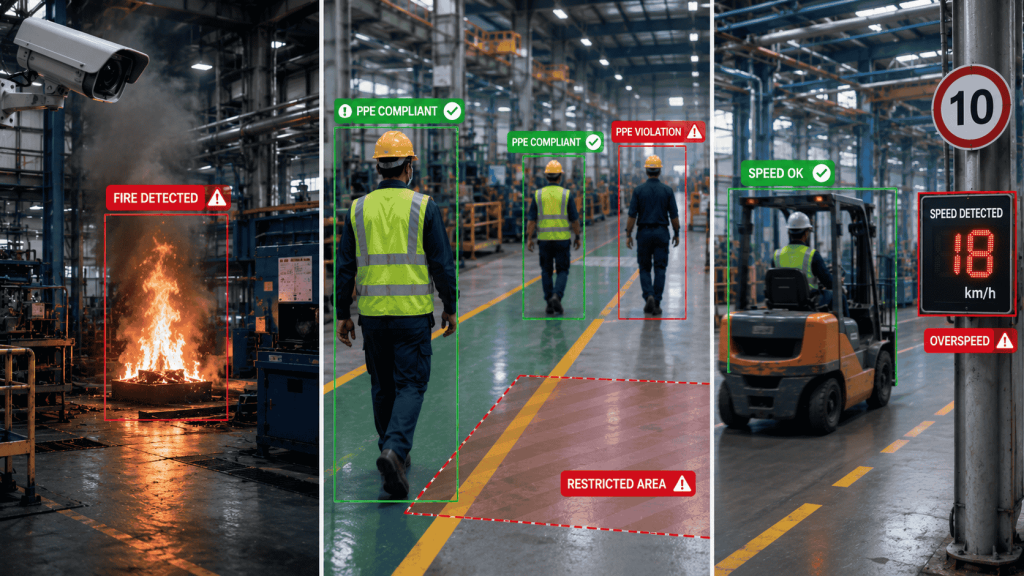
Manufacturing facilities consist of multiple operational zones and challenging environments, each with unique safety requirements and potential risks. Production floors, warehouses, loading bays, machine rooms, chemical storage areas, and utility sections must remain free from unsafe conditions to ensure smooth and compliant operations. Vision AI-powered area safety monitoring enables real time monitoring of these critical zones to identify safety deviations such as blocked emergency exits, unauthorized objects, material spills, unsafe housekeeping, and other environmental hazards that could compromise worker safety or disrupt production. By providing real-time visibility, automated alerts, and continuous zone-wise surveillance, the system enables manufacturers to maintain a safe, organized, and compliant workplace while reducing operational risks and supporting faster corrective actions.
Manual handling, repetitive tasks, awkward postures, overreaching, and improper lifting are among the leading causes of musculoskeletal disorders (MSDs) in industrial environment. Without continuous monitoring, these ergonomic risks often go unnoticed until they result in worker injuries, fatigue, absenteeism, and reduced productivity. Vision AI-powered worker ergonomic monitoring continuously analyzes workers' posture and movement patterns using existing CCTV cameras to identify unsafe ergonomic behaviors such as incorrect lifting, excessive bending, repetitive strain, and overreaching. By enabling proactive employee health monitoring, supporting employee health and well-being, helping manufacturers align with ergonomic best practices, and providing actionable insights for continuous improvement, the system reduces injury risks while creating a safer, healthier, and more productive workplace. This data can also guide targeted training around recurring ergonomic risks.
Industrial environments are constantly exposed to dynamic workplace hazards, including spills, obstructions, damaged equipment, exposed cables, unstable materials, leaks, and other unsafe conditions that can lead to slips, trips, falls, equipment damage, and operational disruptions. Vision AI-powered workplace hazards monitoring provides real-time monitoring of these risks across high-risk environments, delivering a comprehensive view of workplace safety through continuous analysis of live video feeds. By instantly detecting hazards and generating automated alerts, the system enables rapid corrective action, supports compliance with OSHA standards, strengthens SOP adherence, and provides actionable insights for continuous improvement, helping manufacturers proactively reduce workplace risks and create a safer working environment.
Many areas within manufacturing facilities are accessible only to authorized personnel. Restricted Area Monitoring automatically detects unauthorized entry into restricted zones such as electrical rooms, control centers, chemical storage areas, and maintenance sections. Immediate alerts help prevent unauthorized access while improving both plant safety and security.
High-risk areas around heavy machinery, robotic cells, furnaces, cranes, and moving equipment require constant vigilance. AI detects when workers enter dangerous zones without authorization or appropriate safety measures and immediately notifies supervisors. This helps prevent serious injuries and ensures safer interactions between personnel and equipment.
Industrial vehicles such as forklifts, trucks, loaders, and automated guided vehicles (AGVs) are constantly moving across production floors, warehouses, loading bays, and logistics areas, where excessive speed significantly increases the risk of collisions, pedestrian accidents, equipment damage, and operational disruptions. Vision AI-powered vehicle speed detection continuously monitors vehicle movement using existing CCTV cameras, accurately measures speed, and identifies speed limit violations in real time. The system instantly alerts operators and safety teams when unsafe driving behavior is detected, helping manufacturers enforce speed limits, improve traffic management, enhance pedestrian safety, support OSHA compliance, and reduce accidents across high-risk industrial environments.
Industrial safety is no longer just an EHS initiative—it is a business performance driver. Every safety incident affects far more than worker well-being; it disrupts production schedules, reduces equipment utilization, increases operating costs, and exposes manufacturers to regulatory and financial risks. Organizations with mature safety monitoring programs consistently achieve better operational stability because fewer incidents translate into fewer disruptions.
The business impact extends across the entire manufacturing operation. Safer workplaces contribute to higher equipment availability, lower unplanned downtime, fewer production interruptions, and improved workforce confidence, allowing employees to work more efficiently in a secure environment. Safety committees also facilitate communication between frontline workers and leadership. These monitoring tools help turn safety data into operational decisions. Stronger safety performance also reduces compliance issues, simplifies adherence to safety regulations, improves contractor management, lowers insurance premiums and compensation costs, and strengthens ESG performance by demonstrating a commitment to responsible and sustainable operations.
Ultimately, investing in industrial safety is not simply about reducing accidents—it is about improving productivity, protecting business continuity, reducing operational risk, and building a more resilient industrial enterprise.
Modern manufacturing facilities already generate an enormous amount of visual data through their existing CCTV infrastructure. The challenge is no longer capturing what happens on the shop floor—it's understanding what that data is revealing in real time. Traditional surveillance records incidents, but Vision AI interprets them, transforming continuous video streams into actionable safety intelligence.
By automatically detecting hazards, monitoring SOP and PPE compliance, identifying unsafe behaviors, and providing real-time alerts and insights, Vision AI enables manufacturers to move from reactive incident response to proactive risk prevention. The result is more than a safer workplace—it is a smarter, more resilient manufacturing operation with stronger regulatory compliance, higher productivity, improved operational continuity, and a culture of continuous improvement. The factory already sees everything. Vision AI gives it the intelligence to understand, anticipate, and act.
Insights and perspectives from Ripik.ai's thought leaders
Vision AI in blast furnace operations enables real-time monitoring to identify visual patterns, detect...
Discover practical strategies to enhance plant operations with AI, boosting efficiency and productivity....
Computer Vision for Manufacturing: Applications and Benefits Introduction Manufacturers today face increasing...
Predictive Maintenance in Manufacturing Industry: A Complete Guide Introduction Predictive maintenance...
Discover how AI in cement manufacturing improves kiln optimization, energy efficiency, predictive maintenance,...
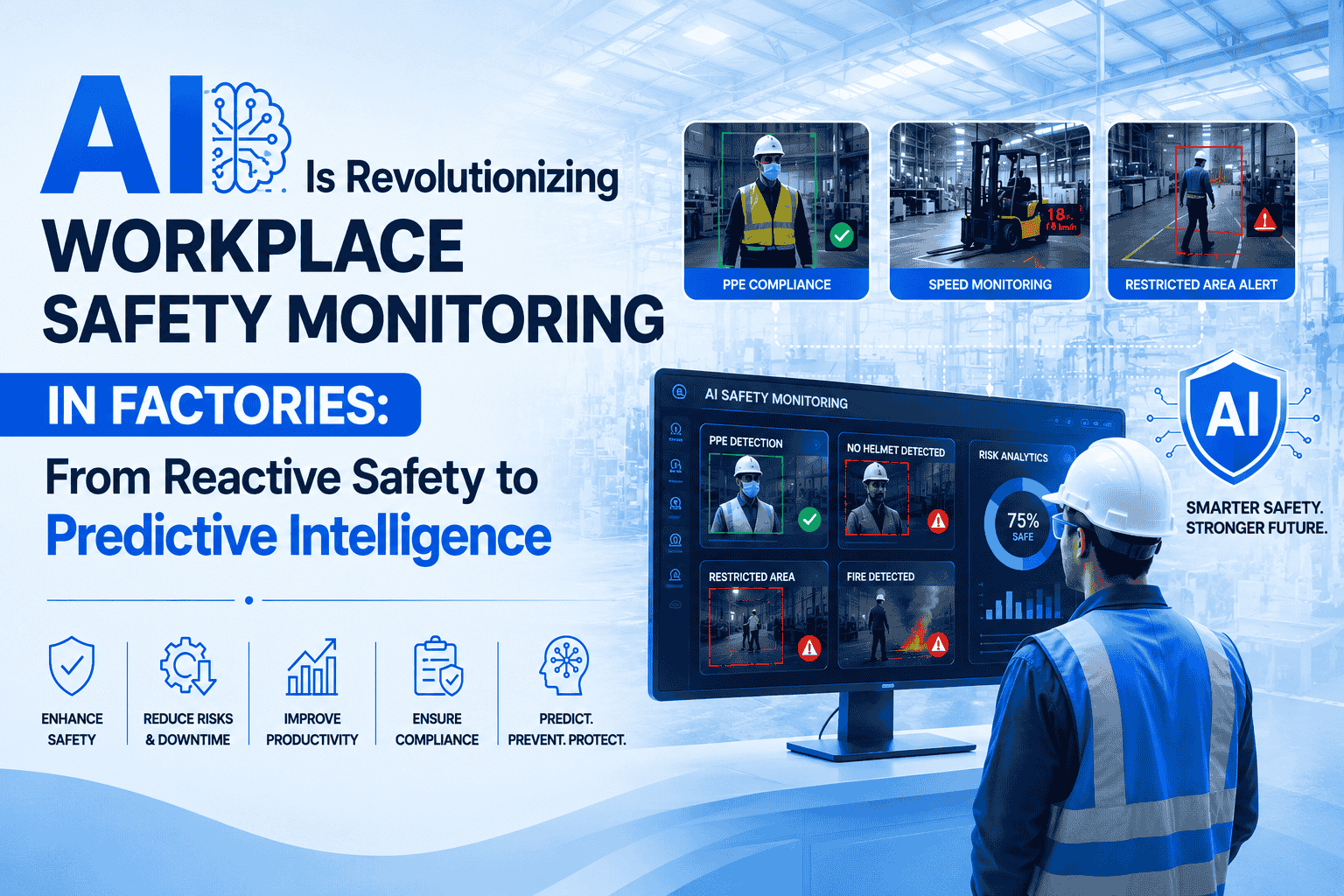
Vision AI unlocks the true value of this existing infrastructure by continuously analyzing live video...
A powerful suite of intelligent agents working in sync to transform manufacturing with speed, precision, and autonomy.