


Zero Downtime, High Yield, AI-Driven Vision
Zero Downtime, High Yield, AI-Driven Vision
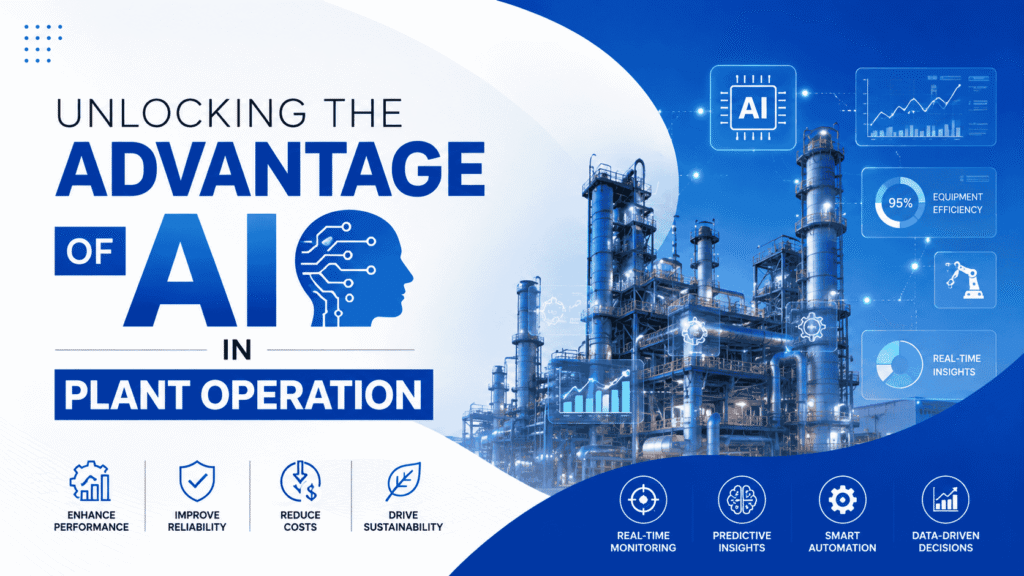
Modern industrial plants generate enormous amounts of data from cameras, sensors, PLCs, DCS, SCADA systems, and production processes. However, turning this data into timely decisions remains a challenge. AI in plant operations helps bridge this gap by analyzing real-time and historical data to identify patterns, detect anomalies, predict potential issues, and recommend actions.
As plants face increasing pressure to improve productivity, reduce downtime, optimize energy consumption, and maintain consistent quality, AI is becoming an important layer of plant intelligence. From predictive maintenance and process optimization to computer vision and production planning, AI in plant management and automation enables plants to move from reactive decision-making toward more predictive, proactive, and optimized operations.
AI in plant operations is the integration of artificial intelligence models with industrial data and control infrastructure to understand complex process behavior. It combines technologies such as machine learning, computer vision, predictive analytics, and optimization with data generated by PLCs, DCS, SCADA, historians, sensors, cameras, and other operational systems.
At a technical level, AI acts as an intelligence layer over the plant’s existing operational technology (OT) environment. Machine learning models learn relationships between process variables and outcomes, computer vision models extract information from images and video, sensors measure physical and process variables to generate operational data, while optimization algorithms evaluate multiple constraints to identify suitable operating conditions. Depending on the application, the resulting intelligence can be delivered as a prediction, anomaly alert, recommendation, or control input—connecting plant data with operational action without requiring the underlying automation infrastructure to be replaced.
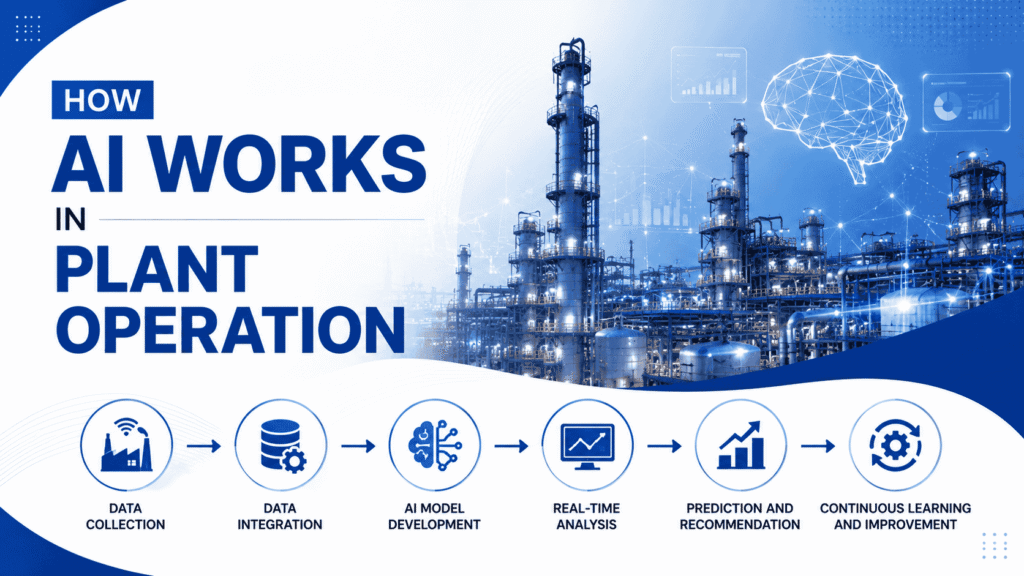
AI in plant operations works through a continuous cycle that transforms industrial data into predictions, insights, and operational recommendations. The typical AI lifecycle consists of six key stages:
Data Collection: AI systems collect real-time and historical plant data from sensors, PLCs, DCS, SCADA, industrial cameras, historians, MES, and other operational systems. This real time data, including feeds from plant systems used for real time monitoring, provides the input required for AI models to understand process and equipment behavior.
Data Integration: Data from multiple plant systems is integrated and contextualized so that different variables can be analyzed together. This creates a unified dataset for AI models while addressing differences in data formats, timestamps, and sources.
AI Model Development: Relevant historical data is used to train machine learning, computer vision, predictive analytics, or optimization models. The models, including machine learning algorithms and other AI algorithms, learn patterns and relationships from historical operating data between operating conditions, process variables, and desired outcomes.
Real-Time Analysis: After deployment, AI models continuously analyze incoming operational data, using AI powered systems to generate real time data insights. The models evaluate current conditions against learned patterns, historical behavior, or defined process objectives to identify significant changes or deviations.
Prediction and Recommendation: The AI system converts its analysis into actionable outputs such as predictions, anomaly alerts, process insights, or recommended operating parameters. Depending on the application, these outputs can support operators directly to optimize processes and support smoother operations, or feed into existing control and automation systems.
Continuous Learning and Improvement: AI performance is evaluated using actual plant outcomes and new operational data. Models can then be retrained or refined to account for changes in equipment, raw materials, processes, and operating conditions, helping maintain performance as the plant evolves.
In simple terms: AI collects plant data, learns from it, analyzes current conditions, predicts what may happen next, and supports the actions needed to improve plant performance.
AI is transforming plant operations by applying intelligence to specific operational challenges rather than simply automating individual tasks. From monitoring process conditions to optimizing production and energy use, AI can continuously analyze plant data and help teams respond to changing conditions with greater speed and precision.
AI enables continuous monitoring of plant processes by analyzing live operational data against historical patterns and expected operating conditions. It can identify process deviations, detect unusual changes, and generate alerts when conditions require attention. This gives operators greater visibility into plant performance without relying entirely on manual monitoring.
AI can analyze equipment parameters such as vibration, temperature, pressure, current, and operating history to identify early indicators of potential failures. Predictive models estimate the likelihood of equipment degradation or failure, allowing maintenance teams to plan interventions based on actual equipment condition rather than fixed maintenance schedules.
AI-powered quality control uses process data and computer vision to identify defects, quality deviations, and inconsistencies. Computer vision models can inspect products or materials in real time, while machine learning models can identify process conditions associated with quality issues. This enables earlier detection and more consistent quality control.
AI can analyze multiple production variables across the manufacturing process simultaneously to identify operating conditions associated with higher productivity and better process performance. Optimization models can evaluate constraints such as raw material availability, equipment capacity, quality requirements, and energy consumption to recommend suitable process parameters, improve throughput, and support overall plant efficiency.
AI helps identify patterns in energy consumption for better energy management and their relationship with production conditions. By analyzing variables such as fuel, electricity, process parameters, production rate, and equipment performance, AI models can identify energy-intensive conditions, recommend operating strategies that optimize energy usage, and improve efficiency while maintaining production requirements, which can lower energy costs and deliver cost savings.
AI-based anomaly detection identifies process or equipment behavior that differs significantly from normal operating patterns. Instead of relying only on predefined thresholds, AI can recognize complex combinations of variables that indicate an emerging abnormal condition. Early alerts allow operators and maintenance teams to investigate potential issues before they develop into larger operational problems, helping prevent equipment failures and better anticipate maintenance needs.
AI in plant management extends AI beyond individual processes to support planning, coordination, performance management, and operational decision-making at the plant level. By combining production, equipment, material, quality, and energy data, AI can give plant managers a more connected view of operations and help them make decisions based on current conditions rather than isolated reports.
AI in plant management refers to the use of artificial intelligence to support production planning, resource allocation, operational decisions, performance analysis, and continuous improvement. It can bring together data from multiple functions to support comprehensive data analysis for the plant manager, identify constraints, evaluate operational scenarios, and highlight areas that require management attention.
AI can support production planning by analyzing demand requirements, production capacity, raw material availability, equipment constraints, production priorities, and inventory management, which also helps in optimizing inventory management. AI-based planning systems can evaluate these variables together to generate or adjust production schedules as operating conditions change, helping plants respond more effectively to changing requirements. AI also applies reinforcement learning to improve scheduling and supply chain logistics, while AI-driven order management systems support timely delivery and streamline procurement processes.
AI can act as a decision-support layer for plant managers, with ai tools helping accelerate decision-making under changing market demands, by providing recommendations, early warnings, performance insights, root-cause indicators, and what-if analysis. For example, managers can evaluate how changes in production rates, raw material mix, equipment availability, or process parameters could affect operational outcomes before making a decision.
AI can continuously analyze plant performance across key operational metrics, including production, quality, energy consumption, equipment performance, yield, process stability, and cost management. Instead of reviewing KPIs only through periodic reports, plant managers can use AI-driven insights to identify performance gaps, understand emerging trends, and prioritize actions that can have the greatest operational impact, with stronger KPI visibility often driving significant improvements in plant efficiency.
AI in plant automation combines artificial intelligence with conventional industrial control systems to make automation more adaptive, data-driven, and responsive to changing operating conditions. While traditional automation is highly effective for executing predefined sequences and control logic, AI can extend these capabilities by interpreting complex data and supporting decisions where fixed rules may be insufficient.
Conventional automation generally follows predefined logic: “If X happens, perform Y.” The response remains largely fixed unless the control logic is changed.
AI-enabled automation introduces a more dynamic approach: “Based on current conditions, historical patterns, and defined objectives, determine the most suitable action.” It helps reduce human error by adapting decisions to the operating context. In practice, that extends human capabilities in monitoring and response rather than replacing human expertise. AI models can evaluate multiple variables simultaneously and generate predictions, recommendations, or control inputs based on the operating context.
AI can work alongside existing industrial technologies, including PLCs, DCS, SCADA, MES, sensors, industrial cameras, and IoT devices. These systems continue to perform their existing monitoring and control functions, while AI adds an intelligence layer that analyzes the data they generate.
This approach allows manufacturers to enhance existing automation infrastructure without necessarily replacing core control systems. AI can provide higher-level intelligence for applications such as process optimization, predictive control, quality monitoring, anomaly detection, and production decision support. But AI integration with industrial systems can still be challenging because legacy system compatibility and data quality issues can slow deployment, cybersecurity vulnerabilities grow when industrial control networks connect to AI systems, and initial costs are often high.
The evolution of industrial automation can be viewed as a progression:
Manual → Automated → AI-Assisted → AI-Optimized → Autonomous
This shift toward autonomy also includes AI-driven automation, where collaborative robots (cobots) enhance productivity by working alongside humans and connected worker technology accelerates onboarding and productivity.
In an AI-assisted plant, AI supports human decision-making with predictions and recommendations. At the AI-optimized stage, models continuously evaluate operating conditions against defined objectives and constraints. The long-term direction is toward autonomous optimization, where AI can make and execute validated operational adjustments within defined safety and control boundaries.
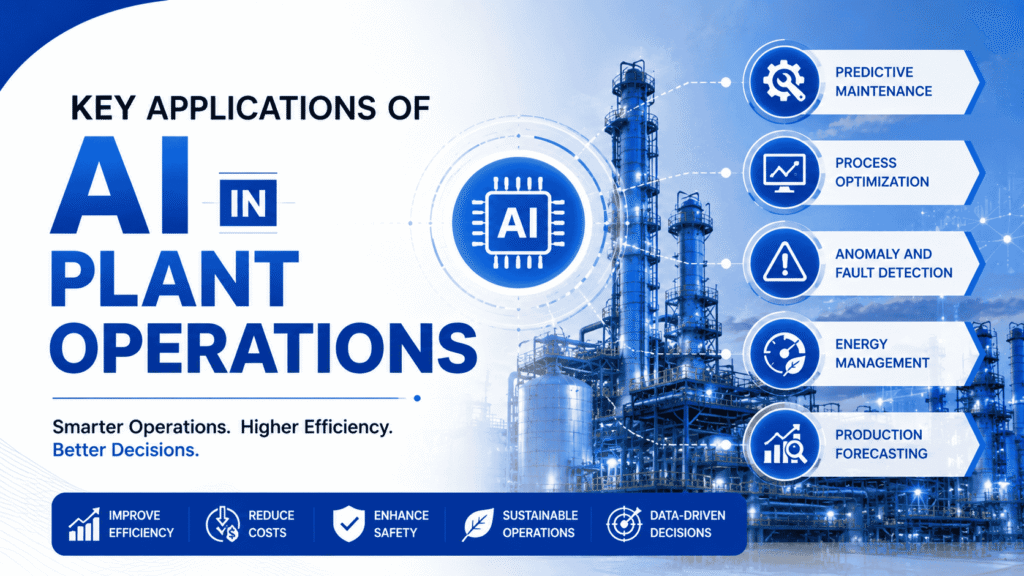
AI can be applied across different stages of industrial operations, from equipment health and production planning to process control, quality, and resource utilization. The most valuable applications depend on the plant’s operational priorities, available data, and specific process challenges.
AI-powered predictive maintenance analyzes equipment condition, sensor readings, operating history, and maintenance records to identify patterns associated with equipment degradation or potential failure. By detecting early changes in equipment behavior, AI can help maintenance teams prioritize interventions, plan maintenance activities based on actual equipment condition, and reduce the risk of unexpected downtime.
AI evaluates production rates, equipment availability, process constraints, raw material conditions, and other operational variables to identify opportunities for improving throughput and plant performance. By analyzing multiple variables simultaneously, AI can help identify bottlenecks, optimize operating parameters, improve equipment utilization, and support production targets while considering quality and process constraints.
AI models analyze relationships between process parameters and production outcomes to identify operating conditions associated with stable and efficient performance. This can help operators reduce process variability, minimize waste and material losses, improve yield, and maintain processes closer to their desired operating conditions.
AI-powered quality inspection uses machine learning and computer vision to identify defects, variations, and quality deviations in products, materials, or processes. By continuously analyzing production data or visual information, AI can detect quality issues earlier than periodic manual inspections, helping manufacturers improve consistency and reduce the risk of defective products moving further through the production process.
Computer vision enables AI systems to interpret images and video captured from industrial environments, providing visual intelligence that complements conventional process data. Applications include material sizing, surface inspection, conveyor monitoring, equipment observation, stockpile monitoring, process monitoring, and detection of visual abnormalities that may otherwise require continuous manual observation.
AI analyzes energy consumption alongside production rates, process parameters, equipment performance, and operating conditions to identify patterns associated with inefficient energy use. By identifying energy-intensive conditions and recommending more efficient operating parameters, AI can help plants reduce energy intensity while maintaining required production and quality levels.
AI can analyze raw material characteristics, composition, quality, availability, and their relationship with process performance to support better material-related decisions. This can help plants optimize material selection, blending, dosing, and consumption, improving process consistency while reducing material losses and making better use of available resources.
AI-based production planning evaluates demand, production capacity, inventory, raw material availability, equipment availability, maintenance schedules, and production priorities to develop more responsive production schedules. As operating conditions change, AI can help adjust plans and identify trade-offs between competing constraints, supporting better capacity utilization and schedule adherence.
AI-based anomaly detection identifies unusual patterns in process, equipment, or production data by comparing current behavior with learned patterns of normal operation. Unlike simple threshold-based monitoring, AI can evaluate multiple variables together and identify complex deviations, providing earlier warnings of emerging process or equipment issues.
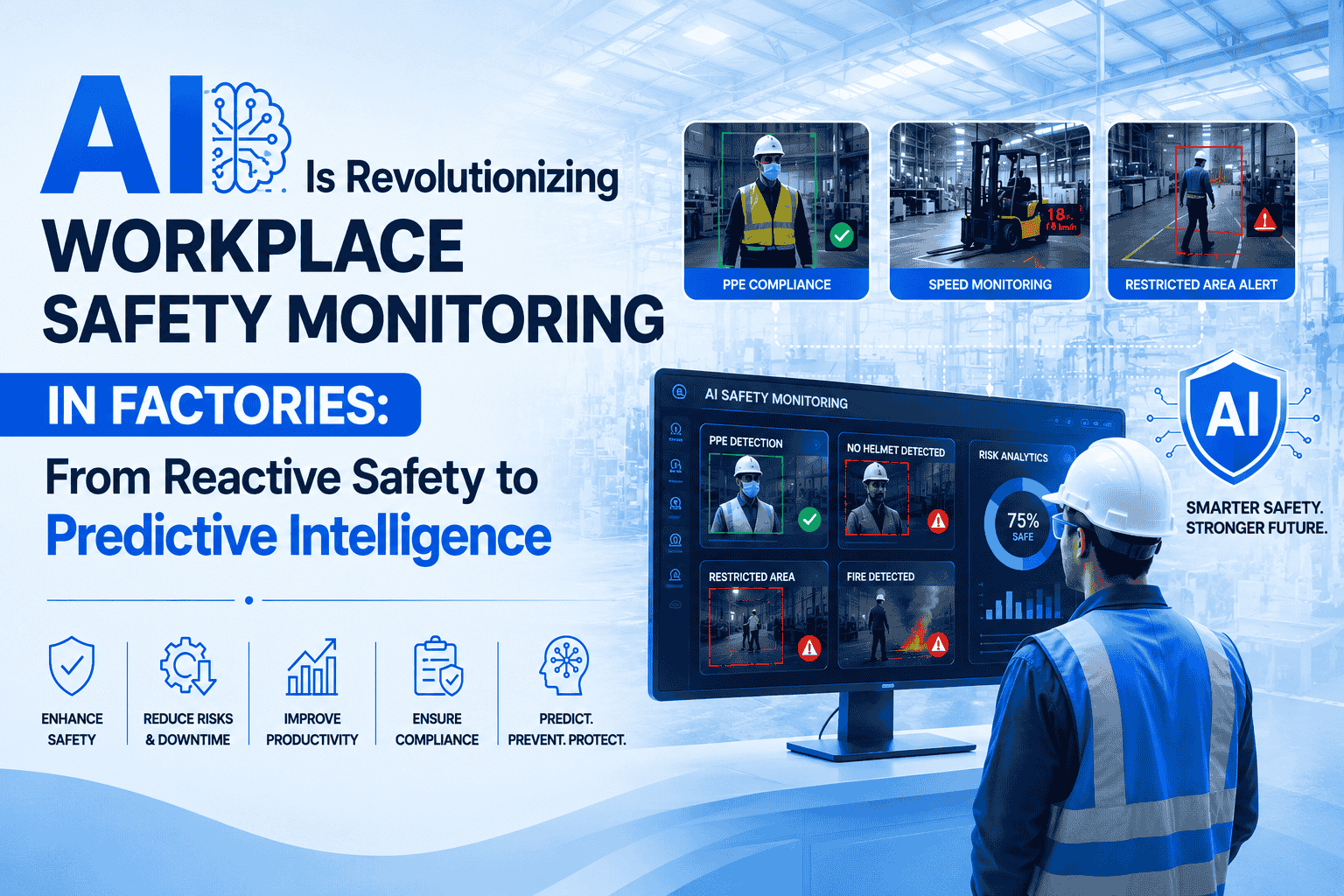
AI can support safety and compliance monitoring by analyzing operational and visual data to identify predefined unsafe conditions or deviations from established procedures. Computer vision can be used for applications such as PPE compliance, restricted-area monitoring, and unsafe access detection, providing continuous monitoring and faster alerts in areas where manual supervision may be difficult.
The value of AI in plant operations comes from its ability to turn operational data into faster, more informed, and more consistent decisions. When deployed for the right use cases, AI can deliver benefits across productivity, cost, quality, maintenance, and resource utilization.
Improved Productivity: AI can identify process bottlenecks, operating patterns, and optimization opportunities that can help plants improve throughput, deliver increased operational efficiency, and utilize production capacity more effectively.
Reduced Unplanned Downtime: By identifying early indicators of equipment or process issues, AI can help teams intervene before failures or disruptions result in significant production losses.
Better Product Quality: AI enables continuous analysis of process and quality parameters, helping detect deviations earlier and maintain more consistent product quality.
Lower Energy Consumption: AI can identify relationships between operating conditions and energy use, enabling plants to optimize energy-intensive processes without compromising production targets.
Reduced Operational Costs: Improvements in productivity, maintenance, quality, energy efficiency, and material utilization can collectively reduce the cost of plant operations.
Faster Decision-Making: AI provides key benefits through faster access to real-time insights and recommendations, allowing operators, engineers, and plant managers to respond to changing conditions without relying solely on periodic reports.
Better Resource Utilization: AI can help optimize the use of raw materials, equipment, energy, production capacity, and other plant resources, ensuring they are utilized more efficiently.
Greater Process Stability: By continuously analyzing process behavior and identifying deviations, AI can help plants maintain more stable operating conditions and reduce process variability.
AI is becoming an important part of modern plant operations, helping manufacturers make better use of operational data and improve how processes, equipment, resources, and production are managed. From predictive maintenance and process optimization to quality inspection, production planning, and computer vision, AI can support decisions across multiple layers of a plant.
The real advantage of AI in plant operations lies not simply in automating individual tasks, but in creating a more connected and intelligent operating environment. By integrating AI with existing industrial systems, plants can move toward faster decision-making, greater process stability, improved resource utilization, and increasingly optimized operations. However, successful AI adoption also requires addressing workforce skills gaps and equipping plant teams with the knowledge needed to work effectively alongside AI systems. As AI capabilities continue to evolve, the transition from AI-assisted operations to autonomous optimization will become an increasingly important part of the future of industrial manufacturing.
Insights and perspectives from Ripik.ai's thought leaders
Vision AI in blast furnace operations enables real-time monitoring to identify visual patterns, detect...
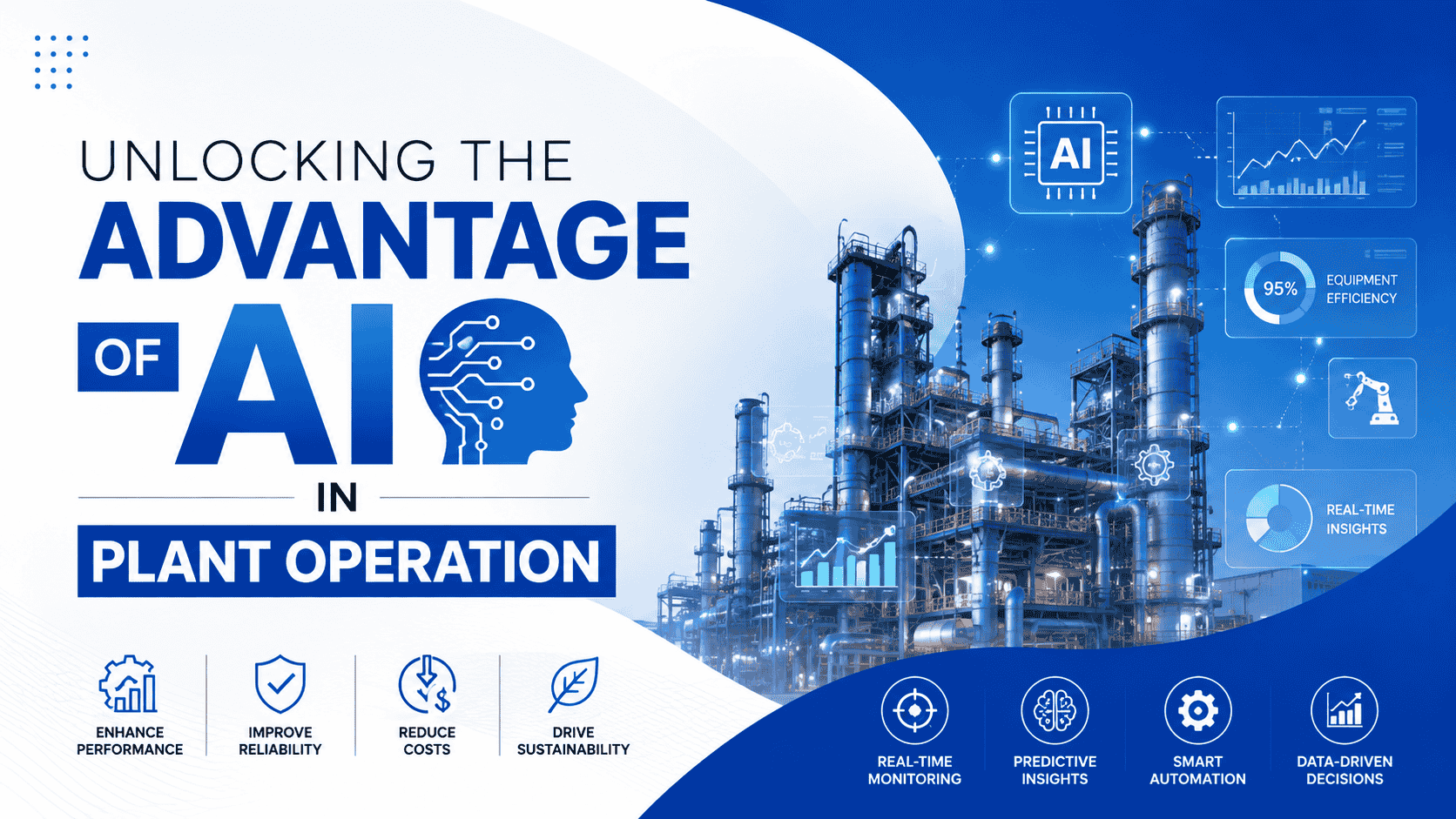
Discover practical strategies to enhance plant operations with AI, boosting efficiency and productivity....
Computer Vision for Manufacturing: Applications and Benefits Introduction Manufacturers today face increasing...
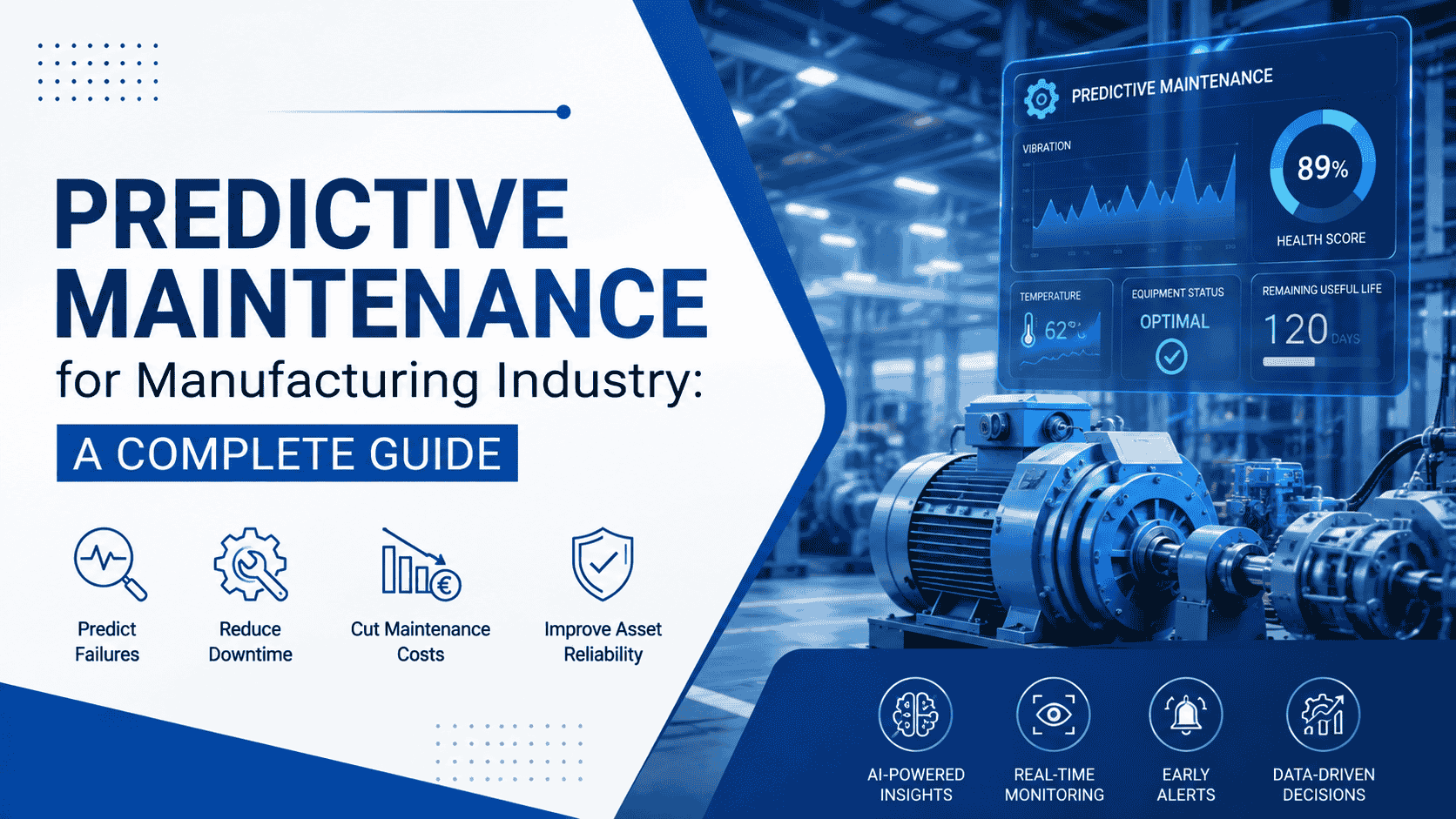
Predictive Maintenance in Manufacturing Industry: A Complete Guide Introduction Predictive maintenance...
Discover how AI in cement manufacturing improves kiln optimization, energy efficiency, predictive maintenance,...
Vision AI unlocks the true value of this existing infrastructure by continuously analyzing live video...
A powerful suite of intelligent agents working in sync to transform manufacturing with speed, precision, and autonomy.