


Zero Downtime, High Yield, AI-Driven Vision
Zero Downtime, High Yield, AI-Driven Vision
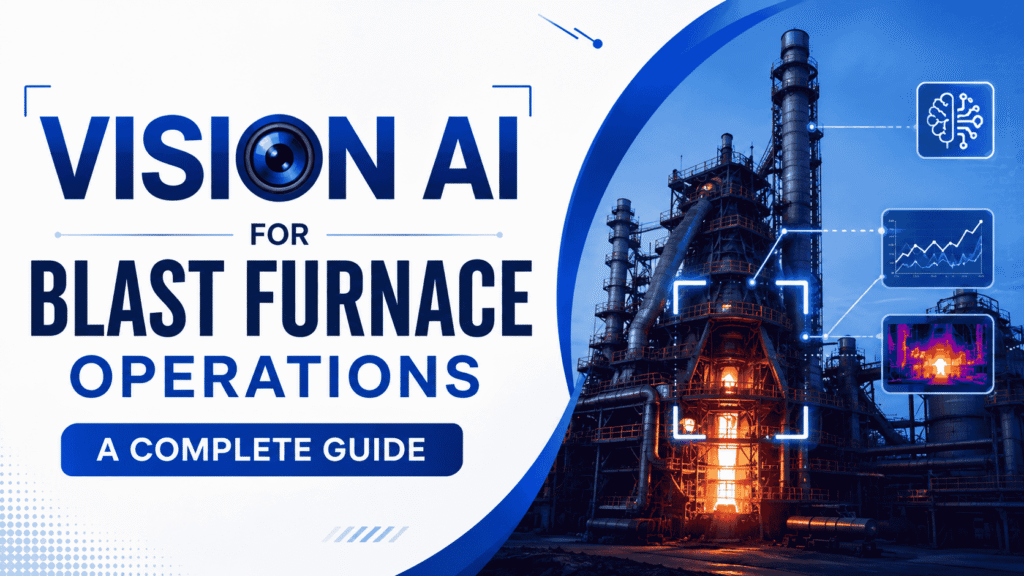
Modern blast furnace operations depend on controlling a continuous, high-temperature ironmaking process in which materials are always moving, conditions are harsh, and stable performance is hard to maintain in real time. However, operating a blast furnace presents a unique monitoring challenge: beyond high temperatures, harsh environments, continuous material movement, and complex process interactions, the furnace’s inherent complexity makes direct and continuous observation difficult.
Traditional monitoring systems rely heavily on process instrumentation, manual inspection, and operator observations. While these remain essential, they may not capture every visual change occurring across the furnace environment. Small abnormalities can develop between measurable process parameters or remain difficult to identify until they become operational issues. For operations managers, plant engineers, heads of manufacturing, and digital transformation leads in steel and other process-manufacturing plants, that gap affects furnace stability, fuel use, product quality, safety, and operating cost.
This is where Vision AI can add a new layer of intelligence, especially when operating blast furnaces where many chemical reactions and internal temperatures cannot be observed directly. By continuously analyzing live camera feeds, Vision AI can identify visual patterns, detect anomalies, and provide real-time insights into burden mix behavior, fuel rate optimization, tuyere and raceway conditions, thermal hotspots, furnace top activity, and bunker levels. Instead of relying only on periodic human observation, operators can gain continuous visual intelligence to spot early warning signs, improve process control, reduce costs and emissions, and make faster, more informed decisions.
Vision AI is the application of artificial intelligence and computer vision models to analyze images and video streams and convert visual information into actionable insights and recommendations for operational decision-making. In an iron blast furnace, it can provide information on critical process conditions and support applications such as particle size analysis, burden mix optimization, hot Metal silicon prediction, furnace refractory life monitoring, and material flow analysis.
Computer vision models analyze video frames, images, and thermal imagery to identify patterns, changes, and anomalies that may be difficult to track consistently through manual observation. Depending on the application, the models can analyze burden movement, particle size, flame characteristics, tuyere conditions, hot spots, refractory condition, and tapping activity.
The visual information can then be correlated with plant parameters such as gas pressure, top gas pressure, gas composition, hot blast, cold blast, coke rate, fuel consumption, and silicon content to provide a more contextual understanding of furnace conditions.
Each technology contributes a different layer of information: cameras capture visual conditions, thermal systems detect heat anomalies, AI models classify deviations, and process data helps validate whether those deviations matter operationally. In the blast furnace process, Vision AI can monitor how raw materials move through the iron-making process, where metallurgical coke, iron ore, and fluxes undergo a series of reactions before molten iron is tapped from the furnace.
Within the furnace, Carbon monoxide acts as an important reducing agent, reacting with iron oxides and progressively reducing them to metallic iron. These reactions also generate carbon dioxide within the furnace gas stream. Limestone also plays an important role as a flux, with its calcium oxide combining with impurities to form slag. The furnace periodically taps molten iron and slag, making reliable tapping important for maintaining proper hearth drainage.
Together, these inputs can help operators in a steel plant or integrated steel plant understand changes in furnace behavior, improve fuel efficiency, optimize coke consumption, and support stable production of molten pig iron. Blast furnace operations typically account for about 70% of a steel plant's energy consumption. Coke remains a major fuel and reducing agent in blast furnace operations, and published industry benchmarks show coke rates varying substantially across plants and operating conditions.
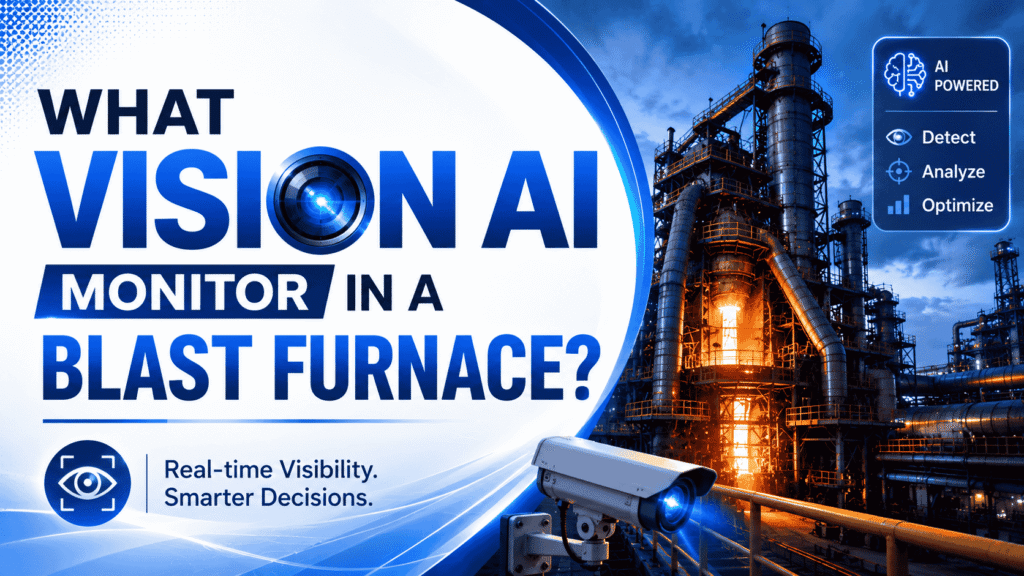
Vision AI can monitor a wide range of visual and thermal parameters across blast furnace operations, including raw material particle size, burden distribution and movement, stockline level, tuyere and raceway conditions, flame characteristics, refractory condition, hot spots, tapping activity, slag and molten iron flow, and abnormal process conditions. These visual insights can also be correlated with process parameters such as gas temperature, hot metal temperature, hot metal silicon content, coke rate, fuel consumption, gas pressure, gas composition, and furnace stability. By combining camera feeds, thermal imaging, AI models, and existing plant data, Vision AI provides operators with greater visibility into furnace behavior and helps identify conditions that may affect improved productivity, fuel efficiency, safety, costs, and emissions.
Vision AI enables continuous raw material analysis by examining images and video of materials such as iron ore, lump ore, sinter, and coke at different points across the material handling and charging process. It can assess characteristics such as particle size distribution, material consistency, shape, surface characteristics, moisture levels, and the presence of fines or oversized particles, providing real-time information on the quality and condition of the burden.
This is particularly important because coke quality and burden quality influence furnace permeability, gas flow, reduction efficiency, and fuel consumption. Coke used in the blast furnace must also meet quality requirements, including appropriate levels of ash and sulfur, as well as coke strength, which affects permeability and burden behavior. By combining visual analysis with process data such as coke rate, gas composition, pressure, and hot metal quality, Vision AI enables more informed burden management and process optimization.
Vision AI helps optimize burden mix by analyzing the quality and characteristics of sinter, pellets, lump ore, and other burden materials and combining this information with LIMS and laboratory chemistry data. AI-based optimization models can evaluate different material combinations to identify the most suitable burden composition for the required furnace conditions. This helps operators maintain the desired burden chemistry, material consistency, furnace stability, and fuel efficiency, while improving raw material utilization and reducing operating costs.
Vision AI enables dynamic optimization by continuously monitoring changes in thermal and pressure profiles, incoming raw material characteristics, burden movement, and other furnace conditions. AI/ML models analyze these changing conditions to identify early signs of declining furnace stability and provide recommendations for adjusting burden distribution and relevant process parameters.
This is particularly valuable because blast furnace performance depends on maintaining a stable balance between raw material quality, gas flow, temperature, pressure, and reduction conditions. Changes in operating conditions influence fuel consumption and furnace stability. For instance, higher hot-blast temperatures are associated with lower coke requirements; an Indian Ministry of Coal report estimates approximately 12 kg/thm reduction in coke rate for every 100°C increase in hot-blast temperature, subject to the specific furnace and operating conditions.
Vision AI supports fuel rate optimization by continuously monitoring visual and thermal conditions across the blast furnace and correlating them with key operating parameters that influence fuel consumption. AI/ML models identify changes in furnace behavior and analyze the positive and negative impact of operating and raw material variables on fuel rate.
By combining visual observations with process data, the system can perform real-time root cause analysis (RCA), identify variables contributing to changes in fuel consumption, and provide recommendations for appropriate operational set points and corrective actions. This is particularly relevant because coke remains a major contributor to both the energy requirement and carbon intensity of conventional blast furnace ironmaking. Pulverized coal injection and other injectants can partially replace coke requirements, depending on furnace design and operating conditions.
Vision AI and AI/ML models help predict the silicon content of hot metal by analyzing operating blast furnace conditions and identifying patterns associated with changes in hot metal silicon (Si). The model predicts the direction and expected value of Si in the next cast while continuously analyzing the factors contributing to variations in silicon levels.
These predictions help operators make timely adjustments to RAFT and other relevant operating parameters, maintain more consistent hot metal quality, reduce silicon variability, and improve overall blast furnace stability and process control.
Vision AI enables continuous monitoring of tuyere and raceway conditions by analyzing the visual condition of tuyeres, raceway behavior, flame patterns, and injection-related abnormalities. It can flag unusual changes that may indicate tuyere-level issues affecting hot-blast delivery through the bustle pipe and local gas flow.
Changes in flame or raceway shape can also provide visual indicators of variations in blast temperature, hot-blast conditions, and oxygen enrichment, which can influence combustion efficiency and fuel rate. Detecting these conditions early helps operators investigate potential causes and take timely corrective action to maintain stable combustion and efficient furnace operation.
Vision AI enables continuous thermal and hotspot monitoring around critical blast furnace areas and equipment by analyzing thermal imagery to identify abnormal temperature patterns, hotspots, and thermal deviations. Thermal instability can also lead to 3–5% productivity loss in blast furnaces, which makes continuous monitoring especially valuable. These changes can provide early indications of developing issues in areas where direct temperature measurement is difficult.
When applied to furnace refractory monitoring, Vision AI can detect localized temperature increases and persistent hotspots that may indicate refractory wear, thinning, potential damage, or scaffold formation, enabling earlier investigation and intervention. This can help operators identify thermal abnormalities before they develop into more serious operational problems.
Vision AI can monitor burden distribution, charging patterns, material surface conditions, and abnormal charging events at the furnace top. This is important because the way raw materials are distributed affects gas-solid contact, gas flow, heat distribution, slag chemistry, and reduction efficiency inside the furnace.
By identifying changes in charging patterns and burden distribution, Vision AI can provide operators with earlier visibility into conditions that may influence top-gas behavior, gas utilization, furnace stability, iron content, and overall process efficiency.
The basicity ratio of slag (CaO/SiO2) controls sulfur removal during smelting.
Vision AI enables continuous bunker level monitoring by analyzing camera feeds to estimate and track the material level inside raw material and charging bunkers in real time. It can identify changes in material levels, detect low-level or overfilling conditions, and monitor the rate at which material is being discharged or replenished. This provides operators with timely visibility into bunker conditions and helps prevent material shortages, overflow, and interruptions in the charging process. By integrating bunker-level information with material flow and process data, Vision AI supports better coordination of raw material handling, more consistent furnace charging, and smoother blast furnace operations.
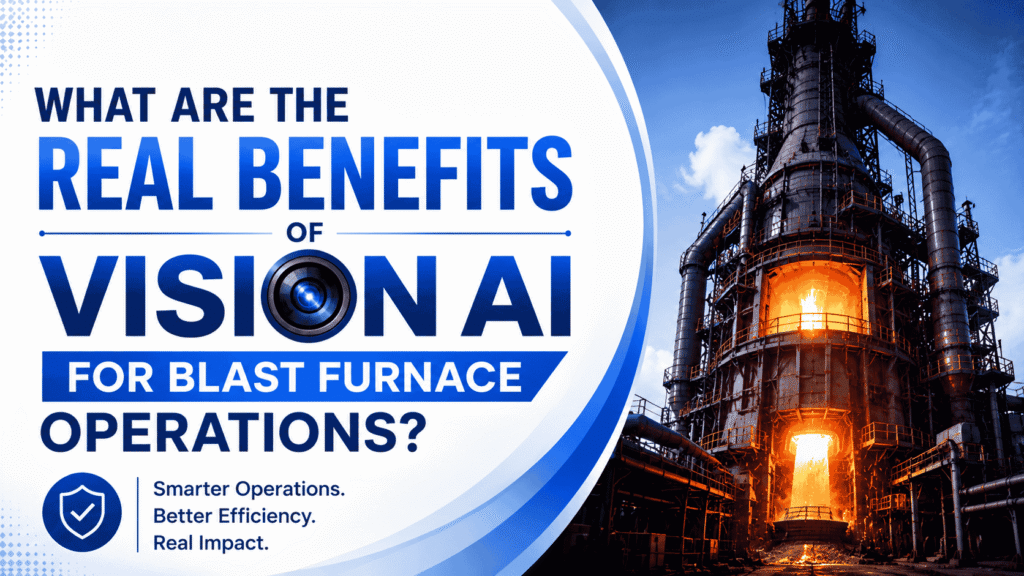
The real value of Vision AI in blast furnace operations is not simply automating camera monitoring. It lies in converting continuous visual and thermal data into actionable information that complements existing process data and operator expertise. By providing visibility into conditions that are difficult to monitor consistently, Vision AI can help plant teams detect changes earlier, understand operational deviations, and make more informed decisions.
Blast furnaces operate continuously, but manual visual inspection is periodic. Vision AI enables 24/7 monitoring of critical areas through cameras and thermal imaging, providing continuous visibility into conditions such as material movement, tuyere behavior, thermal patterns, tapping activity, and refractory condition.
AI models can continuously compare visual and thermal conditions against defined normal operating patterns and flag unusual changes. This can help identify developing issues such as abnormal hotspots, changes in flame or raceway behavior, material-flow deviations, or unusual equipment conditions at an earlier stage.
When an abnormal condition is detected, real-time alerts and visual evidence can help operators understand where the deviation is occurring and assess its severity more quickly. This reduces the time between detection, investigation, and corrective action.
Operators often need to monitor multiple camera feeds while simultaneously managing complex furnace parameters. Vision AI can automatically analyze these feeds and highlight relevant events and deviations, reducing the need for continuous manual observation while keeping operators in control of the final decision.
Vision AI adds another layer of information to existing DCS, SCADA, sensor, laboratory, and historian data. By correlating visual observations with process parameters, it can provide additional context around changing furnace conditions and support operators in making more informed operational decisions.
Vision AI can create a record of visual events, alerts, trends, and process changes, allowing teams to review what happened before, during, and after an incident. This can support more structured root-cause analysis, troubleshooting, and identification of recurring operational patterns, while also strengthening predictive maintenance. Suboptimal operations can increase maintenance costs by 25%.
Many blast furnace areas involve extreme temperatures, molten metal, hot surfaces, and other hazardous conditions. Remote visual and thermal monitoring can provide visibility into these areas without requiring personnel to be physically present for every inspection, helping reduce unnecessary exposure to hazardous environments.
By providing earlier visibility into raw material behavior, burden movement, thermal conditions, tuyere performance, refractory condition, and other process deviations, Vision AI can support more stable furnace operation and more consistent steel production. The resulting insights can help operators respond to conditions that may otherwise affect productivity, fuel efficiency, operating costs, and emissions. The actual impact depends on the specific use case, quality of available data, AI model performance, and how effectively the insights are integrated into plant workflows. When those insights are effectively integrated into operations, AI improves productivity by 5–8% in steel production.
Blast furnace operations generate enormous amounts of process data, but visual information remains critical to understanding what is happening across the iron-making process. Vision AI converts continuous video and thermal data into structured operational insights, helping teams detect deviations, understand changing conditions, and make faster, more informed decisions. Its value goes beyond simply watching the furnace. It adds a layer of intelligence to existing process data and operator expertise, supporting the shift from monitoring to detection, prediction, decision support, and optimization.
The importance of this becomes even clearer when considering the carbon intensity of the conventional BF-BOF route, which remains central to the steel industry and modern iron production, where molten iron is tapped as liquid iron before downstream refining to produce steel. Recent research estimates the route at roughly 2.3 tonnes of CO₂ per tonne of steel, and about 70% of steelmaking emissions come from blast furnace operations. Alongside Vision AI, the industry is exploring pathways such as top-gas recycling, carbon capture, hydrogen-based reduction, and alternative injectants. Carbon capture alone can reduce emissions from blast furnaces by 76%. In this evolving landscape, Vision AI can serve as a potential digital layer for improving operational visibility across conventional systems such as natural gas networks and hot stoves, while helping operators optimize blast furnaces in relation to other furnaces and more intelligent, data-driven blast furnace operations.
Insights and perspectives from Ripik.ai's thought leaders
Vision AI in blast furnace operations enables real-time monitoring to identify visual patterns, detect...
Discover practical strategies to enhance plant operations with AI, boosting efficiency and productivity....
Computer Vision for Manufacturing: Applications and Benefits Introduction Manufacturers today face increasing...
Predictive Maintenance in Manufacturing Industry: A Complete Guide Introduction Predictive maintenance...
Discover how AI in cement manufacturing improves kiln optimization, energy efficiency, predictive maintenance,...
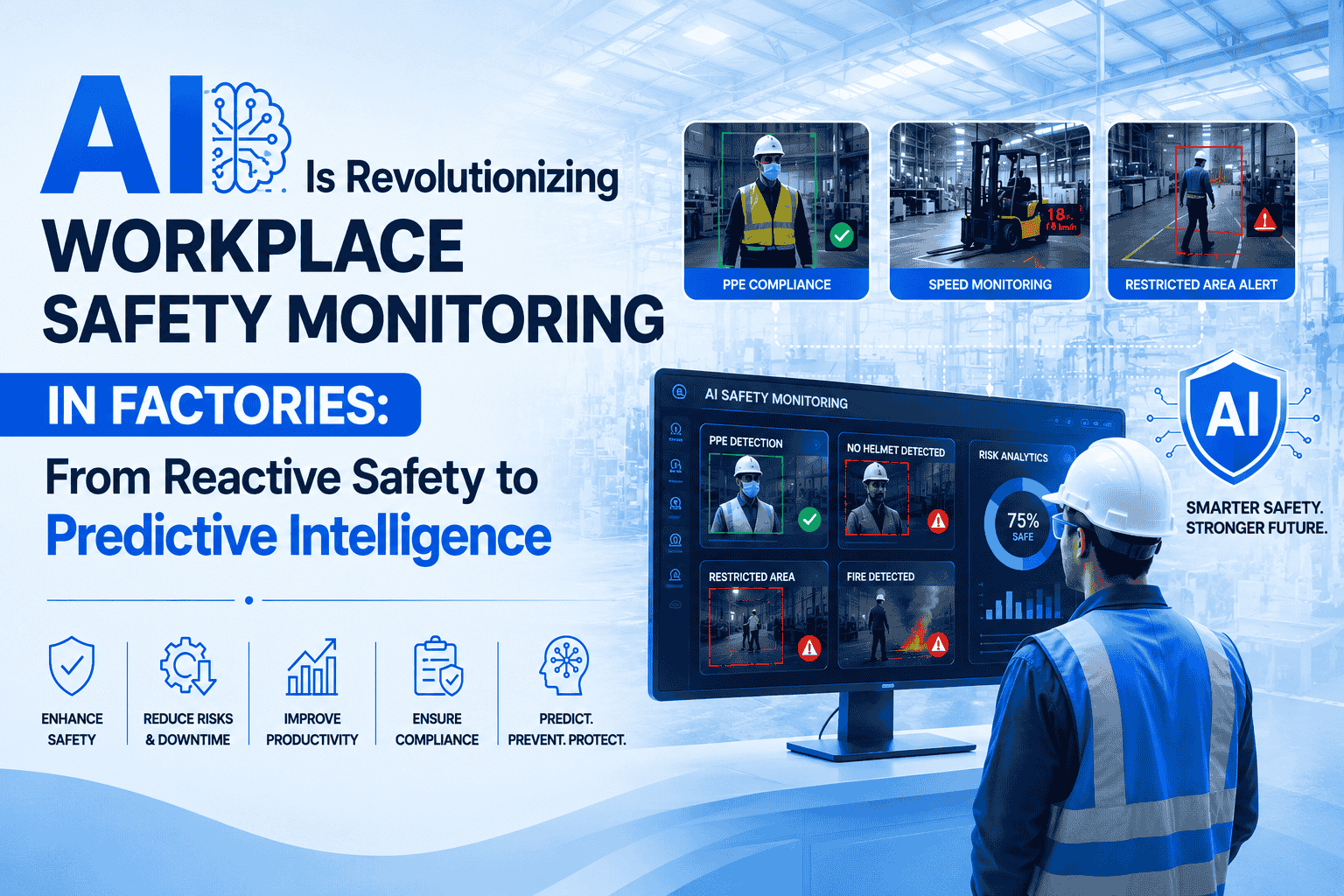
Vision AI unlocks the true value of this existing infrastructure by continuously analyzing live video...
A powerful suite of intelligent agents working in sync to transform manufacturing with speed, precision, and autonomy.