


Zero Downtime, High Yield, AI-Driven Vision
Zero Downtime, High Yield, AI-Driven Vision
In the modern steel manufacturing process, where every second of furnace operation counts, accurate molten metal level measurement is one of the most crucial yet complex process requirements. From blast furnaces and ladles to vacuum degassers and continuous casting molds, knowing the exact molten metal level is essential to ensure process stability, consistent product quality, and reduced downtime in steel plants.
But achieving accuracy is far from simple. Extreme temperatures, harsh conditions, slag interference, and continuous motion make molten metal measurement one of the toughest challenges in industrial automation and digital transformation within the steel making process.
Many steel plants rely on manual observation or outdated technologies that fail to provide real-time accuracy under extreme industrial conditions. The lack of reliable molten metal level detection creates cascading problems — from frequent overflows and inconsistent product quality to increased energy use and maintenance downtime.
Let’s explore the key challenges faced by steel plants due to the absence of accurate molten metal level measurement:
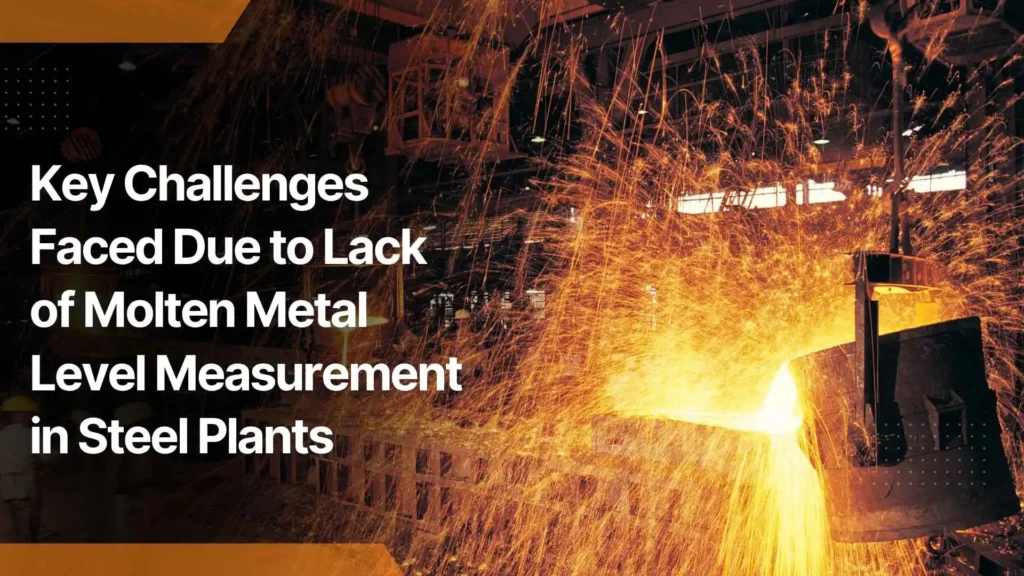
Operators often rely on manual observation to estimate molten steel levels, which can lead to overfilling. These overflows cause molten steel spillage, posing safety risks, damaging equipment, and increasing maintenance needs. Such incidents shorten refractory life, interrupt production, and contribute to costly downtime in steel plants, directly impacting operational efficiency and profitability.
The absence of accurate molten metal level measurement disrupts the refining balance and reduces the efficiency of critical processes such as deoxidation and desulfurization. Fluctuating molten metal levels during refining or vacuum degassing led to inconsistent carbon, oxygen, and inclusion levels, resulting in variations in mechanical strength, cleanliness, and surface finish of the final steel product.
Inaccurate molten metal level control disrupts vacuum stability during degassing in steelmaking, hindering the effective removal of gases such as hydrogen and nitrogen. This leads to poor steel cleanliness, inconsistent composition, and defects like blowholes or porosity. Prolonged degassing cycles further increase fuel consumption in the steel production process, raise energy costs, and contribute to unnecessary downtime in steel plants.
Uncontrolled molten steel levels disturb the furnace’s thermal balance, causing significant fluctuations in temperature and power usage. When the furnace is overfilled, additional heating is required to maintain uniform thermal conditions, increasing energy consumption. Conversely, underfilled furnaces waste fuel as they struggle to sustain target temperatures. Continuous molten metal level detection helps maintain optimal furnace loading, reducing fuel consumption in the steel production process, improving energy efficiency, and stabilizing operations. This leads to lower emissions, reduced costs, and more sustainable furnace performance.
Inadequate slag detection or manual monitoring leads to slag carryover during tapping and pouring. When slag enters ladles or tundishes, it introduces impurities and oxides that compromise steel cleanliness and quality. The lack of advanced slag monitoring systems makes it difficult to identify the optimal tapping point, increasing the risk of slag inclusion and product contamination. Preventing such contamination is critical for maintaining consistency across the entire steel making process.
Manual estimation of molten metal levels leads to frequent under-tapping or over-tapping. Inaccurate tapping causes valuable molten steel to remain in the furnace or overflow during pouring, resulting in significant material loss. These inefficiencies directly lower metal yield, increase production costs, and create inconsistencies in batch output.
The absence of automated level monitoring forces operators to manually inspect molten metal levels near extreme heat zones. This exposes them to intense radiant heat, glare, and splash hazards, posing severe risks of burns and injuries. Continuous dependence on manual observation compromises both operator safety and process reliability.
Overflows, underfills, and slag-related blockages lead to frequent maintenance interventions and production interruptions. Refractory failures, tapping delays, and heat losses further reduce equipment availability, resulting in prolonged downtime in steel plants. Continuous molten metal level monitoring helps prevent abnormal operating conditions, minimizing maintenance frequency, and improving equipment reliability.
Material overflows, molten steel losses, and excess energy use significantly increase a plant’s carbon footprint. Inefficient furnace operations generate higher emissions, waste, and fuel consumption. Consistent molten metal level control ensures optimal resource utilization, reduces fuel consumption in the steel production process, and supports cleaner, more sustainable steel manufacturing processes aligned with global sustainability goals.
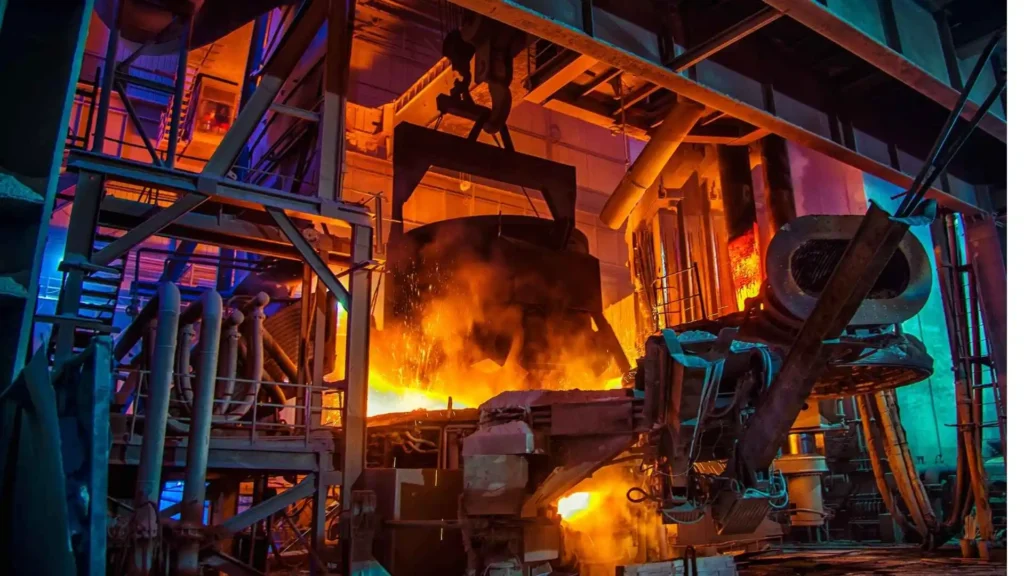
The molten steel environment is one of the harshest in the entire steel manufacturing process, presenting extreme challenges for accurate and reliable molten metal level measurement. Temperatures inside furnaces often exceed 1,600°C, exposing sensors to intense heat, radiant energy, slag fumes, and corrosive gases. Under such severe conditions, traditional measurement technologies deteriorate rapidly, require frequent maintenance, and produce unstable or inaccurate readings.
Most steel plants have experimented with radar, ultrasonic, laser-based, or mechanical contact sensors for molten metal level measurement. However, each of these technologies faces critical challenges in the harsh steelmaking environment. Radar sensors, which rely on electromagnetic wave reflection, often produce inaccurate readings due to slag buildup, extreme heat, and metal vapor interference. Ultrasonic sensors struggle with turbulence, smoke, and high-temperature conditions that distort sound waves. Laser sensors underperform in glare-heavy and dusty environments, while mechanical or contact probes degrade quickly, pose safety risks, and require frequent maintenance.
Even advanced versions of these systems suffer from signal drift, require frequent calibration, and provide limited visibility in multi-phase conditions involving metal, slag, and gas. These limitations make traditional systems unreliable for maintaining real-time accuracy and operational stability in steel plants.
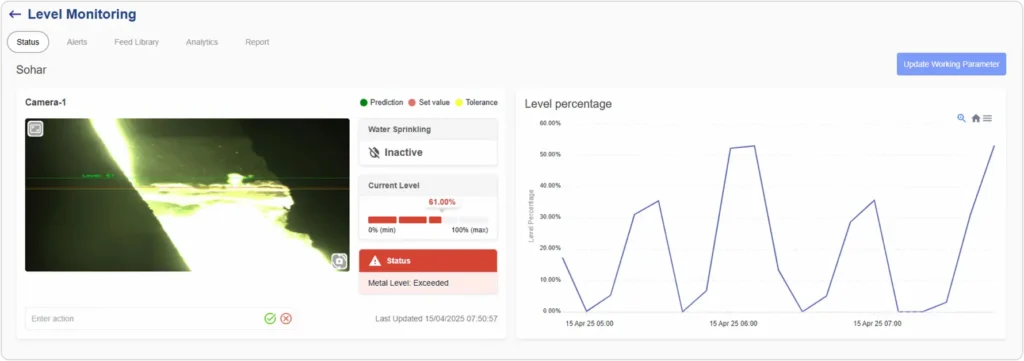
Vision AI-based level monitoring systems have transformed molten metal level control by combining high-end imaging hardware with proprietary computer vision algorithms designed for harsh steelmaking environments. These systems deliver real-time visibility, automated responses, and closed-loop control that traditional sensors cannot achieve in high-temperature, high-interference zones.
Industrial-grade, high-temperature imaging cameras are designed to operate reliably in extreme steelmaking environments, capturing clear images and live video feeds even under intense glare, dense smoke, and airborne dust. The system incorporates heat-protected junction boxes (JBs) and reinforced industrial connections to ensure stable data transmission. Integrated closed-loop control enables real-time feedback between the camera system and plant automation for precise molten metal level control.
The AI-based level monitoring system provides real-time monitoring of molten steel levels with high-resolution, zoomed views for precise observation across every stage of the steel manufacturing process — from tapping and pouring to vacuum degassing. The level monitoring system enables operators to track real-time molten metal level control, monitor key process parameters, and analyze historical level trends for performance insights. This continuous visibility improves decision-making, prevents overflows, and ensures process stability — significantly reducing downtime in steel plants while enhancing energy efficiency, equipment reliability, and overall productivity.
The AI-based level monitoring system automatically executes predefined control actions once molten metal or slag levels reach critical thresholds. Integrated with plant PLCs (Programmable Logic Controllers), it enables real-time operational adjustments such as calibrated water spray or nitrogen flood control to prevent overflows, bursts, and refractory damage. This closed-loop functionality ensures precision in molten metal level control systems, stabilizing operations and reducing manual intervention.
When molten steel or slag levels exceed safe limits, the molten metal level detection system instantly triggers alerts through SMS, email, hooter alarms, WhatsApp, or direct PLC communication. These proactive alerts allow operators to respond before abnormalities escalate, ensuring safety and minimizing downtime in steel plants. By maintaining continuous awareness, the system supports smoother operation and enhanced process reliability.
The molten metal level measurement system provides real-time insights into molten metal level measurement and process performance across the steel manufacturing process. It helps engineers identify trends, detect inefficiencies, and make data-driven decisions to enhance molten steel level monitoring, process stability, and product quality. By enabling predictive maintenance in steel plants, it reduces unplanned repairs and minimizes downtime in steel plants, ensuring higher efficiency and operational excellence.
Molten metal level detection system provides a centralized feed library stores photo and video footage of molten steel and slag activity, complete with timestamps and event logs. Operators can filter data by action type, time, or camera location to review past conditions and responses. This feature enhances traceability, supports training, and improves decision-making within the molten steel level monitoring workflow.
The steel manufacturing process consists of several high-temperature stages where accurate molten metal level measurement is vital for process stability, product quality, and safety. Each department, from the blast furnace to the continuous casting mold, requires a dedicated molten metal level control system suited to its specific operating conditions. Modern AI-based level monitoring systems address these challenges by offering real-time visibility, predictive control, and automation that minimizes errors and reduces downtime in steel plants.
In the blast furnace, monitoring the molten iron level is critical for maintaining consistent tapping and preventing overflow. The molten metal level detection system measures the height of the molten bath and provides real-time feedback to control operations. Vision AI solutions can function under high heat, dust, and glare, ensuring stable and accurate level measurement. This improves process stability, reduces refractory wear, and enhances furnace performance.
Torpedo ladles transfer molten metal from the blast furnace to the converter. The molten metal level control system monitors filling levels to prevent spillage and maintain temperature consistency during transfer. Using infrared and thermal imaging, the system ensures safe and efficient handling of molten metal, reducing energy loss, and improving transport safety within the steel making process.
In the converter or BOF, accurate molten steel level monitoring helps maintain the optimal bath height during oxygen blowing and refining. The system’s AI-driven vision models detect slag-metal interfaces to provide precise level readings. Integration with a slag detection system prevents slag carryover, improving steel purity and consistency. Stable level control at this stage enhances process efficiency and extends refractory life.
The ladle molten metal level control system ensures accurate filling and pouring during transfer between refining and casting. The AI-based level monitoring system captures real-time data to prevent overfill, underfill, or overflow conditions. It enhances operational safety, improves yield, and stabilizes the transfer process, supporting consistent production performance across multiple casting cycles.
The slag monitoring system identifies and separates slag from molten steel during tapping or pouring. The slag level monitoring system uses thermal imaging and pattern recognition to detect slag layers and alert operators in real time. This prevents slag carryover into ladles or tundishes, reducing contamination and improving product quality. The slag detection system also supports automation by providing precise data for process control and ensuring cleaner metal handling.
In vacuum degassing, maintaining stable molten steel levels ensures proper gas removal and pressure control. The Vacuum Degassing Level Monitoring system, powered by AI for Vacuum Degassing Control, tracks molten metal height inside the chamber with precision, even under low-pressure conditions. This automation prevents overflows, improves degassing consistency, and enhances steel cleanliness. It also supports process optimization, reducing interruptions, and downtime in steel plants.
In continuous casting, the tundish regulates molten steel flow into the mold. The molten metal level control system maintains consistent metal height, preventing level fluctuations that affect casting speed and surface quality. AI-based monitoring solutions analyze real-time video feeds and data to maintain steady casting conditions. This helps achieve smooth flow control, better uniformity, and minimal casting interruptions.
At the mold stage, the molten metal level measurement determines casting precision and surface finish. Vision AI and electromagnetic sensors detect level changes instantly, ensuring continuous control. The molten steel level monitoring system maintains the ideal metal height, preventing overflows and underfills. This precise control improves casting quality, reduces surface defects, and enhances operational reliability.
In steel plants, modern molten metal level control systems powered by AI-based level monitoring are transforming how steel manufacturers handle these challenges. By providing real-time visibility, automation, and predictive insights, these systems ensure accuracy in every stage of the steel manufacturing process — from furnaces and ladles to vacuum degassing and casting.
Accurate molten metal level measurement is vital for maintaining stability, safety, and quality in modern steel plants. Even small variations in molten steel levels can cause overflows, product defects, and higher energy use. Traditional sensors and manual monitoring struggle to deliver reliability under extreme heat, slag, and turbulence.
Advanced AI-based level monitoring systems overcome these challenges by providing real-time visibility, automated control, and predictive insights across furnaces, ladles, and vacuum degassing units. By ensuring precise molten metal level control, they reduce downtime, improve energy efficiency, and enhance product consistency — making them essential for smarter, safer, and more sustainable steelmaking operations.
Insights and perspectives from Ripik.ai's thought leaders
Vision AI in blast furnace operations enables real-time monitoring to identify visual patterns, detect...
Discover practical strategies to enhance plant operations with AI, boosting efficiency and productivity....

Computer Vision for Manufacturing: Applications and Benefits Introduction Manufacturers today face increasing...
Predictive Maintenance in Manufacturing Industry: A Complete Guide Introduction Predictive maintenance...
Discover how AI in cement manufacturing improves kiln optimization, energy efficiency, predictive maintenance,...
Vision AI unlocks the true value of this existing infrastructure by continuously analyzing live video...
A powerful suite of intelligent agents working in sync to transform manufacturing with speed, precision, and autonomy.