


Zero Downtime, High Yield, AI-Driven Vision
Zero Downtime, High Yield, AI-Driven Vision
Cement manufacturing raw materials are primarily calcareous materials such as limestone and clay, which supply the calcium carbonate, silica, alumina, and iron needed to form clinker and produce strong, consistent cement for construction. For cement industry professionals, plant operators, engineers, and environmental managers, understanding raw material selection and control is central to producing durable cement efficiently while lowering energy use and CO₂ emissions in modern infrastructure development.
Cement manufacturing contributes nearly 8% of global CO₂ emissions, though concrete reabsorbs about 30% through carbonation. Against that backdrop, the industry is increasingly using AI-driven raw material optimization to improve raw material quality, stockpile monitoring, moisture detection, equipment health, and alternative fuel usage, helping plants raise efficiency and reduce environmental impact.Cement manufacturing contributes nearly 8% of global CO₂ emissions, though concrete reabsorbs about 30% through carbonation. The industry is increasingly adopting AI-driven raw material optimization to enhance efficiency and reduce environmental impact.
Limestone and clay are the primary raw materials used in cement manufacturing, forming the basis of the raw mix for Portland cement, and cement is made by heating them at high temperatures. Cement’s unique properties are derived from two main types of raw materials, and the quality of cement depends on their chemical composition, with precise control needed to maintain consistent quality; calcium oxide, silicon dioxide, aluminum oxide, and iron oxide are the key oxides that form clinker and help produce cement.
Calcareous materials are rich in calcium and magnesium and typically include limestone, chalk, marl, shells, and other calcium carbonate–rich sources. During cement production, these materials undergo calcination, converting calcium carbonate into calcium oxide (quicklime), which imparts the essential binding properties to cement.
Argillaceous materials provide silica (as silicon dioxide), alumina, and iron, and, other oxides to the mix, complementing the calcareous components. Silicon dioxide is a major component supplied by these materials, along with alumina and iron, which are crucial for enhancing cement’s strength, durability, and overall binding performance, ensuring the final product meets required construction standards.
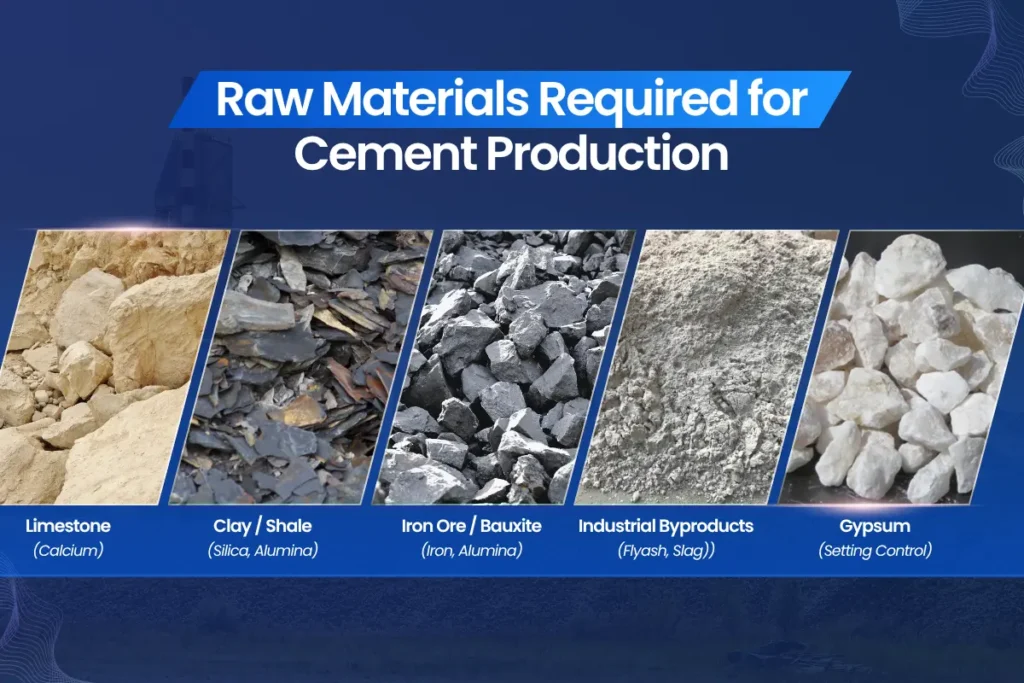
Limestone (Calcium Carbonate – CaCO₃) is the primary raw material used in cement manufacturing process, serving as the main source of calcium oxide (CaO) necessary for clinker formation. Its high calcium content, typically over 80% CaCO₃, provides the essential binding properties that give cement its strength. In a cement plant, limestone is first extracted from the quarry and sent to the crushing unit to be broken down into manageable sizes. Crushed raw material is then transported to the raw mill for fine grinding and blending with other materials to achieve the desired chemical composition. Finally, the prepared limestone mix is fed into the kiln as part of the raw feed for clinker production.
Clay and shale are important argillaceous raw materials in cement production, providing silica (SiO₂), alumina (Al₂O₃), and iron oxide (Fe₂O₃) to balance the chemical composition of the raw mix for clinker formation. Clay, soft and earthy, and shale, harder and compact, are quarried and sent to the crushing unit to be broken into manageable sizes. Both materials are then transported to the raw mill for fine grinding and blending with other raw materials before being fed into the kiln as part of the raw feed for clinker production.
Marl is a cement raw material containing both calcium carbonate (CaCO₃) and clay, used in manufacturing cement to adjust the chemical composition of the raw mix. It is quarried and directly transported to the raw mill for fine grinding and blending with other materials before being fed into the kiln for clinker formation.
Sand or silica sand is used in manufacturing cement to adjust the silica (SiO₂) content of the raw mix. It is added to the raw mill, where it is blended and ground with other materials before being fed into the kiln as part of the raw feed for clinker formation.
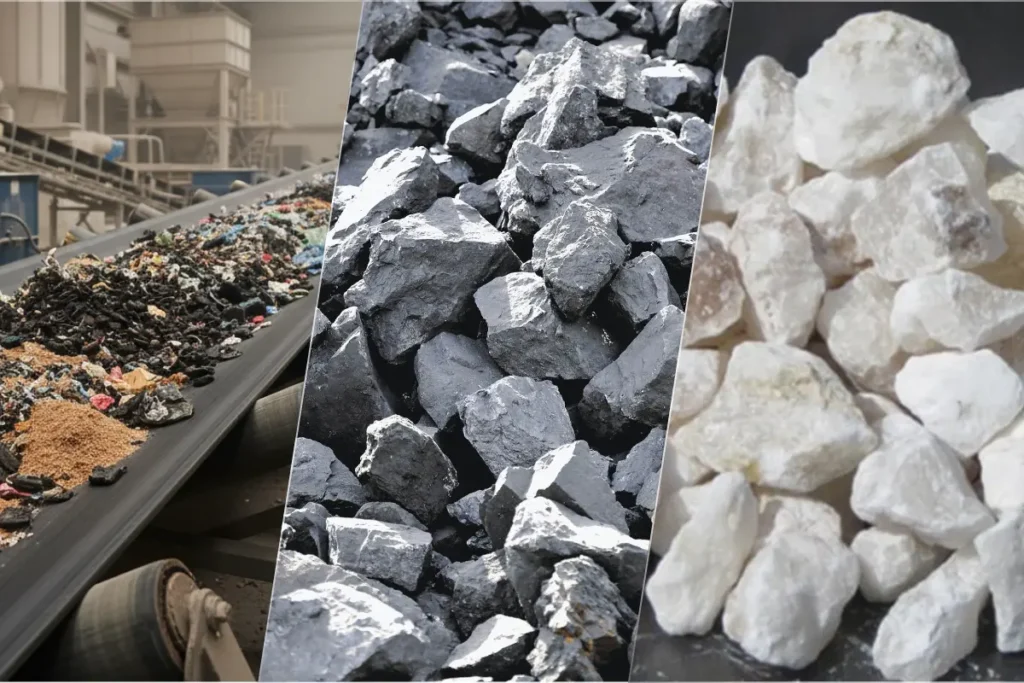
Iron ore or mill scale is used in the cement-making process to adjust the iron oxide (Fe₂O₃) content of the raw mix. It is added to the raw mill, where it is blended and ground with other materials before being fed into the kiln as part of the raw feed for clinker formation.
Bauxite is used in cement production to increase the alumina (Al₂O₃) content of the raw mix. It is added to the raw mill, blended and ground with other materials, and then fed into the kiln as part of the raw feed for clinker formation.
Gypsum (CaSO₄·2H₂O) is added during the final grinding process of cement to control its setting time. It is blended with clinker and other additives in the cement mill, where they are ground into a fine powder with about 150 billion grains per pound, before the finished cement is packed and dispatched.
Modern cement production increasingly uses industrial by-products such as fly ash from coal combustion and blast furnace slag to replace part of the clinker in the cement production process, helping cement manufacturers improve durability, reduce the heat of hydration, and support sustainable development in construction projects. Volcanic ash, a natural pozzolan historically used in cement, imparts hydraulic properties that allow the cement to set in wet conditions. Blended with clinker and other materials in the cement mill, they contribute to the production of pozzolanic cement, known for its strength and long-term performance. In blended cements, higher limestone ratios can reduce carbon footprint by about 10%.
Dolomite is used as a supplementary calcium source in cement production, containing magnesium oxide (MgO). It is quarried, crushed, and transported to the raw mill for grinding and blending with other raw materials before kiln feeding.
Alternative fuels provide the high temperatures required for clinkerization while reducing dependence on conventional fossil fuels. These include biomass (such as rice husk, sawdust, and wood chips), refuse derived fuel (RDF) from municipal waste, tyre-derived fuel (TDF) from shredded scrap tyres, industrial waste (including solvents, paint sludge, and used oils), sewage sludge, and agricultural residues like bagasse and coconut shells. In modern cement kilns, these fuels are introduced into the preheater and kiln system, where hot gases help preheat the raw meal and supply the intense heat needed for clinkerization, improving fuel efficiency and supporting sustainable cement production. The rotary kiln heats the material to about 2,700 degrees Fahrenheit, where chemical reactions form a product called clinker as grey balls about the size of marbles.

Effective management of raw materials is fundamental to producing consistent, high-quality cement. Inconsistent raw materials can lead to improper chemical reactions during manufacturing, negatively impacting cement quality. Additionally, poor raw material management can increase the risk of chemical attack on the final cement and concrete products, reducing their durability. However, several challenges arise due to the inherent variability of natural materials and the complexity of the manufacturing process. Below are the key challenges faced by cement plants:
Monitoring and managing raw material stockpiles is a complex task. Improper stockpile management can result in inconsistent feed quality, increased material wastage, and difficulties in accurately predicting material availability. Traditional manual volumetric estimation—often requiring personnel to climb the piles—not only introduces significant calculation errors but also poses serious safety hazards.
Conventional laboratory testing and manual sampling are time-consuming and offer only intermittent data, limiting the ability to monitor raw material quality in real time. This reactive approach hinders timely adjustments to feed composition, potentially affecting clinker consistency and overall cement quality.
Variations in the moisture content and particle size of cement raw materials affect grinding efficiency, kiln feed uniformity, and heat consumption. High moisture levels increase energy demand during drying, while non-uniform particle size can cause improper burning in the kiln, resulting in incomplete reactions and higher fuel costs.
Equipment in cement plants, such as crushers, conveyors, hoppers, and other handling systems, experiences significant wear and tear due to the properties of raw materials—size, moisture, and stickiness. Crushers can become overloaded, clogged, and suffer accelerated wear of components like jaws and hammers. Conveyors are prone to spillage, belt misalignment, uneven loading, and motor failures. Collectively, these issues lead to sudden downtime, increased maintenance costs, and loss of productivity.
Inefficient raw material handling and preparation can increase the energy required for grinding and heating. Poorly optimized mixes demand higher kiln temperatures to achieve complete reactions, thereby increasing fuel use and CO₂ emissions—directly impacting the plant’s sustainability goals.
Variations in AFR from diverse material types lead to significant fluctuations in calorific value, moisture content, and chemical composition. These inconsistencies can disrupt kiln stability, reduce energy efficiency, and affect clinker quality. Delayed laboratory results hinder timely adjustments, while variable fuel characteristics cause unstable temperature profiles and fluctuating process parameters. Consequently, cement plants are often reluctant to scale up AFR usage due to operational instability and quality risks.
AI is reshaping raw material management in cement production. By monitoring material quality, moisture, and composition in real time, AI enables precise handling from quarry to kiln. Advanced analytics and computer vision ensure consistent feeding, blending, and dosing of raw materials, reducing variability and waste while improving clinker quality. Key applications include:
AI enables real-time raw material monitoring of the chemical composition and physical characteristics of raw materials, including particle size, oversized rocks, fines, and lumps. With instant alerts for any variations, operators can make immediate adjustments to maintain the optimal raw mix, ensuring consistent clinker quality, preventing process disruptions, reducing fuel consumption, and minimizing emissions. By keeping particle sizes and composition within ideal ranges, AI supports stable kiln operation, improved energy efficiency, and more sustainable cement production.
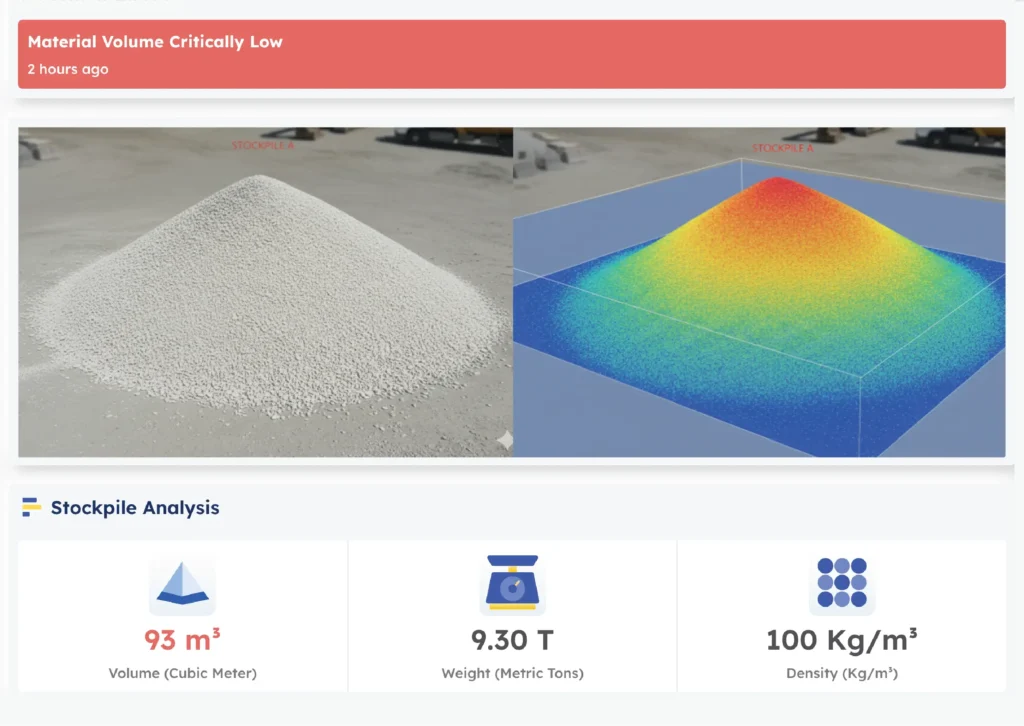
Integrating IP cameras with LiDAR in AI-powered stockpile monitoring enables real-time tracking of stockpile size, material distribution, and density. The system delivers precise volumetric measurements, trend analysis, and automated data collection, minimizing human error and enhancing inventory accuracy. Real-time alerts notify operators of significant changes in stockpile size, shape, or composition, ensuring optimized stockpile handling, efficient material flow, and reliable inventory management.
Excessive or uneven moisture in cement raw materials, alternative fuels, or additives can disrupt grinding efficiency and kiln performance. AI-powered, infrared cameras provide real-time moisture measurement of raw material, delivering precise insights for data-driven decision-making. Instant alerts notify operators whenever moisture levels exceed acceptable limits, allowing quick corrective actions to ensure stable material flow, energy-efficient grinding, and consistent kiln operation.
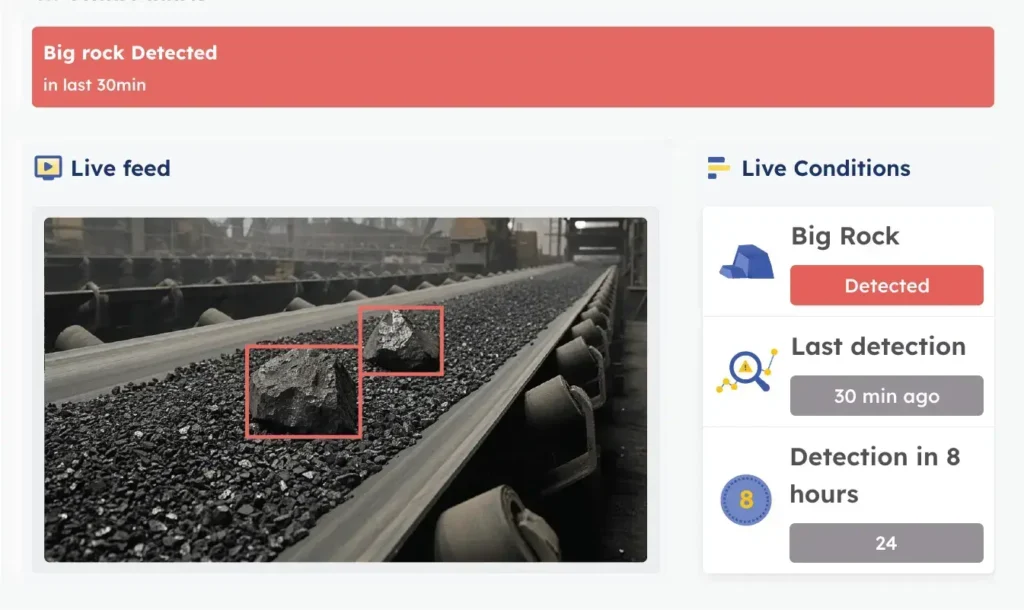
Oversized rocks, metallic debris, or other foreign objects in raw materials can damage crushers, conveyors, and kilns. Vision AI based big rock detection system identify and flag these anomalies in real time, enabling immediate corrective actions to prevent equipment damage, unplanned downtime, and production losses.
Conveyor belts are prone to wear, spillage, overloading, and roller or pulley failures due to heavy abrasive materials, improper loading, or poor belt tension. AI- powered Conveyor Belt system ccontinuously monitors belts for misalignment, wear, blockages, and abnormal vibrations, while predictive maintenance algorithms schedule interventions before failures occur, ensuring uninterrupted material flow, reduced downtime, and improved operational efficiency.
The use of alternative fuels—such as petcoke, biomass, and industrial waste—is becoming increasingly common in cement production. AI systems analyze the moisture content, particle size, and Net Calorific Value (NCV) of these materials in real time. By dynamically adjusting feed rates and combustion parameters, AI ensures efficient fuel utilization, stable kiln temperatures, and reduced emissions. Additive (Gypsum, Fly Ash, Slag) Moisture Monitoring
Vision AI identifies the driest heap at the loading source, enabling optimized stack selection for improved efficiency and cement quality. AI also monitors the moisture content of additives such as gypsum, fly ash, and slag, ensuring precise dosing during clinker grinding. Maintaining consistent additive moisture levels prevents variations in cement setting time and strength, enhancing product reliability, quality, and overall performance.
Consistent Raw Material Quality: Vision AI Platform continuously monitors the chemical composition, particle size, and moisture content of raw materials, ensuring that the raw mix remains within optimal parameters. This reduces variability, prevents process disruptions, and guarantees stable clinker quality.
Real-Time Monitoring and Alerts: AI systems provide instant alerts when stockpile conditions, moisture levels, or particle distributions deviate from acceptable ranges. This allows operators to make immediate corrective actions, reducing material loss and preventing potential production issues.
Optimized Stockpile and Material Handling: By analyzing stockpile data, computer Vision Platforms improves stacking, reclaiming, and feed strategies, ensuring a homogeneous feed to the kiln. Optimized stockpile management reduces material degradation, prevents segregation, and ensures smooth material flow.
Energy Efficiency: Maintaining an optimal raw mix and moisture content improves grinding and calcination efficiency, reducing fuel consumption and lowering energy costs across the cement production process. AI also optimize the grinding process to produce fine cement with a consistent particle size, further enhancing efficiency.
Reduced Emissions: Optimized feed quality and improved kiln efficiency help lower CO₂ and other emissions, supporting sustainability initiatives and regulatory compliance, with carbon capture as one pathway to reduce process emissions and with cement manufacturers targeting carbon neutrality by 2050. Computer Vision Platforms help recover and utilize heat generated during clinker cooling, contributing to reduced emissions and improved energy conservation.
Predictive Maintenance: AI monitors conveyors, feeders, and other material handling equipment to detect misalignment, wear, or abnormal vibrations. Predictive maintenance allows timely interventions, preventing breakdowns and minimizing downtime.
Enhanced Cement Quality: Precise monitoring and dosing of additives such as gypsum, fly ash, and slag ensure consistent setting time, strength, and durability, improving the final cement product’s reliability and performance.
Data-Driven Decision Making: Vision AI systems provide historical and real-time insights into stockpiles, raw mix composition, and material flow. This enables better planning, procurement, and operational decisions, improving overall plant efficiency.
Cement Process Optimization: Vision AI technologies transform cement manufacturing by monitoring and optimizing the entire production process. By tracking hot gas flow in preheating chambers, AI improves energy efficiency and reduces carbon emissions. It also provides real-time kiln data for precise temperature and chemical control, ensuring efficient clinker production. In the latter stages, AI supports process control to maintain consistent product quality and overall operational efficiency.
Enhancing cement production process efficiency is key to reducing the industry’s carbon footprint and achieving sustainable construction. By leveraging AI-driven raw material management, alternative fuels, and waste reuse, manufacturers can optimize feed composition, monitor stockpiles, and maintain consistent clinker quality while minimizing energy consumption and emissions. Integrating these innovative strategies allows the cement industry to produce high-quality, eco-friendly cement efficiently, supporting both sustainability goals and growing infrastructure demands.
Insights and perspectives from Ripik.ai's thought leaders

Vision AI in blast furnace operations enables real-time monitoring to identify visual patterns, detect...
Discover practical strategies to enhance plant operations with AI, boosting efficiency and productivity....

Computer Vision for Manufacturing: Applications and Benefits Introduction Manufacturers today face increasing...

Predictive Maintenance in Manufacturing Industry: A Complete Guide Introduction Predictive maintenance...
Discover how AI in cement manufacturing improves kiln optimization, energy efficiency, predictive maintenance,...
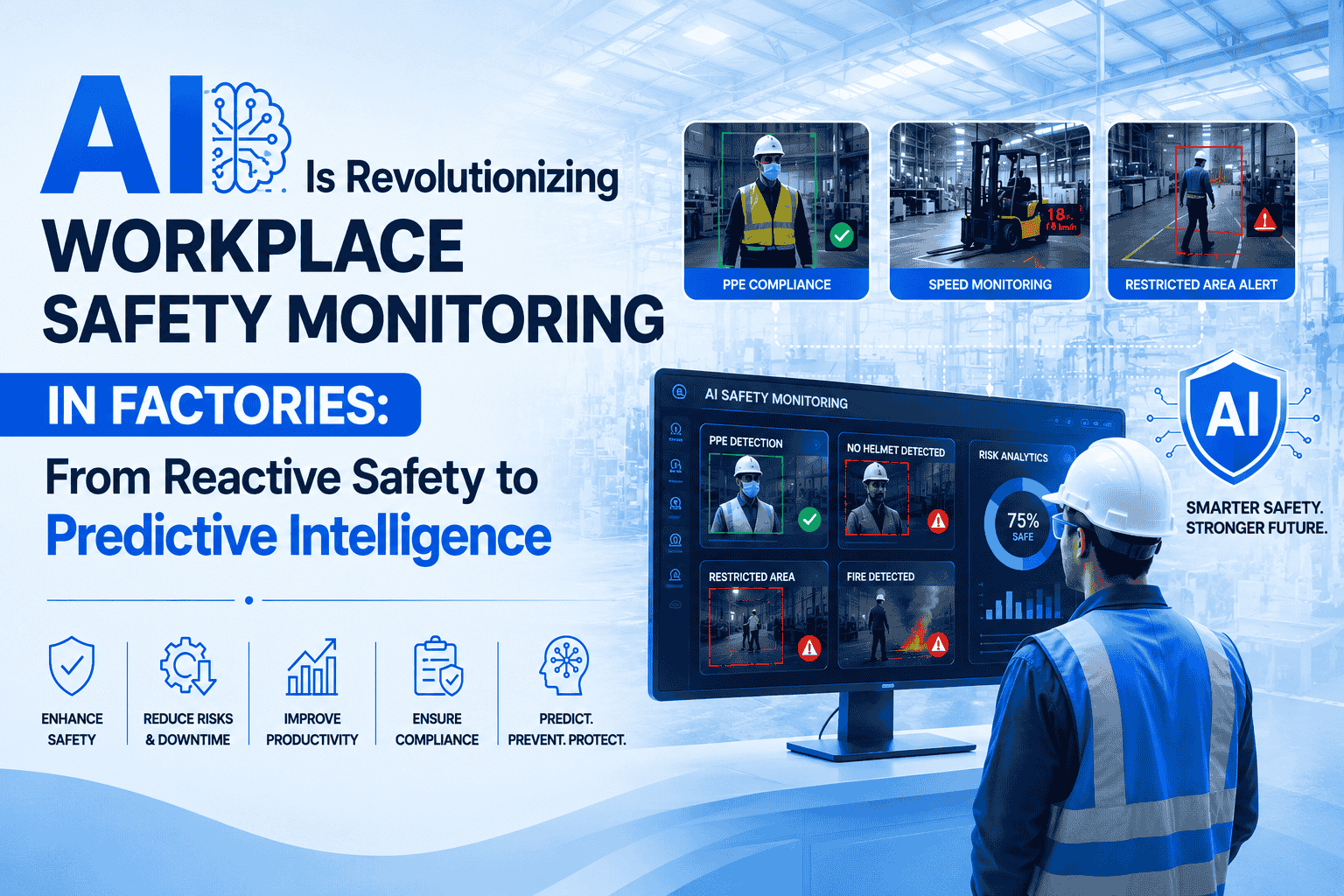
Vision AI unlocks the true value of this existing infrastructure by continuously analyzing live video...
A powerful suite of intelligent agents working in sync to transform manufacturing with speed, precision, and autonomy.